
Before Memmo my notes were scattered across PDFs. Now a workspace pulls everything into one place — I see exactly what's still left to study.
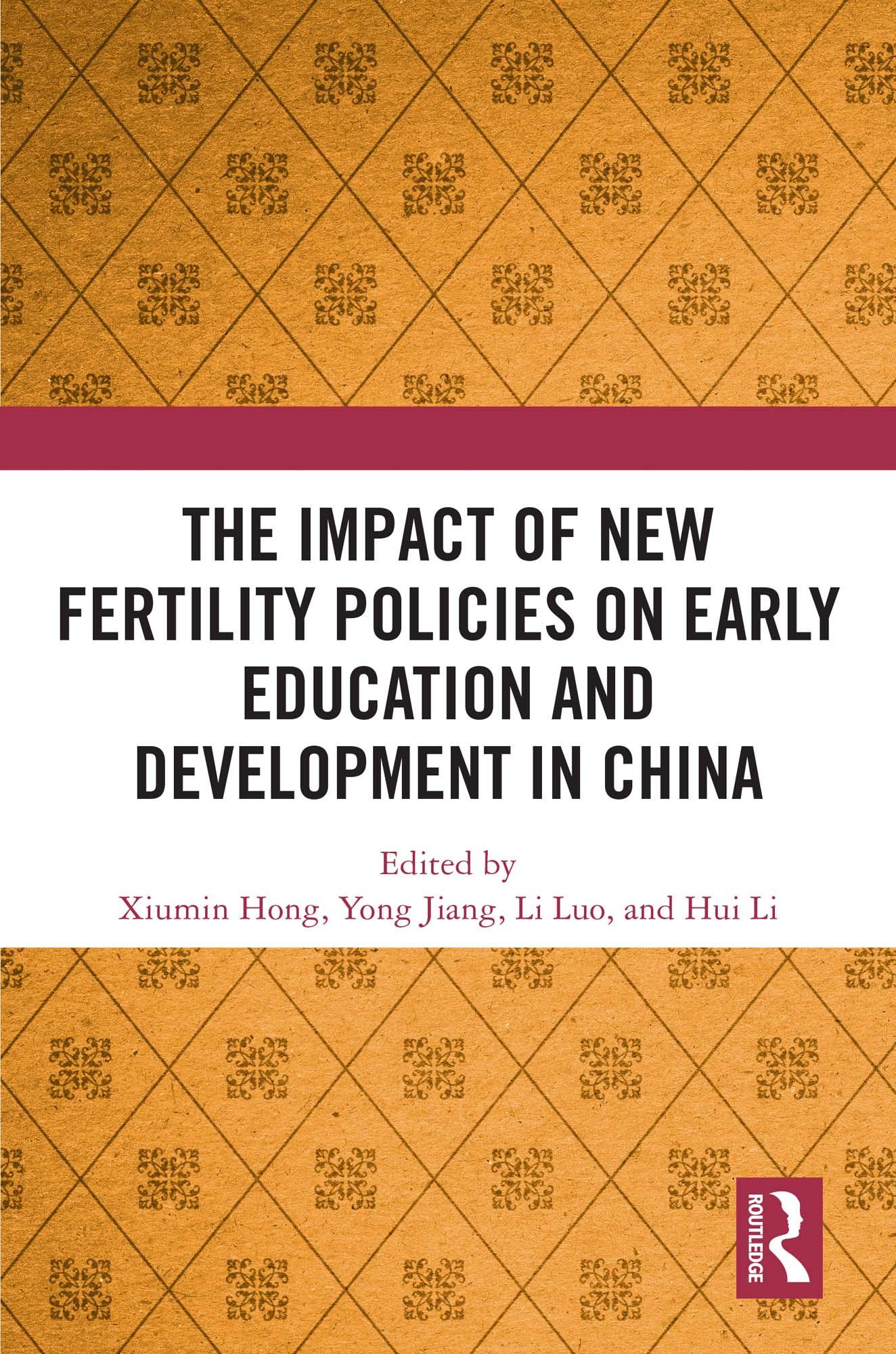
This book is among the first to comprehensively examine the far-reaching impact of China’s new fertility policies on early education and development.
Since the beginning of the 21st century, China has entered a period of declining fertility rate and aging population, which poses a serious threat to its sustainable development. To address this crisis, China has radically revised its fertility policy through the state’s guidance for regulating couples’ reproductive choices, abandoning its iconic one-child policy, and adopting the selective two-child (2013), universal two-child (2016), and then the three-child (2021) policy. Drawing on empirical evidence obtained through various research methods, this book offers multidisciplinary perspectives on the far-reaching impact of these policies. Part I summarizes the lessons learned from new fertility policies and identifies important directions for future research. Focusing on two major microsystems, part II presents research assessing families’ fertility desire for an additional child and projecting the demand for preschool education. Part III attends to family dynamics and their relation to early learning and development for both only and non-only children. Part IV addresses the importance of expanding access to affordable and high-quality early childhood education and care for children from birth through age 6.
The Impact of New Fertility Policies on Early Education and Development in China contributes to policy development and practical improvement and serves as a catalyst to stimulate future studies on the topic. It will be a valuable resource for researchers, policymakers, and practitioners of early childhood education and care, as well as for families of young children. The chapters in this book were originally published as a special issue of Early Education and Development.
Before Memmo my notes were scattered across PDFs. Now a workspace pulls everything into one place — I see exactly what's still left to study.
Memmo's summaries are gold before exams. I don't have to re-read 800 pages two weeks before — just the important parts.
The AI chat has saved me the night before an exam more than once. I just keep asking until I get it — no waiting on a study group to reply.
The quizzes hit exactly what I need to know. Memmo tracks what I get stuck on — so I only practice what's worth it.
Flashcards with spaced repetition are magic. Memmo knows when I'm about to forget something and brings it back.
The AI podcasts are my favorite. I listen on my way to school and get a recap without sitting at a computer.

Handbok i kvalitativa metoder
281 kr

Hållbar utveckling: en introduktion för ingenjörer och andra problemlösare
334 kr

Brymans Samhällsvetenskapliga metoder
390 kr

Projektledning
491 kr

Den orättvisa hälsan: om socioekonomiska skillnader i hälsa och livslängd
326 kr

Vetenskapsteori för nybörjare
196 kr

Organizational Leadership
429 kr

På väg mot läraryrket
172 kr

Det sociala livet i skolan: Socialpsykologiska perspektiv
253 kr

Betygsättningens didaktik
151 kr

Personality
402 kr

Studying Leadership
404 kr

Managing Innovation
477 kr

Introduktion till samhällsvetenskaplig metod
347 kr

The Psychology of Sex and Gender
698 kr

Evidens och kunskap för socialt arbete
207 kr

Introduction to Leadership
605 kr