
Before Memmo my notes were scattered across PDFs. Now a workspace pulls everything into one place — I see exactly what's still left to study.
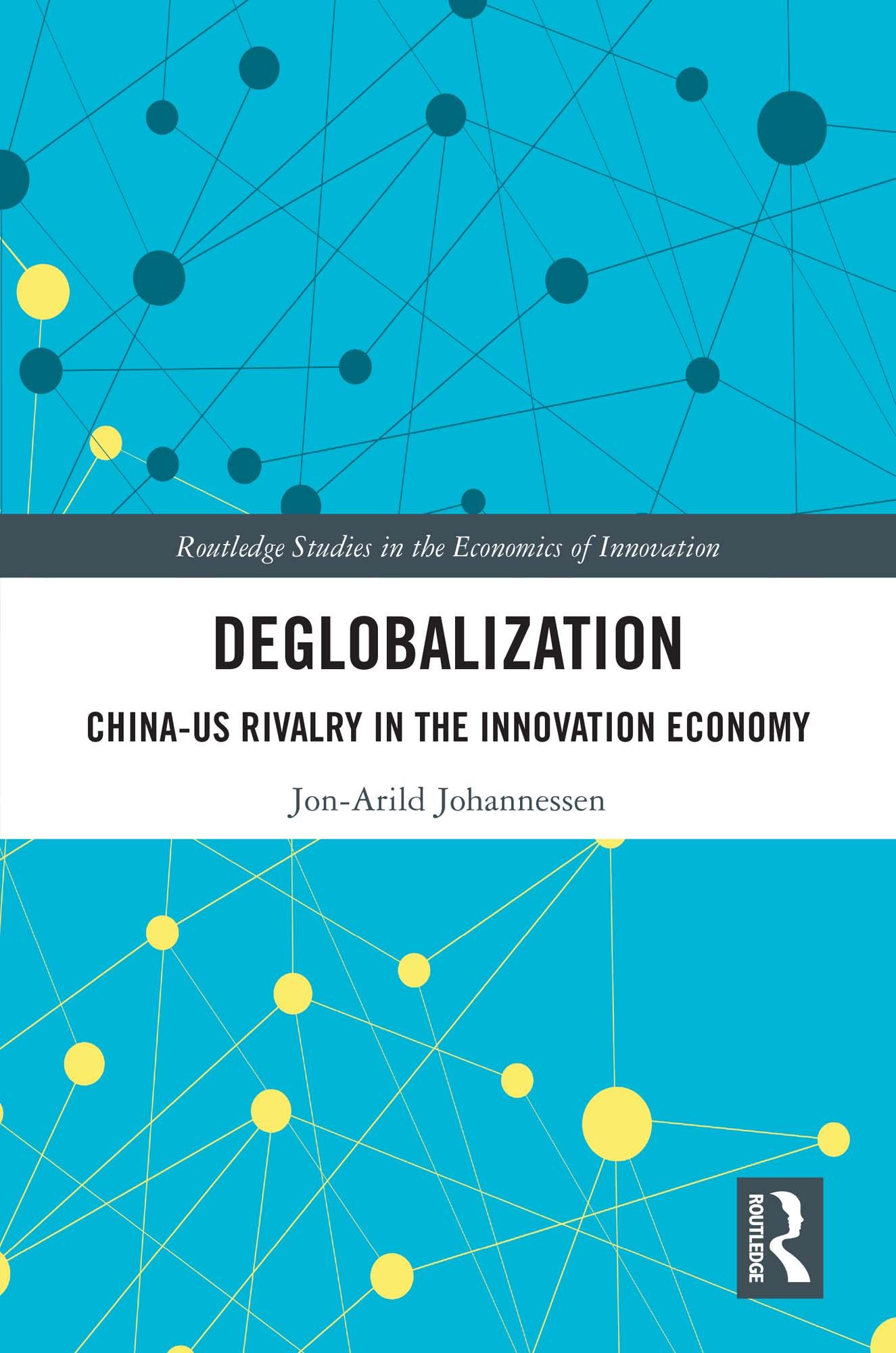
The emerging conflict between the US and China has an inherent tendency towards a development of deglobalization. It is the historical prerequisites for this deglobalization that are examined in this book. These assumptions are largely based on what is termed the second wave of globalization, based on increasing technological competition between the US and China, as well as China's expansion along the New Silk Road.
In this book, the author makes a distinction between the Old Globalization and the New Globalization. The Old Globalization was characterized by competition over costs in general and wage costs in particular, while the New Globalization is categorized by new competencies and skills, especially technological capabilities and technological innovations. The second wave, which is driven by technological innovations, lays the foundation for a counter-strategy on the part of the US to stem the Chinese technological expansion. It is this new strategy that confines the second wave of globalization from China and lays the foundation for deglobalization.
The book analyses US-China relations from a fresh perspective, namely a systemic thinking approach. The focus is the emerging innovation economy, which leads to tension and deglobalization. The book is grounded in evolutionary economics and uses conceptual generalization in its descriptions, analysis, theoretical reflections, and real-world cases.
The key message is that the economy of the future will be characterized by coordinated wave movements: economic growth mainly controlled by private capital alternating with economic downturns that necessitate collective solutions and government interventions.The book offers policy suggestions, which include promoting effective macroeconomic policies, and extending microeconomic cooperation schemes, related to the innovation economy.
Before Memmo my notes were scattered across PDFs. Now a workspace pulls everything into one place — I see exactly what's still left to study.
Memmo's summaries are gold before exams. I don't have to re-read 800 pages two weeks before — just the important parts.
The AI chat has saved me the night before an exam more than once. I just keep asking until I get it — no waiting on a study group to reply.
The quizzes hit exactly what I need to know. Memmo tracks what I get stuck on — so I only practice what's worth it.
Flashcards with spaced repetition are magic. Memmo knows when I'm about to forget something and brings it back.
The AI podcasts are my favorite. I listen on my way to school and get a recap without sitting at a computer.

Handbok i kvalitativa metoder
281 kr

Hållbar utveckling: en introduktion för ingenjörer och andra problemlösare
334 kr

Brymans Samhällsvetenskapliga metoder
390 kr

Projektledning
491 kr

Den orättvisa hälsan: om socioekonomiska skillnader i hälsa och livslängd
326 kr

Organizational Leadership
429 kr

Vetenskapsteori för nybörjare
196 kr

På väg mot läraryrket
172 kr

Det sociala livet i skolan: Socialpsykologiska perspektiv
253 kr

Betygsättningens didaktik
151 kr

Personality
402 kr

Studying Leadership
404 kr

Managing Innovation
477 kr

Introduktion till samhällsvetenskaplig metod
347 kr

The Psychology of Sex and Gender
698 kr

Evidens och kunskap för socialt arbete
207 kr

Introduction to Leadership
605 kr