
Before Memmo my notes were scattered across PDFs. Now a workspace pulls everything into one place — I see exactly what's still left to study.
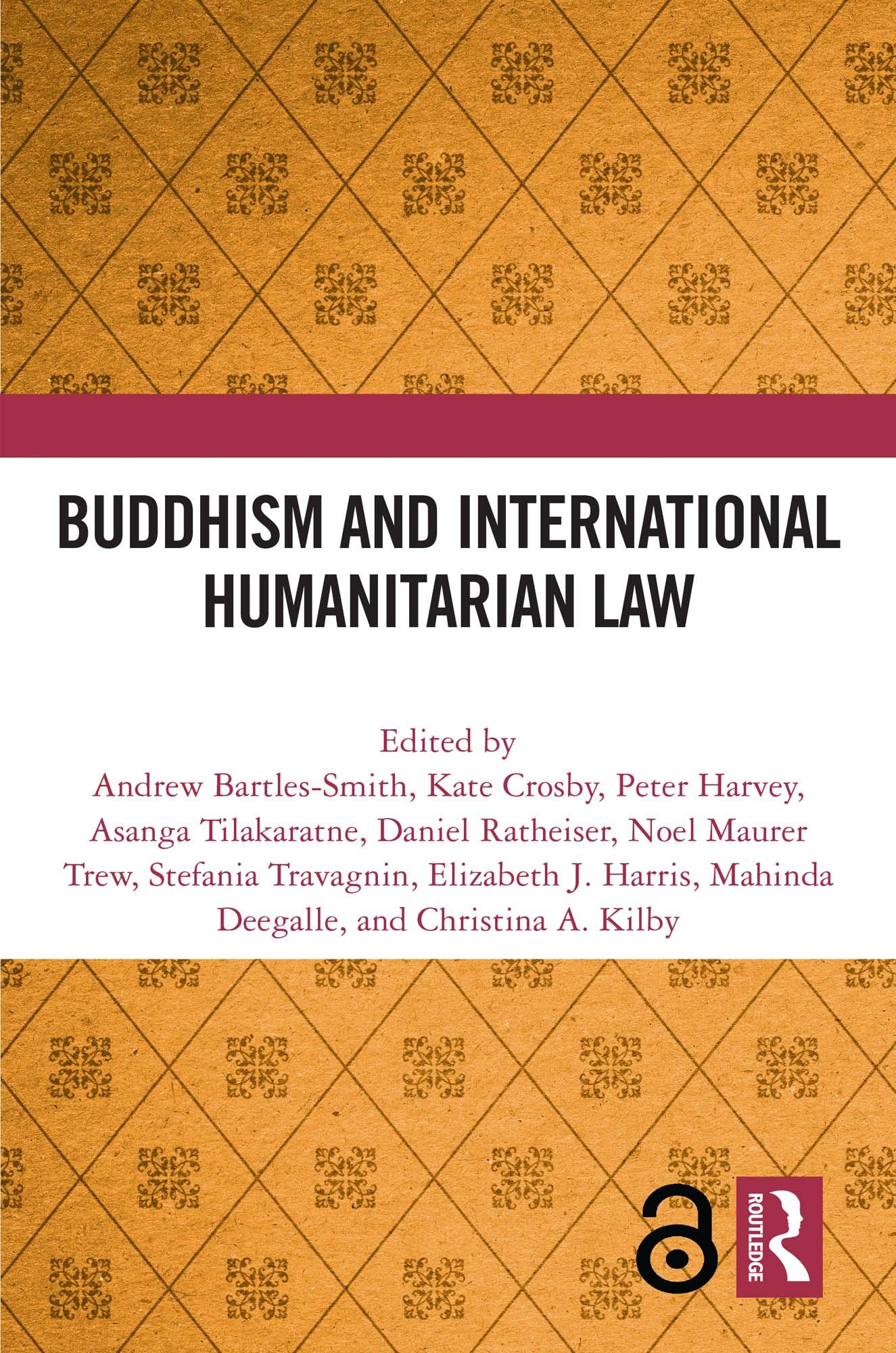
What guidance can Buddhism provide to those involved in armed conflict and to belligerents who must perhaps kill or be killed or defend their families, communities or countries from attack? How, moreover, does Buddhism compare with international humanitarian law (IHL) – otherwise known as the law of armed conflict – which protects non-combatants and restricts the means and methods of warfare to limit the suffering it causes?
Despite the prevalence of armed conflict in parts of the Buddhist world, few contemporary studies have addressed these questions. While there is a wealth of material on Buddhist conflict prevention and resolution, remarkably little attention has been paid to what Buddhism says about the actual conduct of war. IHL is also still relatively little known in the Buddhist world and might not therefore influence the behaviour of belligerents who self-identify as Buddhists and are perhaps more likely to be guided by Buddhist principles. This ground-breaking volume is part of an International Committee of the Red Cross project which seeks to fill this gap by exploring correspondences between Buddhist and IHL principles, and by identifying Buddhist resources to improve compliance with IHL and equivalent Buddhist or humanitarian norms.
This book will be of much interest to students and researchers of International Law, Buddhism, Ethics as well as War and Conflict studies. The chapters in this book were originally published as a special issue of Contemporary Buddhism.
The Open Access version of this book, available at https://www.taylorfrancis.com/books/oa-edit/10.4324/9781003439820/buddhism-international-humanitarian-law-andrew-bartles-smith-kate-crosby-peter-harvey-asanga-tilakaratne-daniel-ratheiser-noel-maurer-trew-stefania-travagnin-elizabeth-harris-mahinda-deegalle-christina-kilby, has been made available under a Creative Commons Attribution-Non Commercial-No Derivatives (CC-BY-NC-ND) 4.0 license. A version of the open access title is also available on the OAPEN platform, https://library.oapen.org/handle/20.500.12657/75921
Before Memmo my notes were scattered across PDFs. Now a workspace pulls everything into one place — I see exactly what's still left to study.
Memmo's summaries are gold before exams. I don't have to re-read 800 pages two weeks before — just the important parts.
The AI chat has saved me the night before an exam more than once. I just keep asking until I get it — no waiting on a study group to reply.
The quizzes hit exactly what I need to know. Memmo tracks what I get stuck on — so I only practice what's worth it.
Flashcards with spaced repetition are magic. Memmo knows when I'm about to forget something and brings it back.
The AI podcasts are my favorite. I listen on my way to school and get a recap without sitting at a computer.

Handbok i kvalitativa metoder
281 kr

Hållbar utveckling: en introduktion för ingenjörer och andra problemlösare
334 kr

Brymans Samhällsvetenskapliga metoder
390 kr

Projektledning
491 kr

Den orättvisa hälsan: om socioekonomiska skillnader i hälsa och livslängd
326 kr

Vetenskapsteori för nybörjare
196 kr

Organizational Leadership
429 kr

På väg mot läraryrket
172 kr

Det sociala livet i skolan: Socialpsykologiska perspektiv
253 kr

Betygsättningens didaktik
151 kr

Personality
402 kr

Studying Leadership
404 kr

Managing Innovation
477 kr

Introduktion till samhällsvetenskaplig metod
347 kr

The Psychology of Sex and Gender
698 kr

Evidens och kunskap för socialt arbete
207 kr

Introduction to Leadership
605 kr