
Before Memmo my notes were scattered across PDFs. Now a workspace pulls everything into one place — I see exactly what's still left to study.
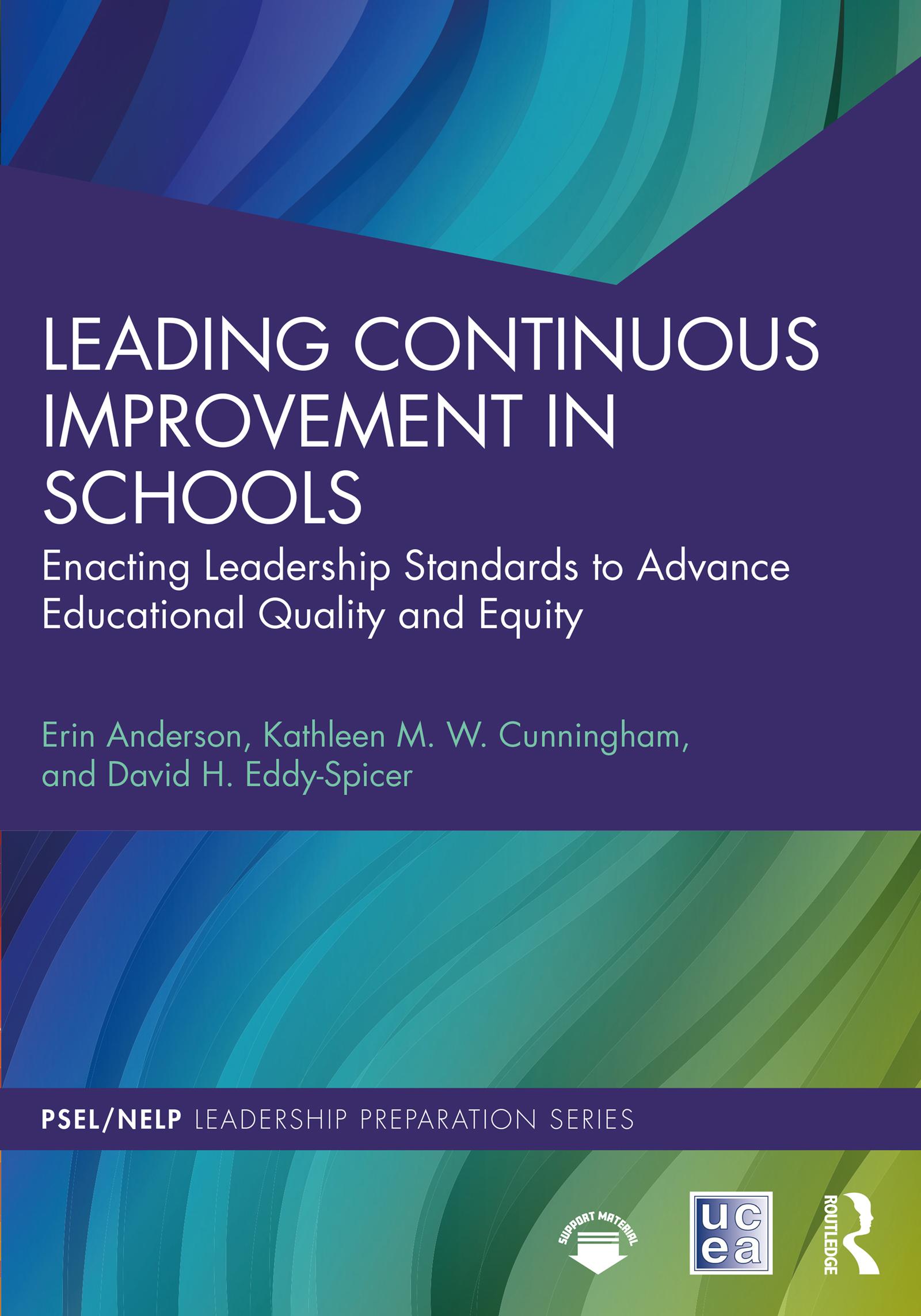
This volume provides a set of principles and systematic methods for improvement to help district and school leaders achieve the continuous improvement goals embedded in the Professional Standard for Educational Leadership (PSEL) and the National Educational Leadership Program (NELP) standards. Bringing the PSEL Standard 10 to life, this book tackles the why, how, and what of continuous improvement through an equity lens.
In the first section, Leading Continuous Improvement in Schools provides an overall introduction to and rationale for continuous improvement, situating current approaches to continuous improvement, situating current approaches to continuous improvement in education within broader historical and sectoral contexts. The second section highlights how the tenets of improvement science – such as making iterative, incremental, evidence-based advancements; utilizing practical measurements; and acknowledging variability – position school and system leaders to adaptively integrate systematic and evidence-based approaches to change as part of ongoing organizational processes. The book concludes with a section that invites readers to consider leadership approaches that forward improvement work, how leaders can build internal capacity to engage in improvement, and how policy can support efforts to build and sustain the capacity for continuous improvement. Special features include beginning-of-chapter highlights, end-of-chapter connections to standards, and action inventories through each chapter. Overall, the volume provides a focus on the continuous improvement aspects of the NELP and PSEL standards that serves as a bridge, supporting students preparing to become educational leaders in their journey from learning about continuous improvement to learning how to lead continuous, equity-oriented improvement work in their own contexts.
Before Memmo my notes were scattered across PDFs. Now a workspace pulls everything into one place — I see exactly what's still left to study.
Memmo's summaries are gold before exams. I don't have to re-read 800 pages two weeks before — just the important parts.
The AI chat has saved me the night before an exam more than once. I just keep asking until I get it — no waiting on a study group to reply.
The quizzes hit exactly what I need to know. Memmo tracks what I get stuck on — so I only practice what's worth it.
Flashcards with spaced repetition are magic. Memmo knows when I'm about to forget something and brings it back.
The AI podcasts are my favorite. I listen on my way to school and get a recap without sitting at a computer.

Handbok i kvalitativa metoder
281 kr

Hållbar utveckling: en introduktion för ingenjörer och andra problemlösare
334 kr

Brymans Samhällsvetenskapliga metoder
390 kr

Projektledning
491 kr

Den orättvisa hälsan: om socioekonomiska skillnader i hälsa och livslängd
326 kr

Organizational Leadership
429 kr

Vetenskapsteori för nybörjare
196 kr

På väg mot läraryrket
172 kr

Det sociala livet i skolan: Socialpsykologiska perspektiv
253 kr

Betygsättningens didaktik
151 kr

Personality
402 kr

Studying Leadership
404 kr

Managing Innovation
477 kr

Introduktion till samhällsvetenskaplig metod
347 kr

The Psychology of Sex and Gender
698 kr

Evidens och kunskap för socialt arbete
207 kr

Introduction to Leadership
605 kr