
Before Memmo my notes were scattered across PDFs. Now a workspace pulls everything into one place — I see exactly what's still left to study.
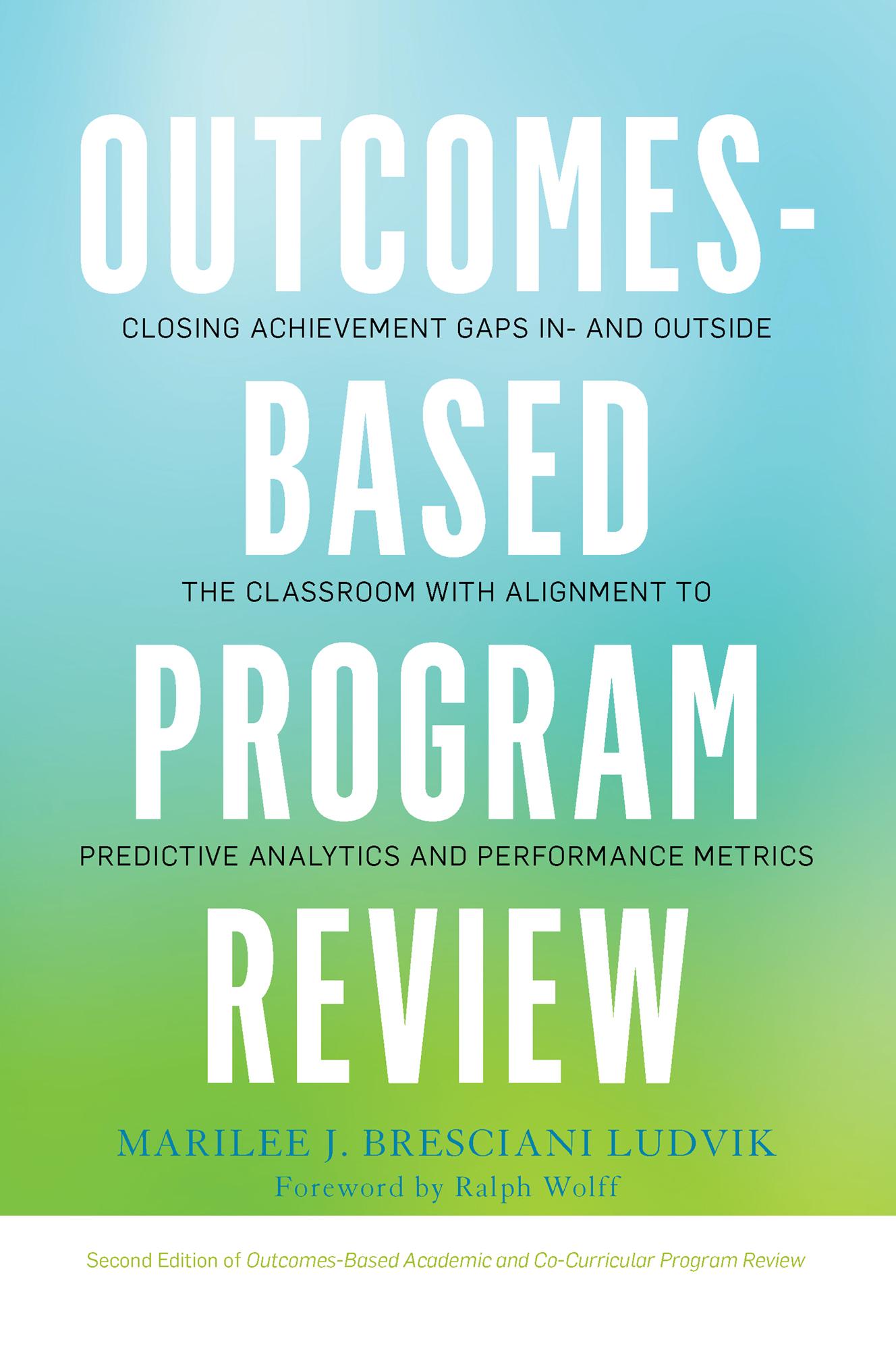
Second EditionThis book introduces the reader to the principles of assessment of student learning outcomes in the context of program review, and illustrates how to implement a sustainable outcomes-based assessment program review process based on over 30 case studies of exemplary practice across a range of institutional types.Since publication of the first edition just over a decade ago, the landscape of higher education has been transformed. With the emergence of competency-based education, the questioning of the value of a post-secondary degree, the explosion of neuroscientific research, the emphasis on metacognition, as well as demographic changes in who is going to college and why, new questions are being asked and new methods of collecting data have multiplied. This new edition retains the goals of the first--which is to inform institutional self-reflection of how well the organization is achieving its intended purpose--in a manner that is reflective, adaptive, and collaborative, but which recognizes today’s changed environment.Among the new topics Marilee J. Bresciani Ludvik introduces in this edition is how to appropriately connect outcomes-based program review (OBPR) to performance indicators and predictive analytics and develop meaningful new performance metrics to inform our understanding of the student experience. She also addresses the intersection of OBPR with competency-based assessment, introduces the reader to new concepts and terminology, and demonstrates the implications of neuroscientific research for learning and development and how that influences OBPR design. All the cases, a signature feature of the first edition to illustrate best practice, have been replaced for this edition.Bresciani Ludvik postulates the importance of developing institutions as learning organizations where OBPR is designed collaboratively between student services, academic services, business services professionals, and faculty.Each chapter concludes with key learning points as well as questions for organizational leadership to promote ongoing professional development as institutions implement OBPR practices that are appropriate for their specific contexts.
Before Memmo my notes were scattered across PDFs. Now a workspace pulls everything into one place — I see exactly what's still left to study.
Memmo's summaries are gold before exams. I don't have to re-read 800 pages two weeks before — just the important parts.
The AI chat has saved me the night before an exam more than once. I just keep asking until I get it — no waiting on a study group to reply.
The quizzes hit exactly what I need to know. Memmo tracks what I get stuck on — so I only practice what's worth it.
Flashcards with spaced repetition are magic. Memmo knows when I'm about to forget something and brings it back.
The AI podcasts are my favorite. I listen on my way to school and get a recap without sitting at a computer.

Handbok i kvalitativa metoder
281 kr

Hållbar utveckling: en introduktion för ingenjörer och andra problemlösare
334 kr

Brymans Samhällsvetenskapliga metoder
390 kr

Projektledning
491 kr

Den orättvisa hälsan: om socioekonomiska skillnader i hälsa och livslängd
326 kr

Organizational Leadership
429 kr

Vetenskapsteori för nybörjare
196 kr

På väg mot läraryrket
172 kr

Det sociala livet i skolan: Socialpsykologiska perspektiv
253 kr

Betygsättningens didaktik
151 kr

Personality
402 kr

Studying Leadership
404 kr

Managing Innovation
477 kr

Introduktion till samhällsvetenskaplig metod
347 kr

The Psychology of Sex and Gender
698 kr

Evidens och kunskap för socialt arbete
207 kr

Introduction to Leadership
605 kr