
Before Memmo my notes were scattered across PDFs. Now a workspace pulls everything into one place — I see exactly what's still left to study.
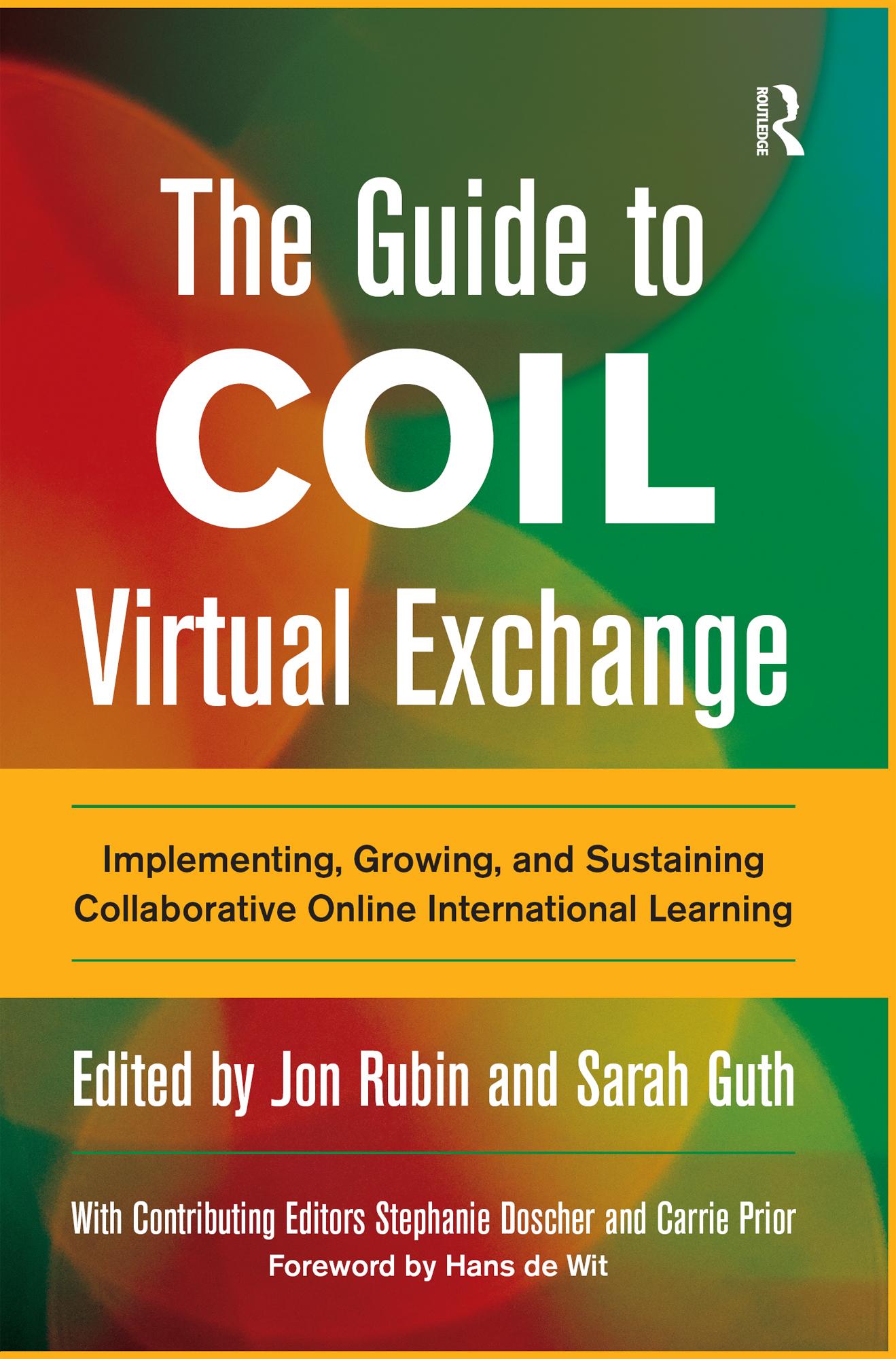
This is the authoritative guide to implementing COIL Virtual Exchange, conceived, and co-edited by one of the originators of this innovative approach to internationalization, Jon Rubin. COIL, the acronym for Collaborative Online International Learning, is a central modality of what has come to be known as virtual exchange. Since its first iteration in 2002, it has gradually established itself as a mature pedagogy that is being increasingly implemented across the world and is validated by a growing body of research. COIL Virtual Exchange at its most essential is a bi-lateral online exchange involving the integration of existing courses across two, or sometimes more, institutions that are geographically and/or culturally distinct. To launch a COIL VE course, the instructor of a class at a higher education institution in one location links online with a professor and his or her class in another region or country. Together, their students engage and develop joint projects, usually over a continuous five to eight-week period. Compared to the limited number of students worldwide who can engage in study abroad, COIL VE potentially opens up more equitable and inclusive participation in international education and intercultural experiences to all students, involves them in rigorous disciplinary and interdisciplinary studies, and promotes close and constructive engagement with students with different cultural perspectives.While many COIL courses are launched by individual instructors, based on their research connections and online outreach, they are being increasingly supported and led by dedicated COIL Coordinators who facilitate virtual exchanges and provide professional development. This comprehensive guide covers COIL VE pedagogy, provides examples of what takes place in the COIL classroom, and explores what instructors and staff need to know to facilitate and support a variety of COIL courses across the curriculum. It addresses how institutional stakeholders, especially those in leadership positions, can develop and embed a successful COIL initiative at their institution. It offers varied perspectives of COIL viewed from different institutional and cultural vantage points -- from research universities, community and technical colleges, and university systems -- and describes how COIL VE is developing in five different world regions, presenting eleven case studies.The book concludes with a guide to thirteen global organizations that support COIL and other forms of VE. Additionally, the book provides links to the COIL Connect for Virtual Exchange website (https://coilconnect.org) which includes an updated directory of organizations, an expanding database of faculty and institutions participating in COIL and looking for partners, course templates, survey data, and case studies.This book offers faculty and administrators across the world -- whether formally involved in international education, in service-learning and community engagement, or wanting to incorporate a cross-cultural perspective in their disciplinary courses -- theoretical foundations, guidance on effective collaboration, and the strategic and pedagogical considerations to develop robust COIL VE courses and programs.
Before Memmo my notes were scattered across PDFs. Now a workspace pulls everything into one place — I see exactly what's still left to study.
Memmo's summaries are gold before exams. I don't have to re-read 800 pages two weeks before — just the important parts.
The AI chat has saved me the night before an exam more than once. I just keep asking until I get it — no waiting on a study group to reply.
The quizzes hit exactly what I need to know. Memmo tracks what I get stuck on — so I only practice what's worth it.
Flashcards with spaced repetition are magic. Memmo knows when I'm about to forget something and brings it back.
The AI podcasts are my favorite. I listen on my way to school and get a recap without sitting at a computer.

Handbok i kvalitativa metoder
281 kr

Hållbar utveckling: en introduktion för ingenjörer och andra problemlösare
334 kr

Brymans Samhällsvetenskapliga metoder
390 kr

Projektledning
491 kr

Den orättvisa hälsan: om socioekonomiska skillnader i hälsa och livslängd
326 kr

Organizational Leadership
429 kr

Vetenskapsteori för nybörjare
196 kr

På väg mot läraryrket
172 kr

Det sociala livet i skolan: Socialpsykologiska perspektiv
253 kr

Betygsättningens didaktik
151 kr

Personality
402 kr

Studying Leadership
404 kr

Managing Innovation
477 kr

Introduktion till samhällsvetenskaplig metod
347 kr

The Psychology of Sex and Gender
698 kr

Evidens och kunskap för socialt arbete
207 kr

Introduction to Leadership
605 kr