
Before Memmo my notes were scattered across PDFs. Now a workspace pulls everything into one place — I see exactly what's still left to study.
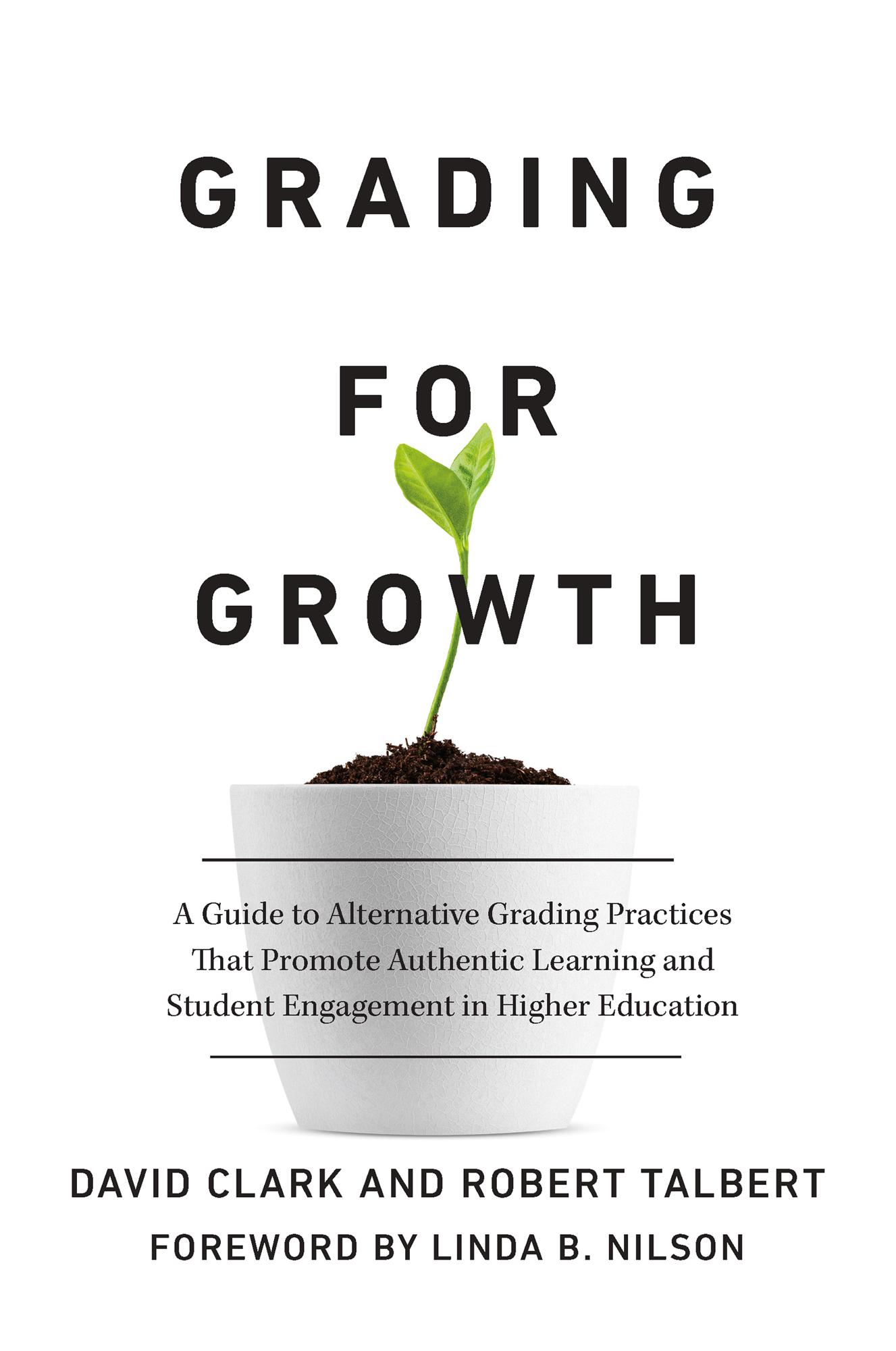
Are you satisfied with your current and traditional grading system? Does it accurately reflect your students’ learning and progress? Can it be gamed? Does it lead to grade-grubbing and friction with your students?The authors of this book – two professors of mathematics with input from colleagues across disciplines and institutions – offer readers a fundamentally more effective and authentic approach to grading that they have implemented for over a decade.
Recognizing that traditional grading penalizes students in the learning process by depriving them of the formative feedback that is fundamental to improvement, the authors offer alternative strategies that encourage revision and growth.Alternative grading is concerned with students’ eventual level of understanding. This leads to big changes: Students take time to review past failures and learn from them. Conversations shift from “why did I lose a point for this” to productive discussions of content and process.Alternative grading can be used successfully at any level, in any situation, and any discipline, in classes that range from seminars to large multi-section lectures. This book offers a comprehensive introduction to alternative grading, beginning with a framework and rationale for implementation and evidence of its effectiveness. The heart of the book includes detailed examples – including variations on Standards-Based Grading, Specifications Grading, and ungrading -- of how alternative grading practices are used in all kinds of classroom environments, disciplines and institutions with a focus on first-hand accounts by faculty who share their practices and experience. The book includes a workbook chapter that takes readers through a step-by-step process for building a prototype of their own alternatively graded class and ends with concrete, practical, time-tested advice for new practitioners.
The underlying principles of alternative grading involve·Evaluating student work using clearly defined and context-appropriate content standards.·Giving students helpful, actionable feedback.·Summarizing the feedback with marks that indicate progress rather than arbitrary numbers.·Allowing students to revise without penalty, using the feedback they receive, until the standards are met or exceeded.
This book is intended for faculty interested in exploring alternative forms of learning assessment as well as those currently using alternative grading systems who are looking for ideas and options to refine practice.
Before Memmo my notes were scattered across PDFs. Now a workspace pulls everything into one place — I see exactly what's still left to study.
Memmo's summaries are gold before exams. I don't have to re-read 800 pages two weeks before — just the important parts.
The AI chat has saved me the night before an exam more than once. I just keep asking until I get it — no waiting on a study group to reply.
The quizzes hit exactly what I need to know. Memmo tracks what I get stuck on — so I only practice what's worth it.
Flashcards with spaced repetition are magic. Memmo knows when I'm about to forget something and brings it back.
The AI podcasts are my favorite. I listen on my way to school and get a recap without sitting at a computer.

Handbok i kvalitativa metoder
281 kr

Hållbar utveckling: en introduktion för ingenjörer och andra problemlösare
334 kr

Brymans Samhällsvetenskapliga metoder
390 kr

Projektledning
491 kr

Den orättvisa hälsan: om socioekonomiska skillnader i hälsa och livslängd
326 kr

Vetenskapsteori för nybörjare
196 kr

Organizational Leadership
429 kr

På väg mot läraryrket
172 kr

Det sociala livet i skolan: Socialpsykologiska perspektiv
253 kr

Betygsättningens didaktik
151 kr

Personality
402 kr

Studying Leadership
404 kr

Managing Innovation
477 kr

Introduktion till samhällsvetenskaplig metod
347 kr

The Psychology of Sex and Gender
698 kr

Evidens och kunskap för socialt arbete
207 kr

Introduction to Leadership
605 kr