
Before Memmo my notes were scattered across PDFs. Now a workspace pulls everything into one place — I see exactly what's still left to study.
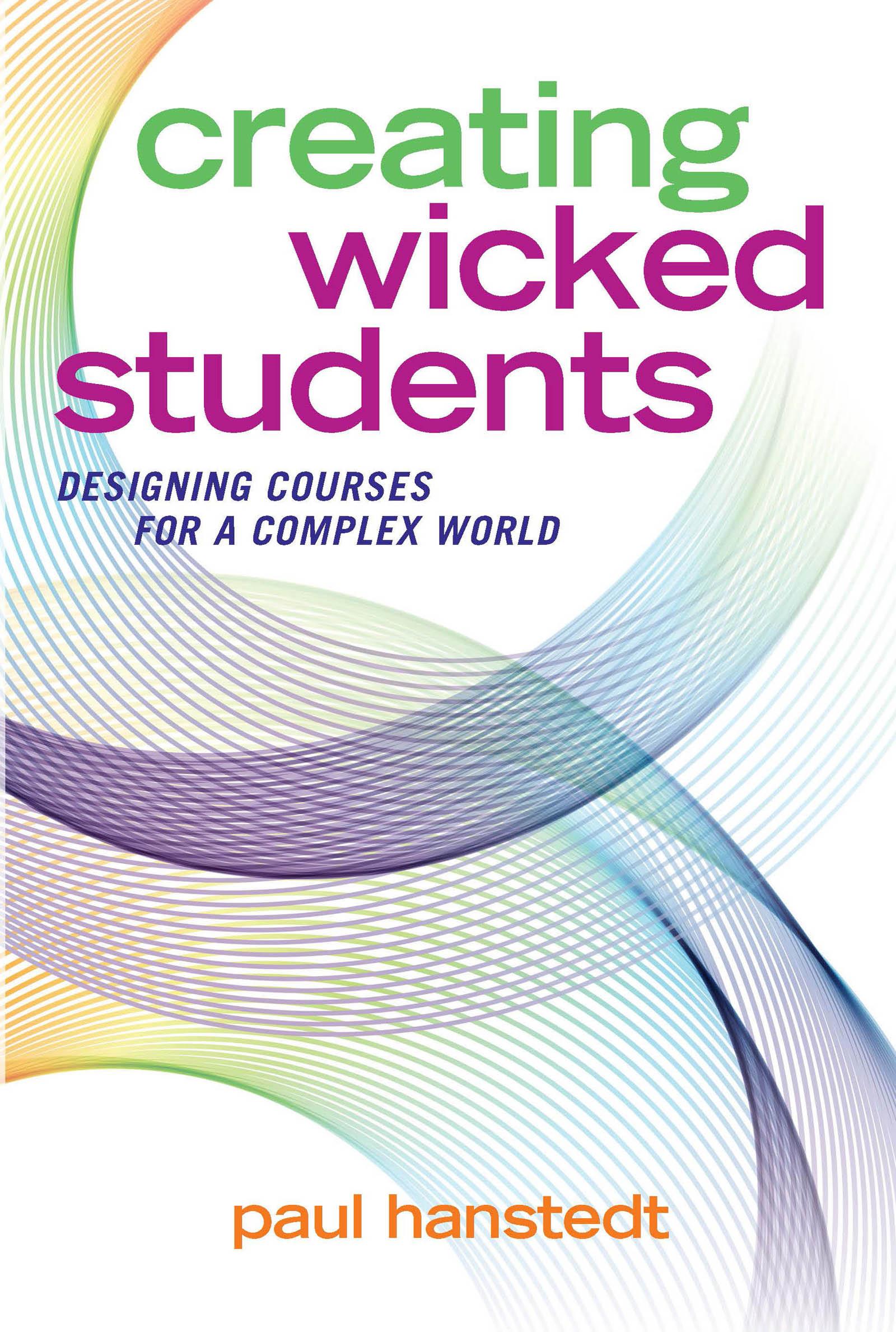
In Creating Wicked Students, Paul Hanstedt argues that courses can and should be designed to present students with what are known as “wicked problems” because the skills of dealing with such knotty problems are what will best prepare them for life after college. As the author puts it, “this book begins with the assumption that what we all want for our students is that they be capable of changing the world….When a student leaves college, we want them to enter the world not as drones participating mindlessly in activities to which they’ve been appointed, but as thinking, deliberative beings who add something to society.”There’s a lot of talk in education these days about “wicked problems”—problems that defy traditional expectations or knowledge, problems that evolve over time: Zika, ISIS, political discourse in the era of social media. To prepare students for such wicked problems, they need to have wicked competencies, the ability to respond easily and on the fly to complex challenges. Unfortunately, a traditional education that focuses on content and skills often fails to achieve this sense of wickedness. Students memorize for the test, prepare for the paper, practice the various algorithms over and over again—but when the parameters or dynamics of the test or the paper or the equation change, students are often at a loss for how to adjust.This is a course design book centered on the idea that the goal in the college classroom—in all classrooms, all the time—is to develop students who are not just loaded with content, but capable of using that content in thoughtful, deliberate ways to make the world a better place. Achieving this goal requires a top-to-bottom reconsideration of courses, including student learning goals, text selection and course structure, day-to-day pedagogies, and assignment and project design. Creating Wicked Students takes readers through each step of the process, providing multiple examples at each stage, while always encouraging instructors to consider concepts and exercises in light of their own courses and students.
Before Memmo my notes were scattered across PDFs. Now a workspace pulls everything into one place — I see exactly what's still left to study.
Memmo's summaries are gold before exams. I don't have to re-read 800 pages two weeks before — just the important parts.
The AI chat has saved me the night before an exam more than once. I just keep asking until I get it — no waiting on a study group to reply.
The quizzes hit exactly what I need to know. Memmo tracks what I get stuck on — so I only practice what's worth it.
Flashcards with spaced repetition are magic. Memmo knows when I'm about to forget something and brings it back.
The AI podcasts are my favorite. I listen on my way to school and get a recap without sitting at a computer.

Handbok i kvalitativa metoder
281 kr

Hållbar utveckling: en introduktion för ingenjörer och andra problemlösare
334 kr

Brymans Samhällsvetenskapliga metoder
390 kr

Projektledning
491 kr

Den orättvisa hälsan: om socioekonomiska skillnader i hälsa och livslängd
326 kr

Organizational Leadership
429 kr

Vetenskapsteori för nybörjare
196 kr

På väg mot läraryrket
172 kr

Det sociala livet i skolan: Socialpsykologiska perspektiv
253 kr

Betygsättningens didaktik
151 kr

Personality
402 kr

Studying Leadership
404 kr

Managing Innovation
477 kr

Introduktion till samhällsvetenskaplig metod
347 kr

The Psychology of Sex and Gender
698 kr

Evidens och kunskap för socialt arbete
207 kr

Introduction to Leadership
605 kr