
Before Memmo my notes were scattered across PDFs. Now a workspace pulls everything into one place — I see exactly what's still left to study.
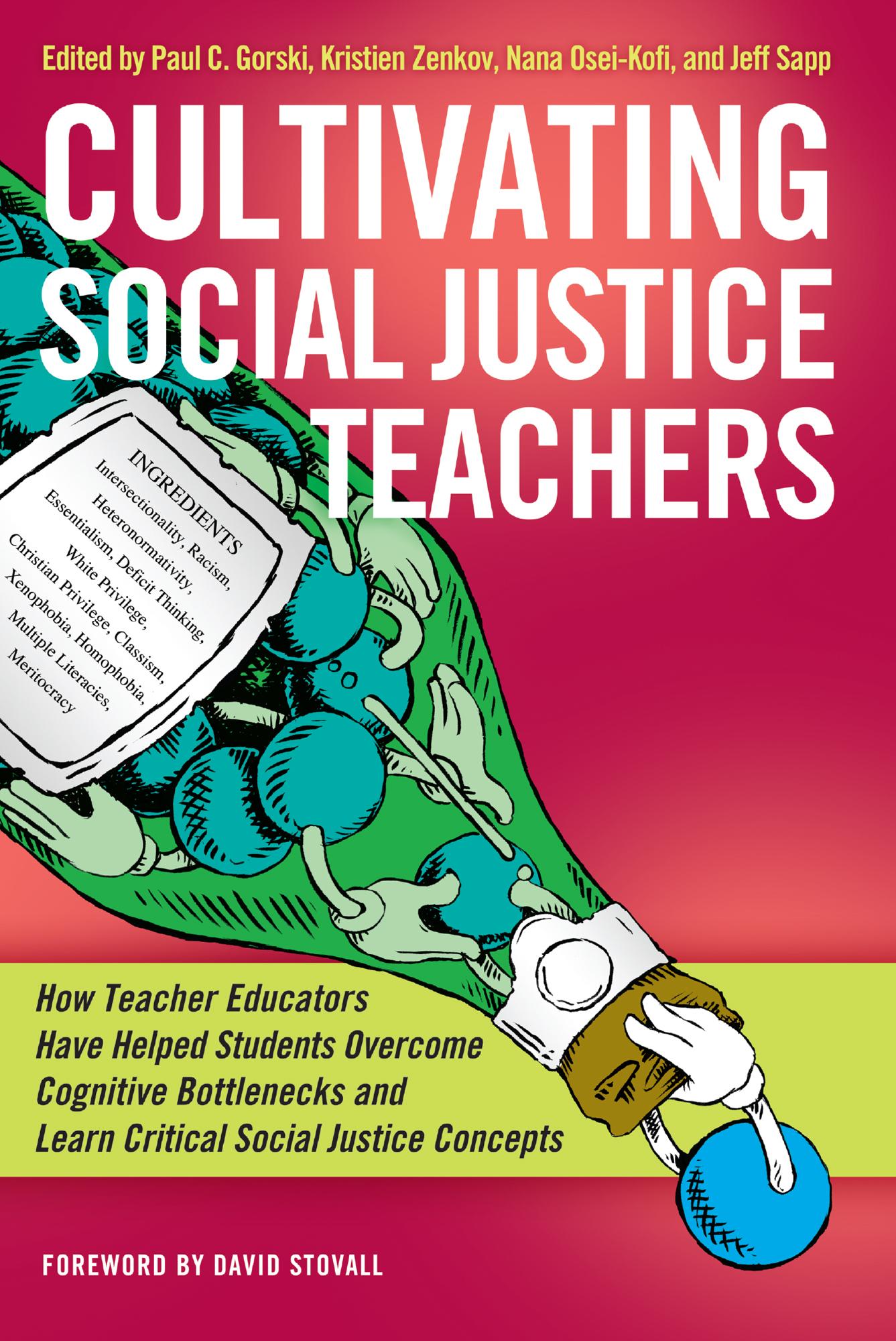
Frustrated by the challenge of opening teacher education students to a genuine understanding of the social justice concepts vital for creating an equitable learning environment?Do your students ever resist accepting that lesbian, gay, bisexual, transgender, or queer people experience bias or oppression, or that their experiences even belong in a conversation about “diversity,” “multiculturalism,” or “social justice?”Recognizing these are common experiences for teacher educators, the contributors to this book present their struggles and achievements in developing approaches that have successfully guided students to complex understandings of such threshold concepts as White privilege, homophobia, and heteronormativity, overcoming the “bottlenecks” that impede progress toward bigger learning goals and understandings. The authors initiate a conversation – one largely absent in the social justice education literature and the discourse – about the common content- and pedagogy-related challenges that social justice educators face in their work, particularly for those doing this work in relative or literal isolation, where collegial understanding cannot be found down the hall or around the corner. In doing so they hope not only to help individual teachers in their practice, but also strengthen social justice teacher education more systemically. Each contributor identifies a learning bottleneck related to one or two specific threshold concepts that they have struggled to help their students learn. Each chapter is a narrative about individual efforts toward sometimes profound pedagogical adjustment, about ambiguity and cognitive dissonance and resistance, about trial and error, and about how these educators found ways to facilitate foundational social justice learning among a diversity of education students. Although this is not intended to be a “how-to” manual, or to provide five easy steps to enable straight students to “get” heteronormativity, each chapter does describe practical strategies that teachers might adapt as part of their own practice.
Before Memmo my notes were scattered across PDFs. Now a workspace pulls everything into one place — I see exactly what's still left to study.
Memmo's summaries are gold before exams. I don't have to re-read 800 pages two weeks before — just the important parts.
The AI chat has saved me the night before an exam more than once. I just keep asking until I get it — no waiting on a study group to reply.
The quizzes hit exactly what I need to know. Memmo tracks what I get stuck on — so I only practice what's worth it.
Flashcards with spaced repetition are magic. Memmo knows when I'm about to forget something and brings it back.
The AI podcasts are my favorite. I listen on my way to school and get a recap without sitting at a computer.

Handbok i kvalitativa metoder
281 kr

Hållbar utveckling: en introduktion för ingenjörer och andra problemlösare
334 kr

Brymans Samhällsvetenskapliga metoder
390 kr

Projektledning
491 kr

Den orättvisa hälsan: om socioekonomiska skillnader i hälsa och livslängd
326 kr

Vetenskapsteori för nybörjare
196 kr

Organizational Leadership
429 kr

På väg mot läraryrket
172 kr

Det sociala livet i skolan: Socialpsykologiska perspektiv
253 kr

Betygsättningens didaktik
151 kr

Personality
402 kr

Studying Leadership
404 kr

Managing Innovation
477 kr

Introduktion till samhällsvetenskaplig metod
347 kr

The Psychology of Sex and Gender
698 kr

Evidens och kunskap för socialt arbete
207 kr

Introduction to Leadership
605 kr