
Before Memmo my notes were scattered across PDFs. Now a workspace pulls everything into one place — I see exactly what's still left to study.
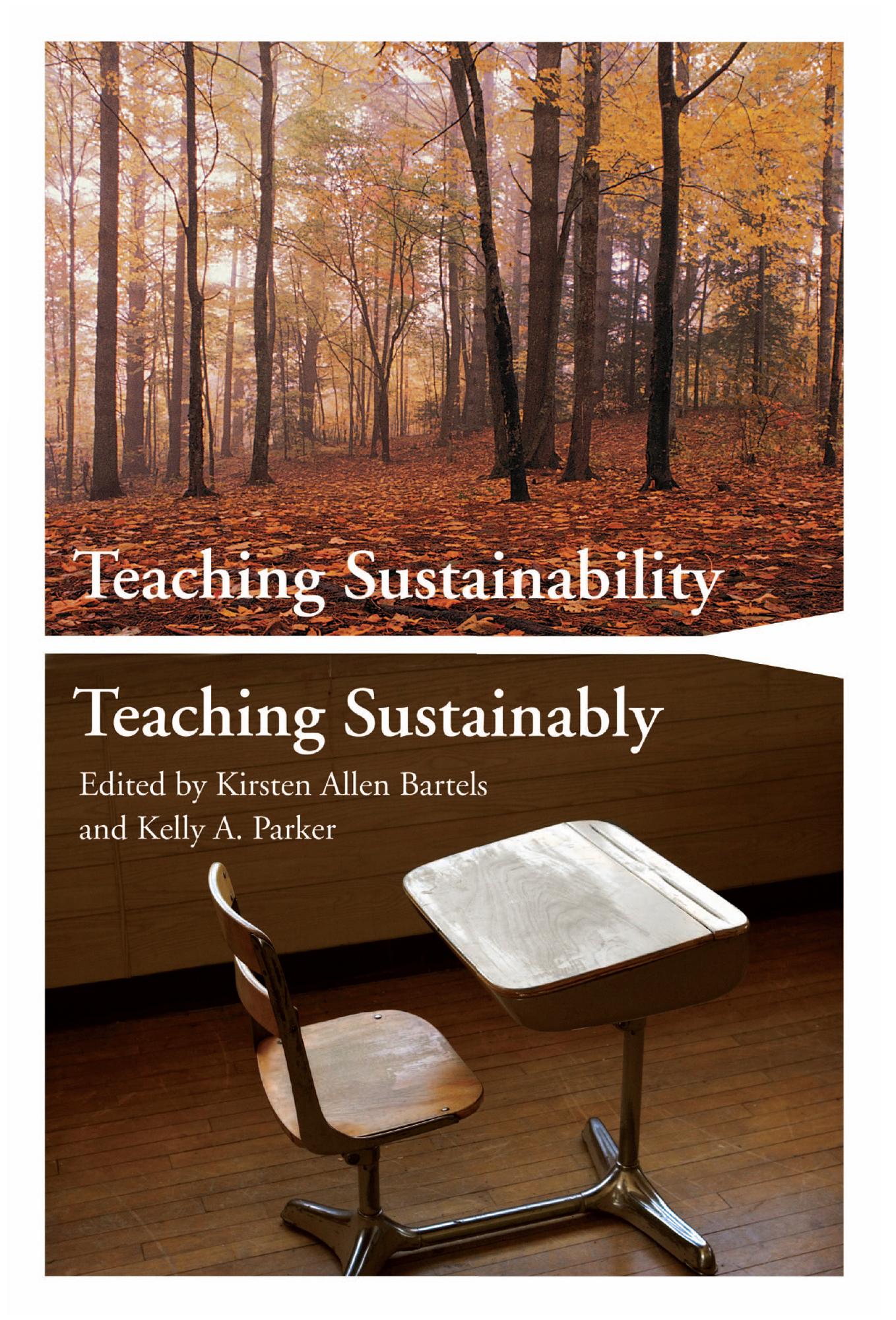
Over the coming decades, every academic discipline will have to respond to the paradigm of more sustainable life practices because students will be living in a world challenged by competition for resources and climate change, and will demand that every academic discipline demonstrate substantial and corresponding relevance.This book takes as its point of departure that integrating a component of sustainability into a discipline-specific course arises from an educator asking a simple question: in the coming decades, as humanity faces unprecedented challenges, what can my discipline or area of research contribute toward a better understanding of these issues? The discipline need not be future-oriented: an archaeologist, for instance, could incorporate into a course some aspects of sustainable archaeological practices in areas threatened by rapid climate change, as well as examples of sustainable or unsustainable ways of living practiced by members of the long-gone society under investigation. This book also argues that courses about sustainability need to cross disciplinary boundaries, both because of the inter-relatedness of the issues, and because students will require the ability to use interdisciplinary approaches to thrive through the multiple careers most of them will face.The contributions to this book are presented under four sections. “Sustainability as a Core Value in Education” considers the rationale for incorporating sustainability in disciplinary courses. “Teaching Sustainability in the Academic Disciplines” presents eight examples of courses from disciplines as varied as agriculture, composition, engineering, and teacher education. “Education as a Sustainable Practice” reviews how the physical environment of the classroom and the delivery of instruction need themselves to reflect the values being taught. The final section addresses the issues of leadership and long-term institutional change needed to embed sustainable practice as a core value on campus.
Before Memmo my notes were scattered across PDFs. Now a workspace pulls everything into one place — I see exactly what's still left to study.
Memmo's summaries are gold before exams. I don't have to re-read 800 pages two weeks before — just the important parts.
The AI chat has saved me the night before an exam more than once. I just keep asking until I get it — no waiting on a study group to reply.
The quizzes hit exactly what I need to know. Memmo tracks what I get stuck on — so I only practice what's worth it.
Flashcards with spaced repetition are magic. Memmo knows when I'm about to forget something and brings it back.
The AI podcasts are my favorite. I listen on my way to school and get a recap without sitting at a computer.

Handbok i kvalitativa metoder
281 kr

Hållbar utveckling: en introduktion för ingenjörer och andra problemlösare
334 kr

Brymans Samhällsvetenskapliga metoder
390 kr

Projektledning
491 kr

Den orättvisa hälsan: om socioekonomiska skillnader i hälsa och livslängd
326 kr

Vetenskapsteori för nybörjare
196 kr

Organizational Leadership
429 kr

På väg mot läraryrket
172 kr

Det sociala livet i skolan: Socialpsykologiska perspektiv
253 kr

Betygsättningens didaktik
151 kr

Personality
402 kr

Studying Leadership
404 kr

Managing Innovation
477 kr

Introduktion till samhällsvetenskaplig metod
347 kr

The Psychology of Sex and Gender
698 kr

Evidens och kunskap för socialt arbete
207 kr

Introduction to Leadership
605 kr