
Before Memmo my notes were scattered across PDFs. Now a workspace pulls everything into one place — I see exactly what's still left to study.
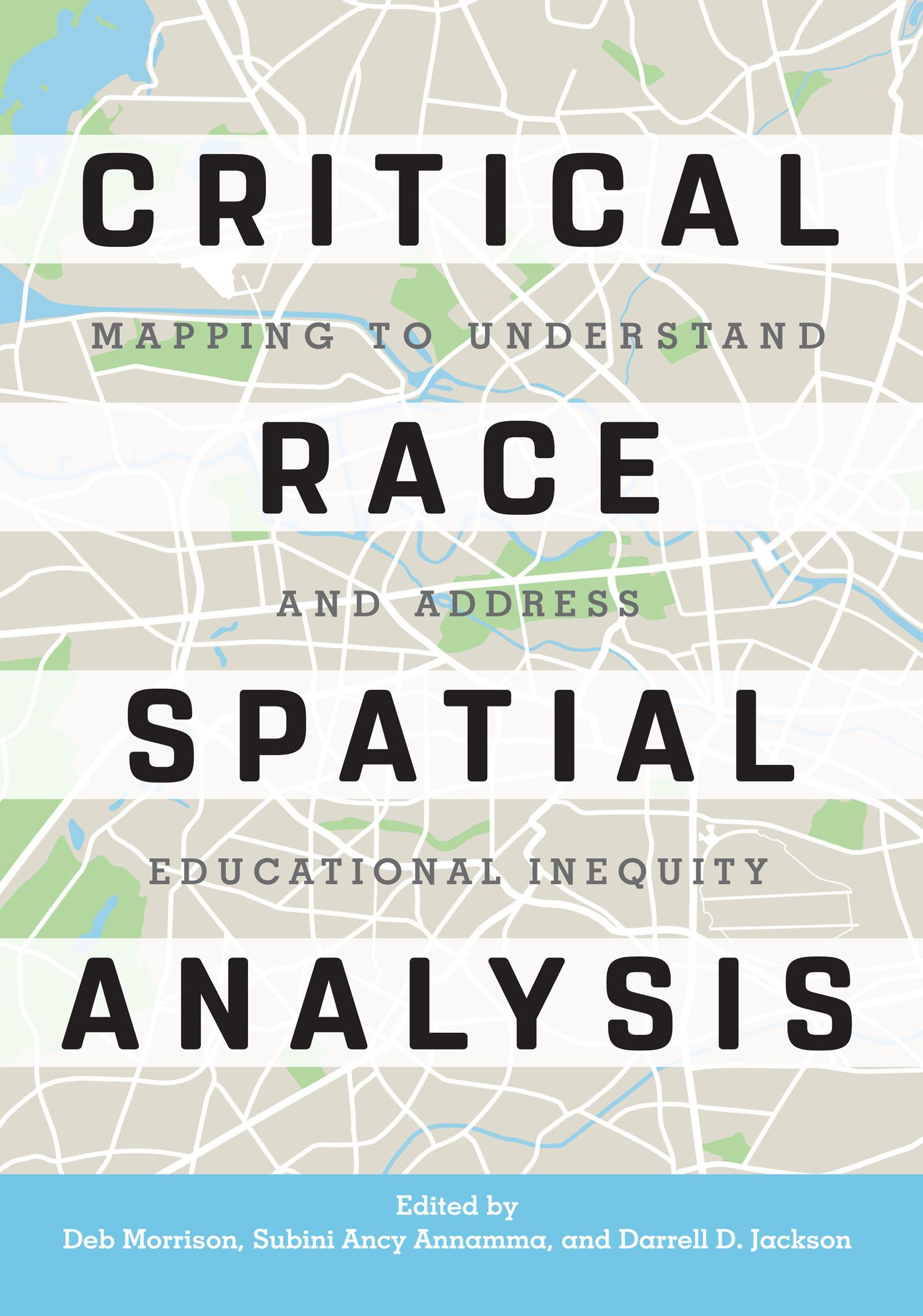
How does space illuminate educational inequity?Where and how can spatial analysis be used to disrupt educational inequity?Which tools are most appropriate for the spatial analysis of educational equity?This book addresses these questions and explores the use of critical spatial analysis to uncover the dimensions of entrenched and systemic racial inequities in educational settings and identify ways to redress them. The contributors to this book – some of whom are pioneering scholars of critical race spatial analysis theory and methodology – demonstrate the application of the theory and tools applied to specific locales, and in doing so illustrate how this spatial and temporal lens enriches traditional approaches to research. The opening macro-theoretical chapter lays the foundation for the book, rooting spatial analyses in critical commitments to studying injustice. Among the innovative methodological chapters included in this book is the re-conceptualization of mapping and space beyond the simple exploration of external spaces to considering internal geographies, highlighting how the privileged may differ in socio-spatial thinking from oppressed communities and what may be learned from both perspectives; data representations that allow the construction of varied narratives based on differences in positionality and historicity of perspectives; the application of redlining to the analysis of classroom interactions; the use of historical archives to uncover the process of marginalization; and the application of techniques such as the fotonovela and GIS to identify how spaces are defined and can be reimagined.The book demonstrates the analytical and communicative power of mapping and its potential for identifying and dismantling racial injustice in education. The editors conclude by drawing connections across sections, and elucidating the tensions and possibilities for future research.ContributorsBenjamin BlaisdellGraham S. GarlickLeigh Anna HidalgoMark C. HogrebeJoshua RadinskyDaniel G. SolórzanoWilliam F. TateVerónica N. VélezFederico R. Waitoller
Before Memmo my notes were scattered across PDFs. Now a workspace pulls everything into one place — I see exactly what's still left to study.
Memmo's summaries are gold before exams. I don't have to re-read 800 pages two weeks before — just the important parts.
The AI chat has saved me the night before an exam more than once. I just keep asking until I get it — no waiting on a study group to reply.
The quizzes hit exactly what I need to know. Memmo tracks what I get stuck on — so I only practice what's worth it.
Flashcards with spaced repetition are magic. Memmo knows when I'm about to forget something and brings it back.
The AI podcasts are my favorite. I listen on my way to school and get a recap without sitting at a computer.

Handbok i kvalitativa metoder
281 kr

Hållbar utveckling: en introduktion för ingenjörer och andra problemlösare
334 kr

Brymans Samhällsvetenskapliga metoder
390 kr

Projektledning
491 kr

Den orättvisa hälsan: om socioekonomiska skillnader i hälsa och livslängd
326 kr

Organizational Leadership
429 kr

Vetenskapsteori för nybörjare
196 kr

På väg mot läraryrket
172 kr

Det sociala livet i skolan: Socialpsykologiska perspektiv
253 kr

Betygsättningens didaktik
151 kr

Personality
402 kr

Studying Leadership
404 kr

Managing Innovation
477 kr

Introduktion till samhällsvetenskaplig metod
347 kr

The Psychology of Sex and Gender
698 kr

Evidens och kunskap för socialt arbete
207 kr

Introduction to Leadership
605 kr