
Before Memmo my notes were scattered across PDFs. Now a workspace pulls everything into one place — I see exactly what's still left to study.
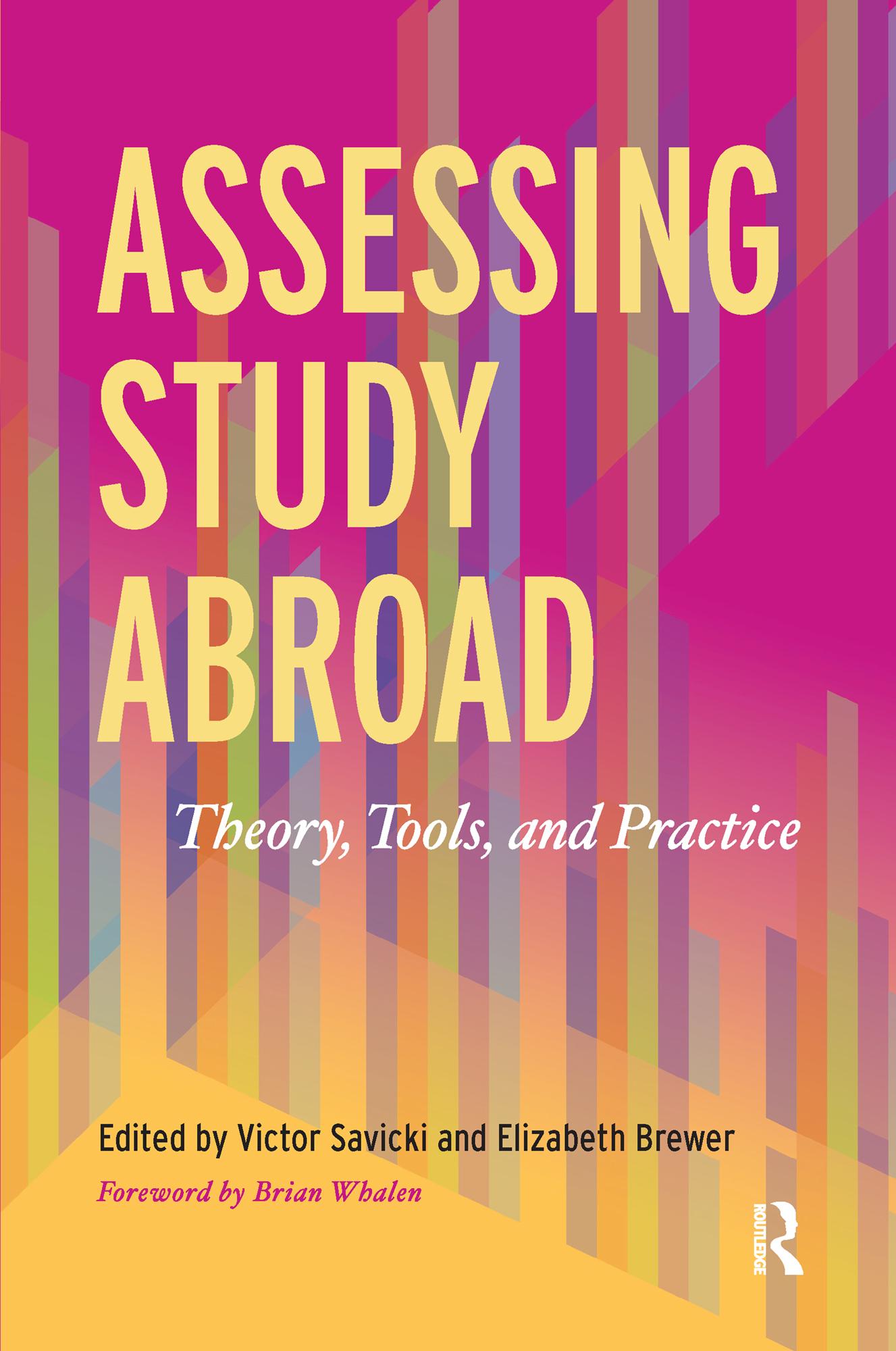
This book is intended to guide advisors, administrators, and faculty members engaged with study abroad who are concerned with answering the question: what does study abroad achieve? It will also inform the work of study abroad organizations as well as institutions receiving study abroad students. Offering a broad-based approach to assessment, the book will appeal to those starting out. However, an array of case studies, illustrating the often untidy process of implementation, will equally appeal to those further along by offering creative – and often simple – approaches to common problems. Following an account of how, and why, assessment in the field has evolved, the first part of the book sets the stage for the reader to consider the role of mission and context in determining purpose, goals and outcomes; to identify and consult with stakeholders; determine what data and expertise may already be available on campus; match methods and tools to questions; and create realistic plans to communicate findings, and to act upon them. The second part of the book offers an overview of appropriate tools and strategies for assessing study abroad, emphasizing the importance of carefully formulating and prioritizing assessment questions and understanding the advantages and drawbacks of different instruments. It describes an array of qualitative, quantitative, and mixed methods, illustrating their application with examples of practice, and concludes by outlining the process of putting a plan into action.The book concludes with ten case studies that illustrate various approaches to planning, experimentation, and implementation, some revealing false starts and lessons learned, and all conveying the message that assessment is an iterative, on-going process that needs constant refinement. The cases represent a wide variety of institutional and organizational types and demonstrate how each selected methods suited to their capacities and cultures.
Before Memmo my notes were scattered across PDFs. Now a workspace pulls everything into one place — I see exactly what's still left to study.
Memmo's summaries are gold before exams. I don't have to re-read 800 pages two weeks before — just the important parts.
The AI chat has saved me the night before an exam more than once. I just keep asking until I get it — no waiting on a study group to reply.
The quizzes hit exactly what I need to know. Memmo tracks what I get stuck on — so I only practice what's worth it.
Flashcards with spaced repetition are magic. Memmo knows when I'm about to forget something and brings it back.
The AI podcasts are my favorite. I listen on my way to school and get a recap without sitting at a computer.

Handbok i kvalitativa metoder
281 kr

Hållbar utveckling: en introduktion för ingenjörer och andra problemlösare
334 kr

Brymans Samhällsvetenskapliga metoder
390 kr

Projektledning
491 kr

Den orättvisa hälsan: om socioekonomiska skillnader i hälsa och livslängd
326 kr

Organizational Leadership
429 kr

Vetenskapsteori för nybörjare
196 kr

På väg mot läraryrket
172 kr

Det sociala livet i skolan: Socialpsykologiska perspektiv
253 kr

Betygsättningens didaktik
151 kr

Personality
402 kr

Studying Leadership
404 kr

Managing Innovation
477 kr

Introduktion till samhällsvetenskaplig metod
347 kr

The Psychology of Sex and Gender
698 kr

Evidens och kunskap för socialt arbete
207 kr

Introduction to Leadership
605 kr