
Before Memmo my notes were scattered across PDFs. Now a workspace pulls everything into one place — I see exactly what's still left to study.
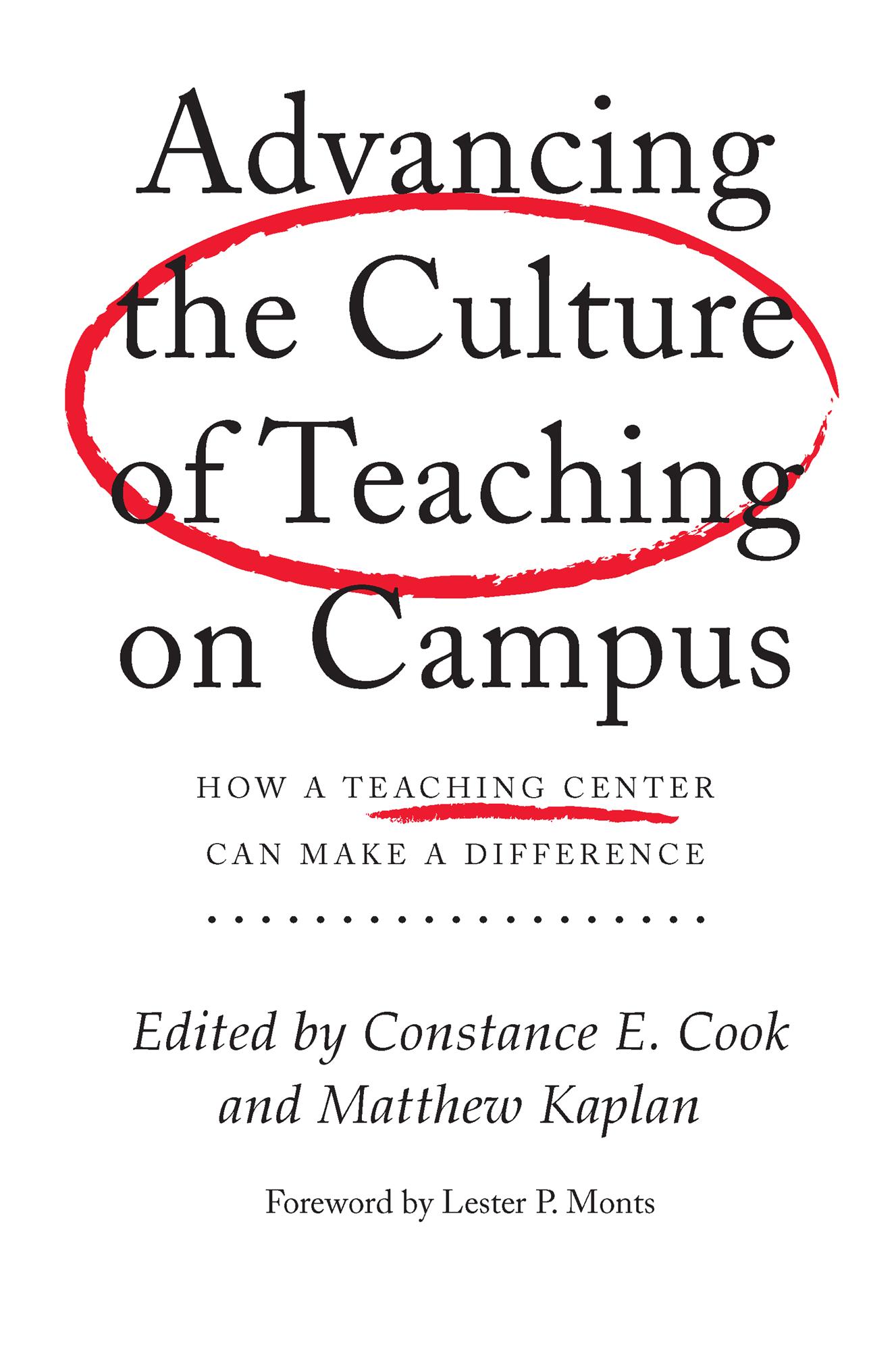
Written by the director and staff of the first, and one of the largest, teaching centers in American higher education – the University of Michigan’s Center for Research on Learning and Teaching (CRLT) – this book offers a unique perspective on the strategies for making a teaching center integral to an institution’s educational mission. It presents a comprehensive vision for running a wide range of related programs, and provides faculty developers elsewhere with ideas and material to prompt reflection on the management and practices of their centers – whatever their size – and on how best to create a culture of teaching on their campuses. Given that only about a fifth of all U.S. postsecondary institutions have a teaching center, this book also offers a wealth of ideas and models for those administrators who are considering the development of new centers on their campuses.Topics covered include:• The role of the director, budgetary strategies, and operational principles• Strategies for using evaluation to enhance and grow a teaching center• Relationships with center constituencies: faculty, provost, deans, and department chairs• Engagement with curricular reform and assessment• Strengthening diversity through faculty development• Engaging faculty in effective use of instructional technology• Using student feedback for instructional improvement• Using action research to improve teaching and learning• Incorporating role play and theatre in faculty development• Developing graduate students as consultants• Preparing future faculty for teaching• The challenges of faculty development at a research universityIn the concluding chapter, to provide additional context about the issues that teaching centers face today, twenty experienced center directors who operate in similar environments share their main challenges, and the strategies they have developed to overcome them through innovative programming and careful management of their resources. Their contributions fall into four broad categories: institutional-level challenges, engaging faculty and students and supporting engaged pedagogy, discipline-specific programming, and programming to address specific instructor career stages.
Before Memmo my notes were scattered across PDFs. Now a workspace pulls everything into one place — I see exactly what's still left to study.
Memmo's summaries are gold before exams. I don't have to re-read 800 pages two weeks before — just the important parts.
The AI chat has saved me the night before an exam more than once. I just keep asking until I get it — no waiting on a study group to reply.
The quizzes hit exactly what I need to know. Memmo tracks what I get stuck on — so I only practice what's worth it.
Flashcards with spaced repetition are magic. Memmo knows when I'm about to forget something and brings it back.
The AI podcasts are my favorite. I listen on my way to school and get a recap without sitting at a computer.

Handbok i kvalitativa metoder
281 kr

Hållbar utveckling: en introduktion för ingenjörer och andra problemlösare
334 kr

Brymans Samhällsvetenskapliga metoder
390 kr

Projektledning
491 kr

Den orättvisa hälsan: om socioekonomiska skillnader i hälsa och livslängd
326 kr

Vetenskapsteori för nybörjare
196 kr

Organizational Leadership
429 kr

På väg mot läraryrket
172 kr

Det sociala livet i skolan: Socialpsykologiska perspektiv
253 kr

Betygsättningens didaktik
151 kr

Personality
402 kr

Studying Leadership
404 kr

Managing Innovation
477 kr

Introduktion till samhällsvetenskaplig metod
347 kr

The Psychology of Sex and Gender
698 kr

Evidens och kunskap för socialt arbete
207 kr

Introduction to Leadership
605 kr