
Before Memmo my notes were scattered across PDFs. Now a workspace pulls everything into one place — I see exactly what's still left to study.
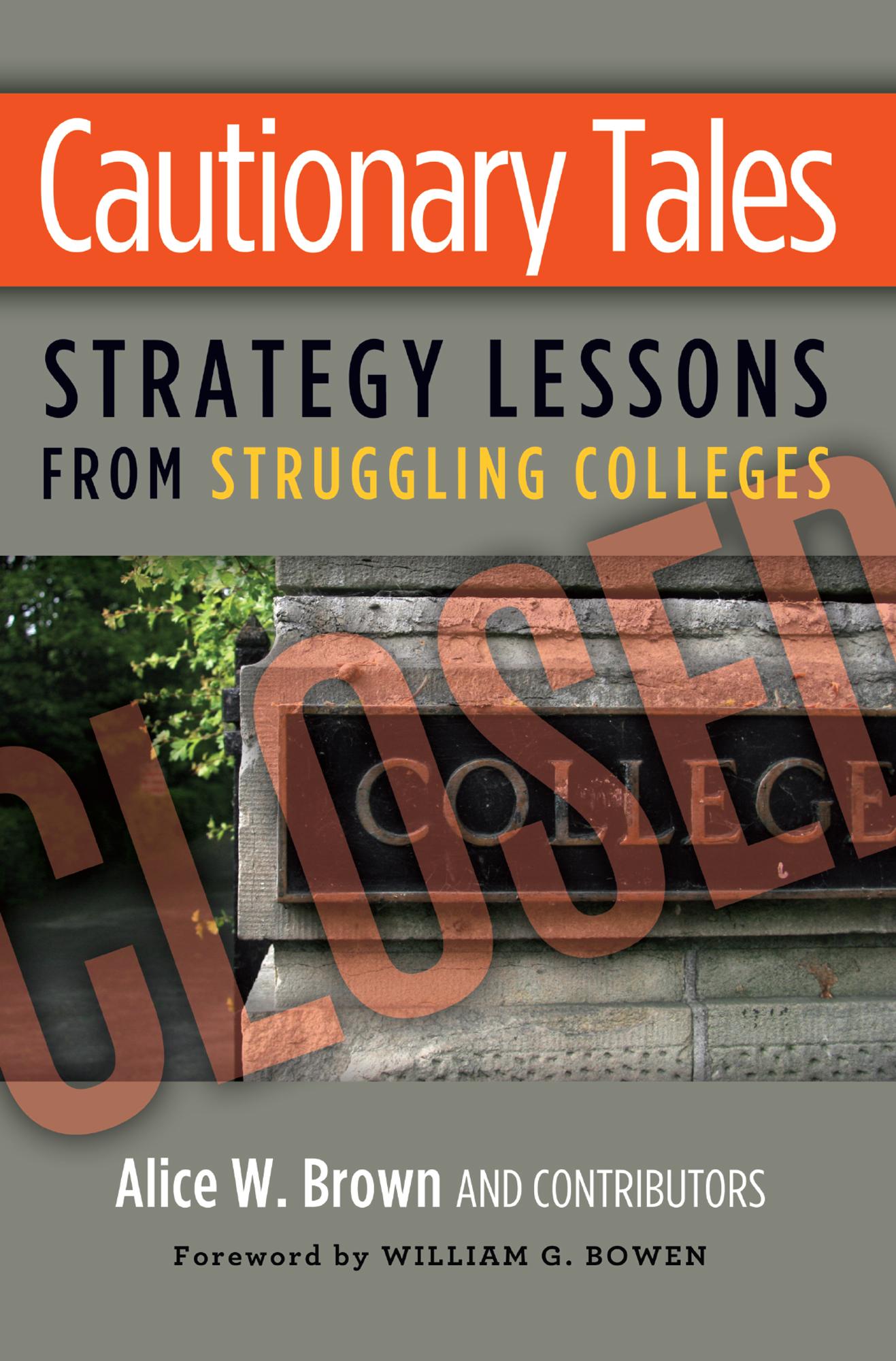
Scarcely a week goes by without a headline about the unsustainability of higher education as we know it, under threat from new models, for-profits, or online education. Most threatened are small liberal arts colleges – with commentators predicting the demise of colleges with fewer than 1,000, or even 1,500 students. Are these trends inevitable, or can they be overcome?Through a unique case study approach to examining and analyzing colleges that have struggled, Alice Brown reveals the steps that can lead to a sustainable operation and, when closure is inevitable, the steps to do so with orderliness and dignity. Rather than expounding on trends, or management theory and prescriptions, Brown focuses on narrative examples of survival and closure, recounted by real people in actual colleges, and reports the lessons they learned. Here are examples of strategies involving mergers, partnerships, or “going it alone”, and their outcomes, that illustrate principles that can serve as guides for fragile colleges struggling to address their social and economic challenges.Added to Brown’s six carefully researched and extended case studies, her own insights and analyses of decisions made and actions taken, this book offers guidance by seasoned scholars and administrators on issues as varied as leadership, the roles of the president, governing boards, faculty and staff, in articulating and implementing mission and strategies for survival, and on the changing landscape of higher education. The references to the literature on college survival strategies constitute an education in themselves.While this book is of immediate practical value for trustees and leaders of small colleges as they look toward and plan for the future and for anyone aspiring to an administrative positions in higher education, the examples constitute a microcosm of the interplay between the external constituencies, governance structures and internal forces that sustain or undermine institutional health, and which are hard to observe clearly in larger, more decentralized environments.
Before Memmo my notes were scattered across PDFs. Now a workspace pulls everything into one place — I see exactly what's still left to study.
Memmo's summaries are gold before exams. I don't have to re-read 800 pages two weeks before — just the important parts.
The AI chat has saved me the night before an exam more than once. I just keep asking until I get it — no waiting on a study group to reply.
The quizzes hit exactly what I need to know. Memmo tracks what I get stuck on — so I only practice what's worth it.
Flashcards with spaced repetition are magic. Memmo knows when I'm about to forget something and brings it back.
The AI podcasts are my favorite. I listen on my way to school and get a recap without sitting at a computer.

Handbok i kvalitativa metoder
281 kr

Hållbar utveckling: en introduktion för ingenjörer och andra problemlösare
334 kr

Brymans Samhällsvetenskapliga metoder
390 kr

Projektledning
491 kr

Den orättvisa hälsan: om socioekonomiska skillnader i hälsa och livslängd
326 kr

Organizational Leadership
429 kr

Vetenskapsteori för nybörjare
196 kr

På väg mot läraryrket
172 kr

Det sociala livet i skolan: Socialpsykologiska perspektiv
253 kr

Betygsättningens didaktik
151 kr

Personality
402 kr

Studying Leadership
404 kr

Managing Innovation
477 kr

Introduktion till samhällsvetenskaplig metod
347 kr

The Psychology of Sex and Gender
698 kr

Evidens och kunskap för socialt arbete
207 kr

Introduction to Leadership
605 kr