
Before Memmo my notes were scattered across PDFs. Now a workspace pulls everything into one place — I see exactly what's still left to study.
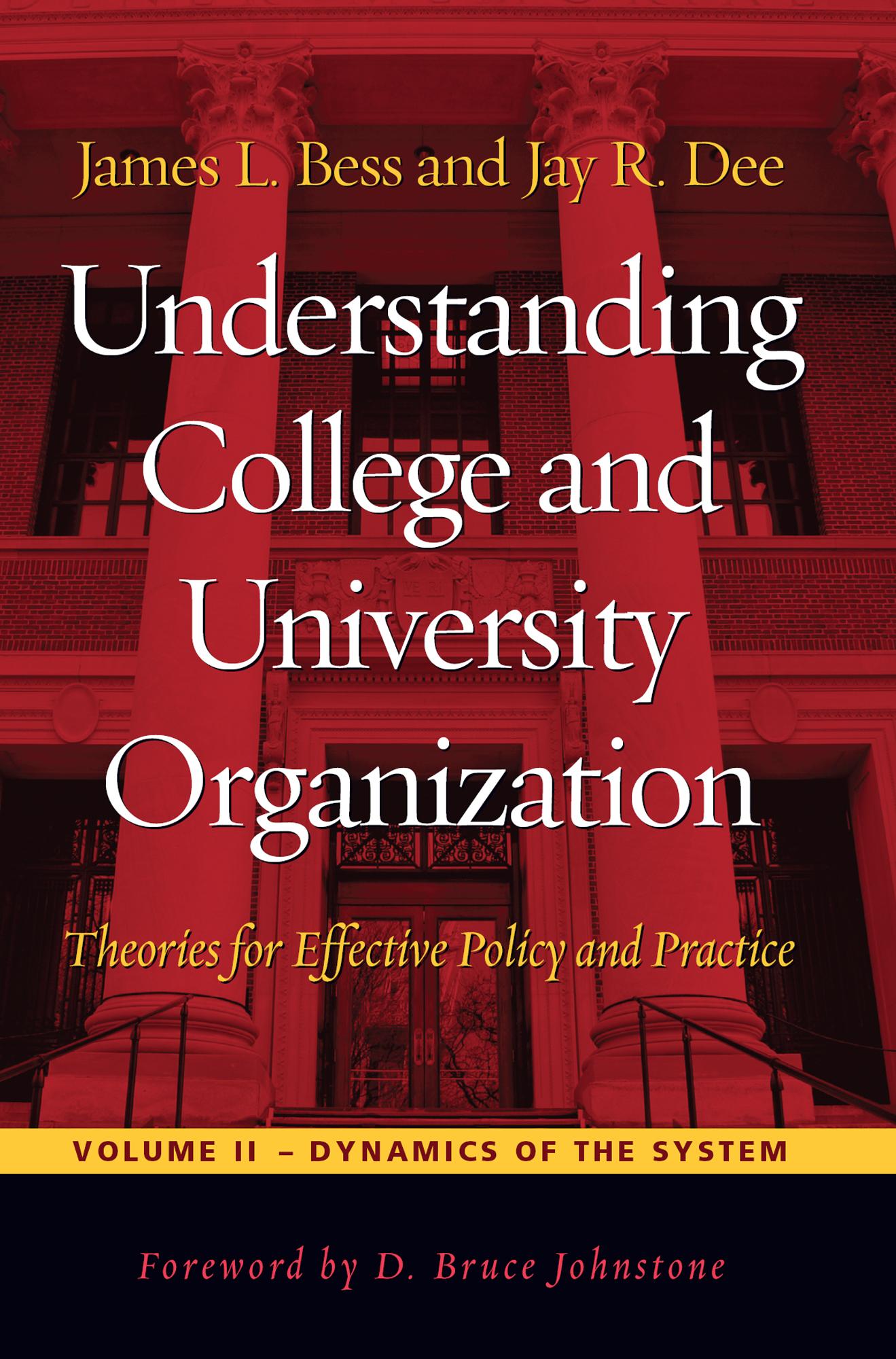
Now available in paperback, this two-volume work is intended to help readers develop powerful new ways of thinking about organizational principles, and apply them to policy-making and management in colleges and universities. The book is written with two audiences in mind: administrative and faculty leaders in institutions of higher learning, and students (both doctoral and Master's degree) studying to become upper-level administrators, leaders, and policy makers in higher education. It systematically presents a range of theories that can be applied to many of the difficult management situations that college and university leaders encounter. It provides them with the theoretical background to knowledgeably evaluate the many new ideas that emerge in the current literature, and in workshops and conferences. The purpose is to help leaders develop their own effective management style and approaches, and feel confident that their actions are informed by appropriate theory and knowledge of the latest research in the field. Without theory, organizational leaders are forced to treat each problem that they encounter as unique–as if it were a first-time occurrence. While leaders may have some experience with a particular issue, their solutions are usually not informed by the accumulated wisdom of others who have already encountered and resolved similar situations. The authors approach the theory of the organization and administration of colleges and universities from three quite different perspectives, or paradigms, each relying on different assumptions about the “reality” of organizational life in colleges and universities. The positivist paradigm–primarily an omnibus systems theory–integrates the chapters into a comprehensive, yet easily accessible whole. Social constructionism, the second paradigm, is introduced in each chapter to illuminate the difficulty of seeking and finding meaningful consensus on problems and policies, while also addressing important ethical issues that tend to be overlooked in leadership thought and action. The third paradigm, postmodernism, draws attention to difficulties of logic and communication under the constraints of strictly linear thinking that “authorities” at all levels attempt to impose on organizations. This “multiple paradigm” approach enables readers to become more cognizant of their own assumptions, how they may differ from those of others in their organization, and how those differences may both create difficulties in resolving problems and expand the range of alternatives considered in organizational decision making. The book offers readers the tools to balance the real-world needs to succeed in today’s challenging and competitive environment with the social and ethical aspirations of all its stakeholders and society at large. The authors’ aim is to elucidate how administration can be made more efficient and effective through rational decision-making while also respecting humanistic values. This approach highlights a range of phenomena that require attention if the institution is ultimately to be considered successful. Also available: Volume 1: The State of the System Two volume set
Before Memmo my notes were scattered across PDFs. Now a workspace pulls everything into one place — I see exactly what's still left to study.
Memmo's summaries are gold before exams. I don't have to re-read 800 pages two weeks before — just the important parts.
The AI chat has saved me the night before an exam more than once. I just keep asking until I get it — no waiting on a study group to reply.
The quizzes hit exactly what I need to know. Memmo tracks what I get stuck on — so I only practice what's worth it.
Flashcards with spaced repetition are magic. Memmo knows when I'm about to forget something and brings it back.
The AI podcasts are my favorite. I listen on my way to school and get a recap without sitting at a computer.

Handbok i kvalitativa metoder
281 kr

Hållbar utveckling: en introduktion för ingenjörer och andra problemlösare
334 kr

Brymans Samhällsvetenskapliga metoder
390 kr

Projektledning
491 kr

Den orättvisa hälsan: om socioekonomiska skillnader i hälsa och livslängd
326 kr

Organizational Leadership
429 kr

Vetenskapsteori för nybörjare
196 kr

På väg mot läraryrket
172 kr

Det sociala livet i skolan: Socialpsykologiska perspektiv
253 kr

Betygsättningens didaktik
151 kr

Personality
402 kr

Studying Leadership
404 kr

Managing Innovation
477 kr

Introduktion till samhällsvetenskaplig metod
347 kr

The Psychology of Sex and Gender
698 kr

Evidens och kunskap för socialt arbete
207 kr

Introduction to Leadership
605 kr