
Before Memmo my notes were scattered across PDFs. Now a workspace pulls everything into one place — I see exactly what's still left to study.
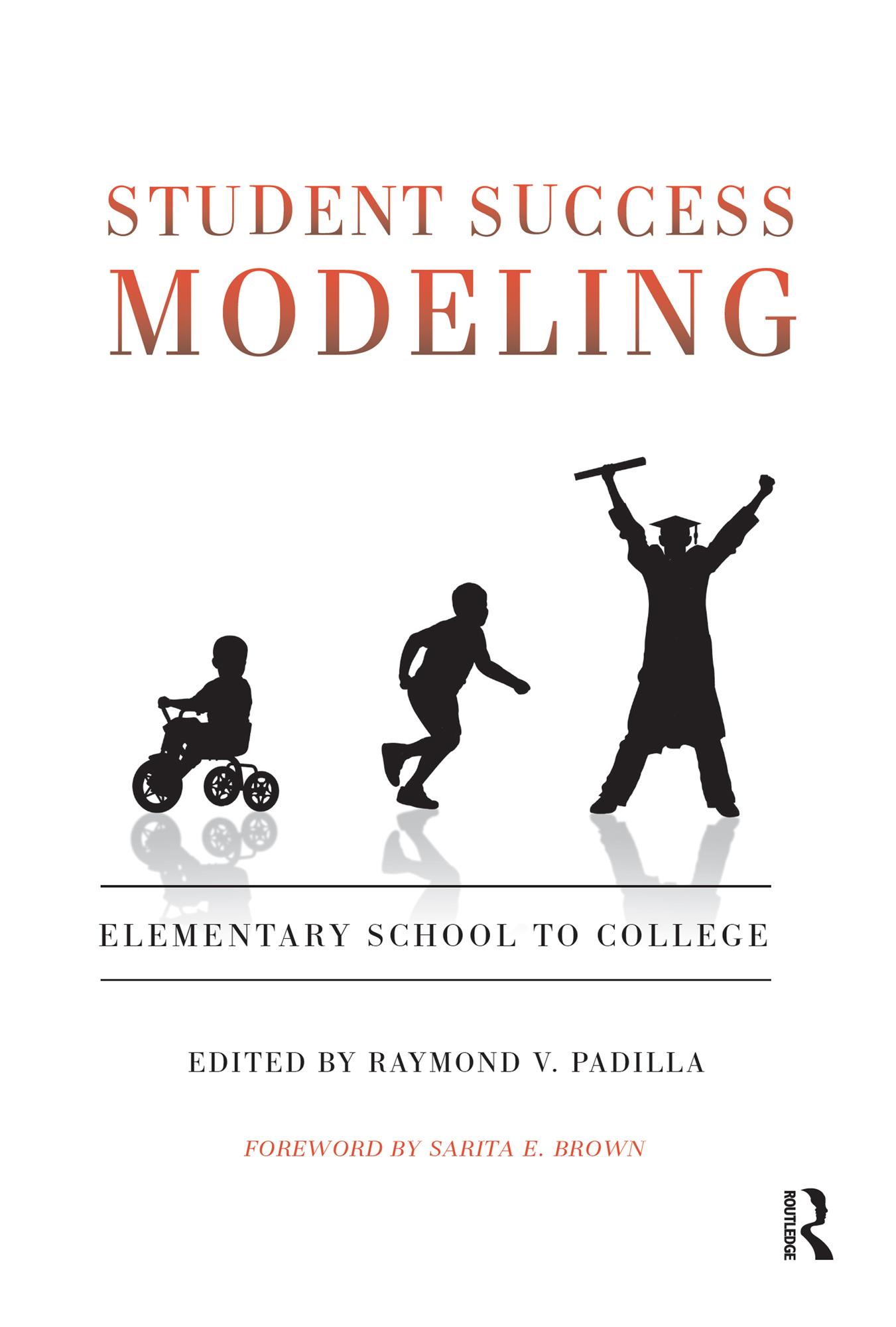
This book focuses on one of the key questions in education: What determines a student’s success?Based on twenty years of work on student success, Ray Padilla here presents two related models he has developed that both provide a framework for understanding success and indicate how it can be enhanced and replicated. The research and theory that inform his models are covered in detail.He defines student success simply as progress through a program of study, such that the student and others expect him or her to complete it and be promoted to the next level or graduate. Rather than focusing on the reasons for failure or drop out, his approach focuses on understanding the factors that account for student success and that enable many students, some of them under the most challenging circumstances, to complete all program requirements and graduate. The models provide schools and colleges with an analytical tool to uncover the reasons for student success so that they can develop strategies and practices that will enable more students to emulate their successful peers. They address the characteristics of the students—such as motivation and engagement, the ability to surmount barriers, and persistence—and similarly surface the characteristics of teachers, the educational institution, its resources, and the contexts in which they interact. The process provides administrators with a clear and appropriate strategy for action at the level of each individual unit or subpopulation. Recognizing the need to develop general models of student success that also can be applied locally to specific situations and contexts, the book presents Padilla’s Expertise Model of Student Success (EMSS) that can be applied to general populations, as well as the Local Student Success Model (LSSM) that can be used to drive local institutional strategies to improve student success.The book demonstrates how the models have been applied in settings as diverse as a minority high school, a community college, and an Hispanic Serving Institution, and for such purposes as comparing a high-performing and a non high-performing elementary school. Contributors:* Kimberly S. Barker is an assistant professor at Texas A&M University-Kingsville, System Center San Antonio. She is currently working in the College of Education, Department of Curriculum and Instruction.* Mary J. Miller is the Instructional Compliance Director for the Edgewood Independent School District in San Antonio, Texas. Prior to this appointment, she served as an elementary school principal for ten years.* George E. Norton is the Assistant Vice President of Student Affairs for Admissions, Orientation & Transition Services at The University of Texas at San Antonio.* Ralph Mario Wirth is an administrator and director of educational planning at The San Antonio School for Inquiry and Creativity, as well as lead researcher for the Democratic Schools Research Institute, Inc.
Before Memmo my notes were scattered across PDFs. Now a workspace pulls everything into one place — I see exactly what's still left to study.
Memmo's summaries are gold before exams. I don't have to re-read 800 pages two weeks before — just the important parts.
The AI chat has saved me the night before an exam more than once. I just keep asking until I get it — no waiting on a study group to reply.
The quizzes hit exactly what I need to know. Memmo tracks what I get stuck on — so I only practice what's worth it.
Flashcards with spaced repetition are magic. Memmo knows when I'm about to forget something and brings it back.
The AI podcasts are my favorite. I listen on my way to school and get a recap without sitting at a computer.

Handbok i kvalitativa metoder
281 kr

Hållbar utveckling: en introduktion för ingenjörer och andra problemlösare
334 kr

Brymans Samhällsvetenskapliga metoder
390 kr

Projektledning
491 kr

Den orättvisa hälsan: om socioekonomiska skillnader i hälsa och livslängd
326 kr

Organizational Leadership
429 kr

Vetenskapsteori för nybörjare
196 kr

På väg mot läraryrket
172 kr

Det sociala livet i skolan: Socialpsykologiska perspektiv
253 kr

Betygsättningens didaktik
151 kr

Personality
402 kr

Studying Leadership
404 kr

Managing Innovation
477 kr

Introduktion till samhällsvetenskaplig metod
347 kr

The Psychology of Sex and Gender
698 kr

Evidens och kunskap för socialt arbete
207 kr

Introduction to Leadership
605 kr