
Before Memmo my notes were scattered across PDFs. Now a workspace pulls everything into one place — I see exactly what's still left to study.
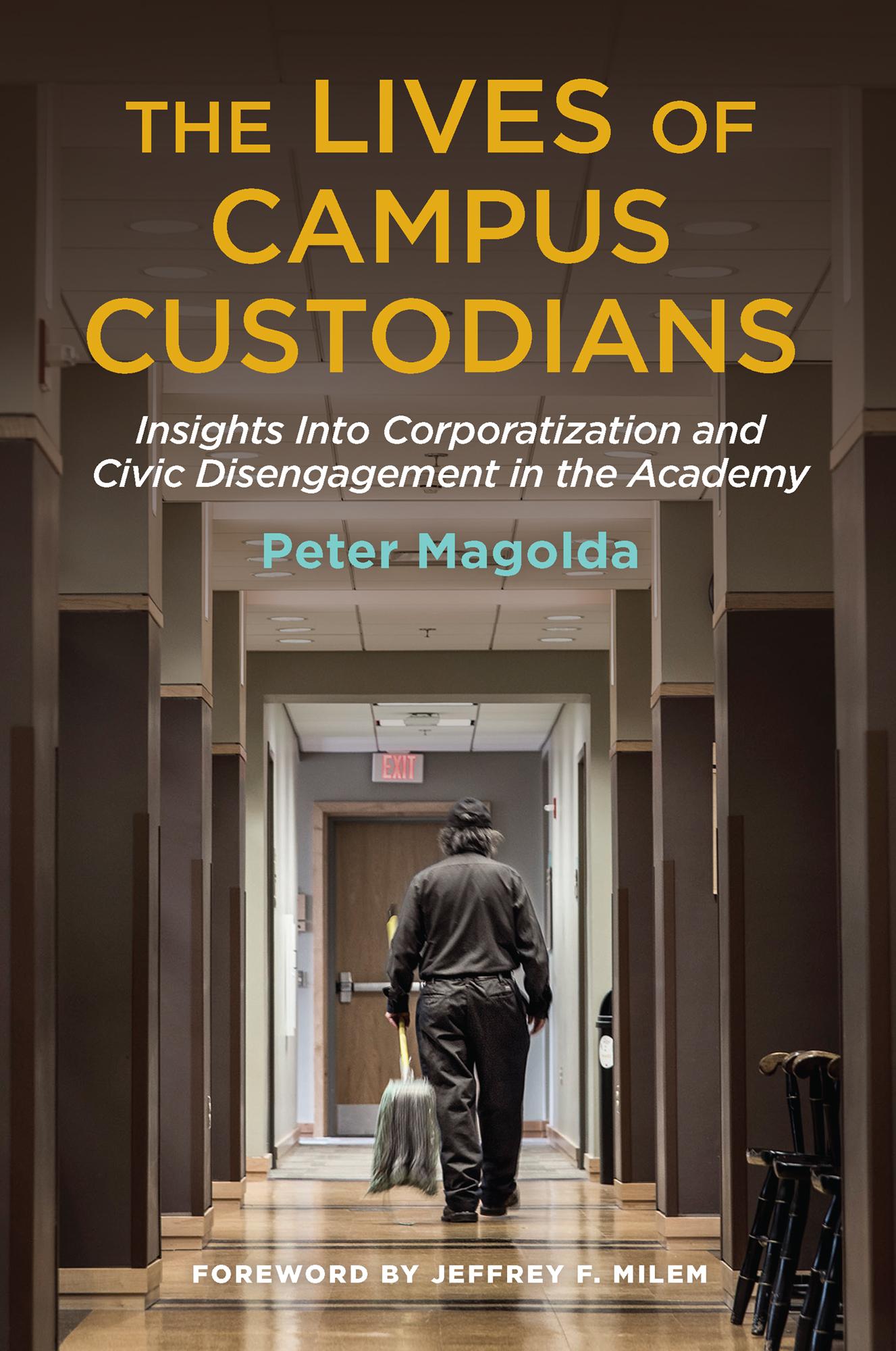
This unique study uncovers the lives and working conditions of a group of individuals who are usually rendered invisible on college campuses--the custodians who daily clean the offices, residence halls, bathrooms and public spaces. In doing so it also reveals universities’ equally invisible practices that frequently contradict their espoused values of inclusion and equity, and their profession that those on the margins are important members of the campus community.This vivid ethnography is the fruit of the year’s fieldwork that Peter Magolda’s undertook at two universities. His purpose was to shine a light on a subculture that neither decision-makers nor campus community members know very much about, let alone understand the motivations and aspirations of those who perform this work; and to pose fundamental questions about the moral implications of the corporatization of higher education and its impact on its lowest paid and most vulnerable employees.Working alongside and learning about the lives of over thirty janitorial staff, Peter Magolda becomes privy to acts of courage, resilience, and inspiration, as well as witness to their work ethic, and to instances of intolerance, inequity, and injustices. We learn the stories of remarkable people, and about their daily concerns, their fears and contributions.Peter Magolda raises such questions as: Does the academy still believe wisdom is exclusive to particular professions or classes of people? Are universities really inclusive? Is addressing service workers’ concerns part of the mission of higher education? If universities profess to value education, why make it difficult for those on the margins, such as custodians, to “get educated.”The book concludes with the research participants’ and the author’s reflections about ways that colleges can improve the lives of those whose underpaid and unremarked labor is so essential to the smooth running of their campuses.Appendices provide information about the research methodology and methods, as well as a discussion of the influence of corporate managerialism on ethnographic research.
Before Memmo my notes were scattered across PDFs. Now a workspace pulls everything into one place — I see exactly what's still left to study.
Memmo's summaries are gold before exams. I don't have to re-read 800 pages two weeks before — just the important parts.
The AI chat has saved me the night before an exam more than once. I just keep asking until I get it — no waiting on a study group to reply.
The quizzes hit exactly what I need to know. Memmo tracks what I get stuck on — so I only practice what's worth it.
Flashcards with spaced repetition are magic. Memmo knows when I'm about to forget something and brings it back.
The AI podcasts are my favorite. I listen on my way to school and get a recap without sitting at a computer.

Handbok i kvalitativa metoder
281 kr

Hållbar utveckling: en introduktion för ingenjörer och andra problemlösare
334 kr

Brymans Samhällsvetenskapliga metoder
390 kr

Projektledning
491 kr

Den orättvisa hälsan: om socioekonomiska skillnader i hälsa och livslängd
326 kr

Vetenskapsteori för nybörjare
196 kr

Organizational Leadership
429 kr

På väg mot läraryrket
172 kr

Det sociala livet i skolan: Socialpsykologiska perspektiv
253 kr

Betygsättningens didaktik
151 kr

Personality
402 kr

Studying Leadership
404 kr

Managing Innovation
477 kr

Introduktion till samhällsvetenskaplig metod
347 kr

The Psychology of Sex and Gender
698 kr

Evidens och kunskap för socialt arbete
207 kr

Introduction to Leadership
605 kr