
Before Memmo my notes were scattered across PDFs. Now a workspace pulls everything into one place — I see exactly what's still left to study.
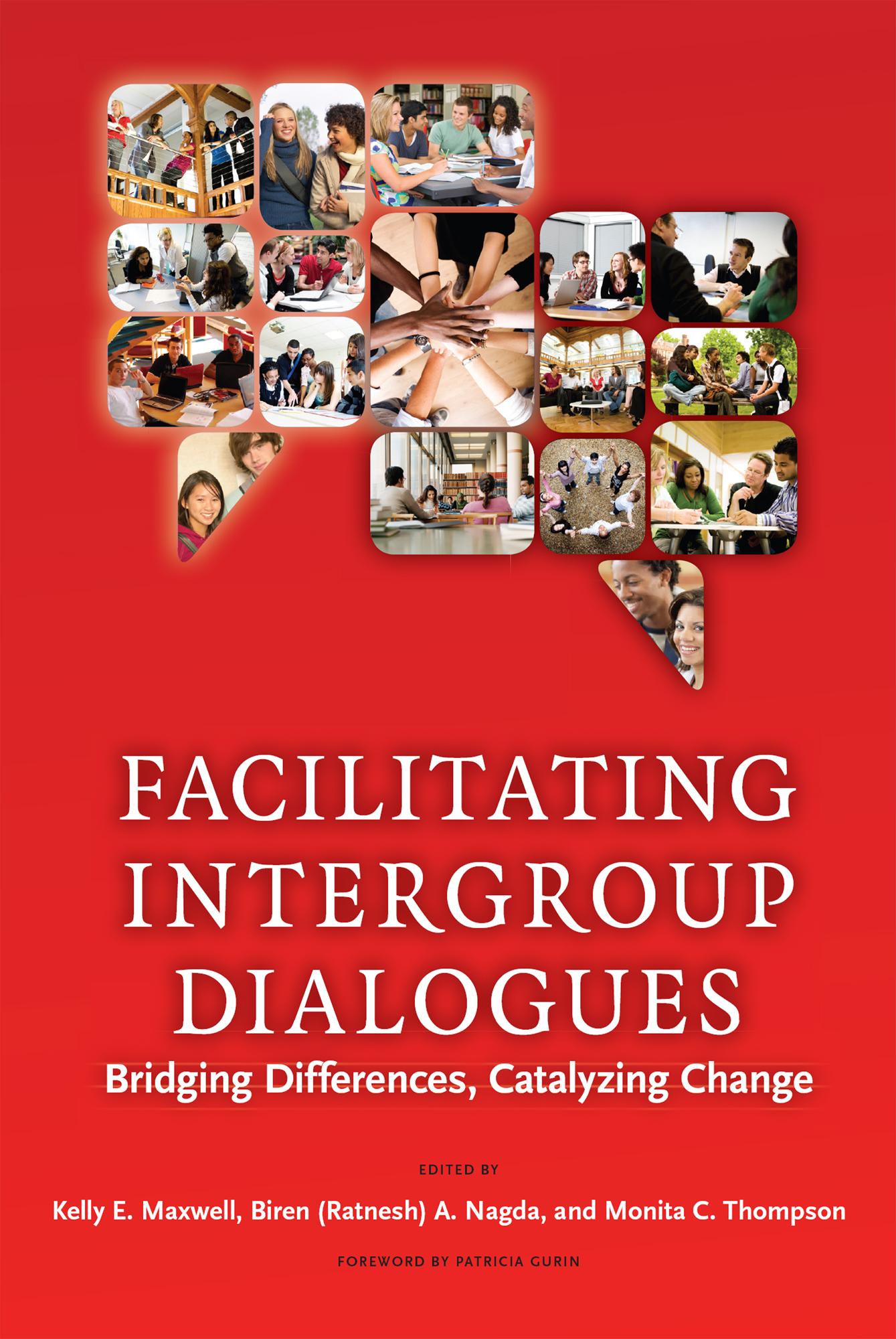
Co-published with Intergroup dialogue has emerged as an effective educational and community building method to bring together members of diverse social and cultural groups to engage in learning together so that they may work collectively and individually to promote greater diversity, equality and justice. Intergroup dialogues bring together individuals from different identity groups (such as people of color and white people; women and men; lesbian, gay, and bisexual people and heterosexual people), and uses explicit pedagogy that involves three important features: content learning, structured interaction, and facilitative guidance. The least understood role in the pedagogy is that of facilitation. This volume, the first dedicated entirely to intergroup dialogue facilitation, draws on the experiences of contributors and on emerging research to address the multi-dimensional role of facilitators and co-facilitators, the training and support of facilitators, and ways of improving practice in both educational and community settings. It constitutes a comprehensive guide for practitioners, covering the theoretical, conceptual, and practical knowledge they need. Presenting the work and insights of scholars, practitioners and scholar-practitioners who train facilitators for intergroup dialogues, this book bridges the theoretical and conceptual foundations of intergroup relations and social justice education with training models for intergroup dialogue facilitation. It is intended for staff, faculty, and administrators in higher education, and community agencies, as well as for human resources departments in workplaces. Contributors:Charles Behling, University of Michigan, Ann Arbor, The Program on Intergroup RelationsBarry Checkoway, University of Michigan, Ann Arbor, School of Social WorkMark Chesler, University of Michigan, Ann Arbor, The Program on Intergroup RelationsKeri De Jong, University of Massachusetts at Amherst, School of EducationRoger Fisher, University of Michigan, Ann Arbor, The Program on Intergroup RelationsNichola G. FulmerPatricia Gurin, University of Michigan, Ann Arbor, The Program on Intergroup RelationsTanya Kachwaha, University of Massachusetts at Amherst, School of EducationChristina Kelleher, Institute for Sustained Dialogue, Sustained Dialogue Campus NetworkAriel Kirkland, Occidental College, Student facilitatorJames Knauer, Lock Haven University of Pennsylvania, Democracy LabJoycelyn Landrum-Brown, University of Illinois at Urbana-Champaign, Program on Intergroup RelationsShaquanda D. Lindsey, Occidental College, Student facilitatorDavid J. Martineau, Washington University, St. Louis, School of Social WorkKelly E. MaxwellBiren (Ratnesh) A. NagdaTeddy Nemeroff, Institute for Sustained Dialogue, Sustained Dialogue Campus NetworkRomina Pacheco, University of Massachusetts at Amherst, School of EducationPriya Parker, Institute for Sustained Dialogue, Sustained Dialogue Campus NetworkJaclyn Rodríguez, Occidental College, Department of PsychologyAndrea C. Rodríguez-Scheel, Occidental College, Student facilitatorMichael S. Spencer, University of Michigan, Ann Arbor, School of Social WorkMonita C. ThompsonNorma TimbangThai Hung V. TranCarolyn Vasques-Scalera, Independent Scholar Thomas E. Walker, University of Denver, Center for Multicultural ExcellenceKathleen Wong (Lau), Arizona State University/Western Michigan University, Intergroup Relations Center/Intercultural CommunicationAnna M. Yeakley, Independent Intergroup Dialogue ConsultantXimena Zúñiga, University of Massachusetts at Amherst, School of Education
Before Memmo my notes were scattered across PDFs. Now a workspace pulls everything into one place — I see exactly what's still left to study.
Memmo's summaries are gold before exams. I don't have to re-read 800 pages two weeks before — just the important parts.
The AI chat has saved me the night before an exam more than once. I just keep asking until I get it — no waiting on a study group to reply.
The quizzes hit exactly what I need to know. Memmo tracks what I get stuck on — so I only practice what's worth it.
Flashcards with spaced repetition are magic. Memmo knows when I'm about to forget something and brings it back.
The AI podcasts are my favorite. I listen on my way to school and get a recap without sitting at a computer.

Handbok i kvalitativa metoder
281 kr

Hållbar utveckling: en introduktion för ingenjörer och andra problemlösare
334 kr

Brymans Samhällsvetenskapliga metoder
390 kr

Projektledning
491 kr

Den orättvisa hälsan: om socioekonomiska skillnader i hälsa och livslängd
326 kr

Organizational Leadership
429 kr

Vetenskapsteori för nybörjare
196 kr

På väg mot läraryrket
172 kr

Det sociala livet i skolan: Socialpsykologiska perspektiv
253 kr

Betygsättningens didaktik
151 kr

Personality
402 kr

Studying Leadership
404 kr

Managing Innovation
477 kr

Introduktion till samhällsvetenskaplig metod
347 kr

The Psychology of Sex and Gender
698 kr

Evidens och kunskap för socialt arbete
207 kr

Introduction to Leadership
605 kr