
Before Memmo my notes were scattered across PDFs. Now a workspace pulls everything into one place — I see exactly what's still left to study.
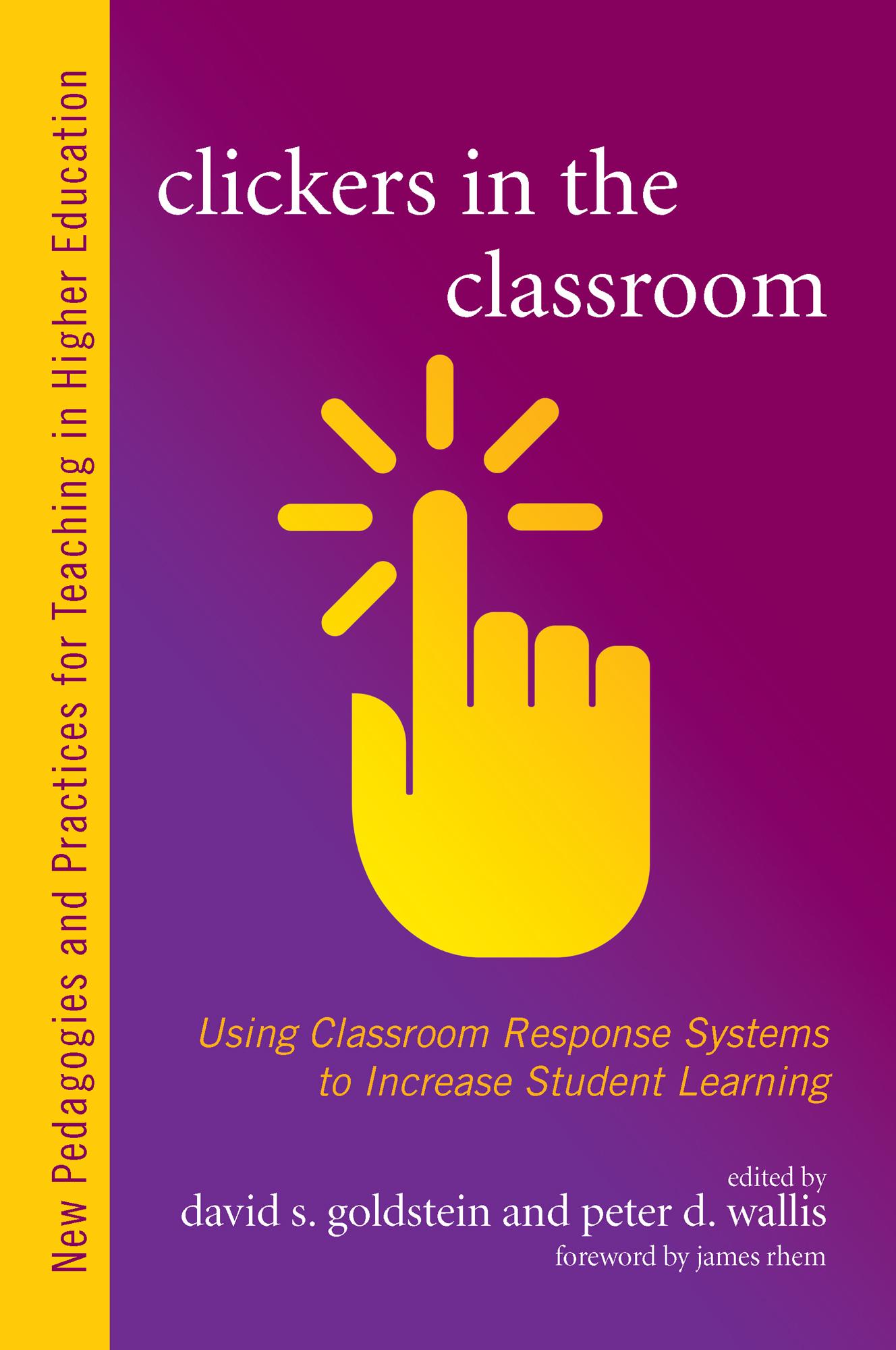
With classroom response systems (or CRSs, also known as Student Response Systems, Individual Response Systems, or, informally, “clickers”) in use in higher education for some 20 years, there is now both ample research and a wealth of examples and ideas to draw on for faculty who are contemplating their use, or exploring new ways to integrate them in their teaching.The research demonstrates that, integrated purposefully in courses, the use of clickers aligns with what neuroscience tells us about the formation of memory and the development of learning. In addition, they elicit contributions from otherwise reticent students and enhance collaboration, even in large lecture courses; foster more honest responses to discussion prompts; increase students’ engagement and satisfaction with the classroom environment; and provide an instantaneous method of formative assessment.This book presents a brief history of the development of CRSs and a survey of empirical research to provide a context for current best practices, and then presents seven chapters providing authentic, effective examples of the use of clickers across a wide range of academic disciplines, demonstrating how they can be effective in helping students to recognize their misconceptions and grasp fundamental concepts.Like all pedagogical interventions, classroom response systems are no panacea, and the experienced contributors candidly describe avoidable pitfalls while demonstrating how clickers can deepen student learning and how, by providing instantaneous feedback, they enable teachers to make adjustments on the fly to better address student understandings or misunderstandings.The final chapter explores pros and cons of response systems that use mobile devices and smart phones, and the book concludes with an annotated list of further resources, such as books, articles, and videos.
Before Memmo my notes were scattered across PDFs. Now a workspace pulls everything into one place — I see exactly what's still left to study.
Memmo's summaries are gold before exams. I don't have to re-read 800 pages two weeks before — just the important parts.
The AI chat has saved me the night before an exam more than once. I just keep asking until I get it — no waiting on a study group to reply.
The quizzes hit exactly what I need to know. Memmo tracks what I get stuck on — so I only practice what's worth it.
Flashcards with spaced repetition are magic. Memmo knows when I'm about to forget something and brings it back.
The AI podcasts are my favorite. I listen on my way to school and get a recap without sitting at a computer.

Handbok i kvalitativa metoder
281 kr

Hållbar utveckling: en introduktion för ingenjörer och andra problemlösare
334 kr

Brymans Samhällsvetenskapliga metoder
390 kr

Projektledning
491 kr

Den orättvisa hälsan: om socioekonomiska skillnader i hälsa och livslängd
326 kr

Organizational Leadership
429 kr

Vetenskapsteori för nybörjare
196 kr

På väg mot läraryrket
172 kr

Det sociala livet i skolan: Socialpsykologiska perspektiv
253 kr

Betygsättningens didaktik
151 kr

Personality
402 kr

Studying Leadership
404 kr

Managing Innovation
477 kr

Introduktion till samhällsvetenskaplig metod
347 kr

The Psychology of Sex and Gender
698 kr

Evidens och kunskap för socialt arbete
207 kr

Introduction to Leadership
605 kr