
Before Memmo my notes were scattered across PDFs. Now a workspace pulls everything into one place — I see exactly what's still left to study.
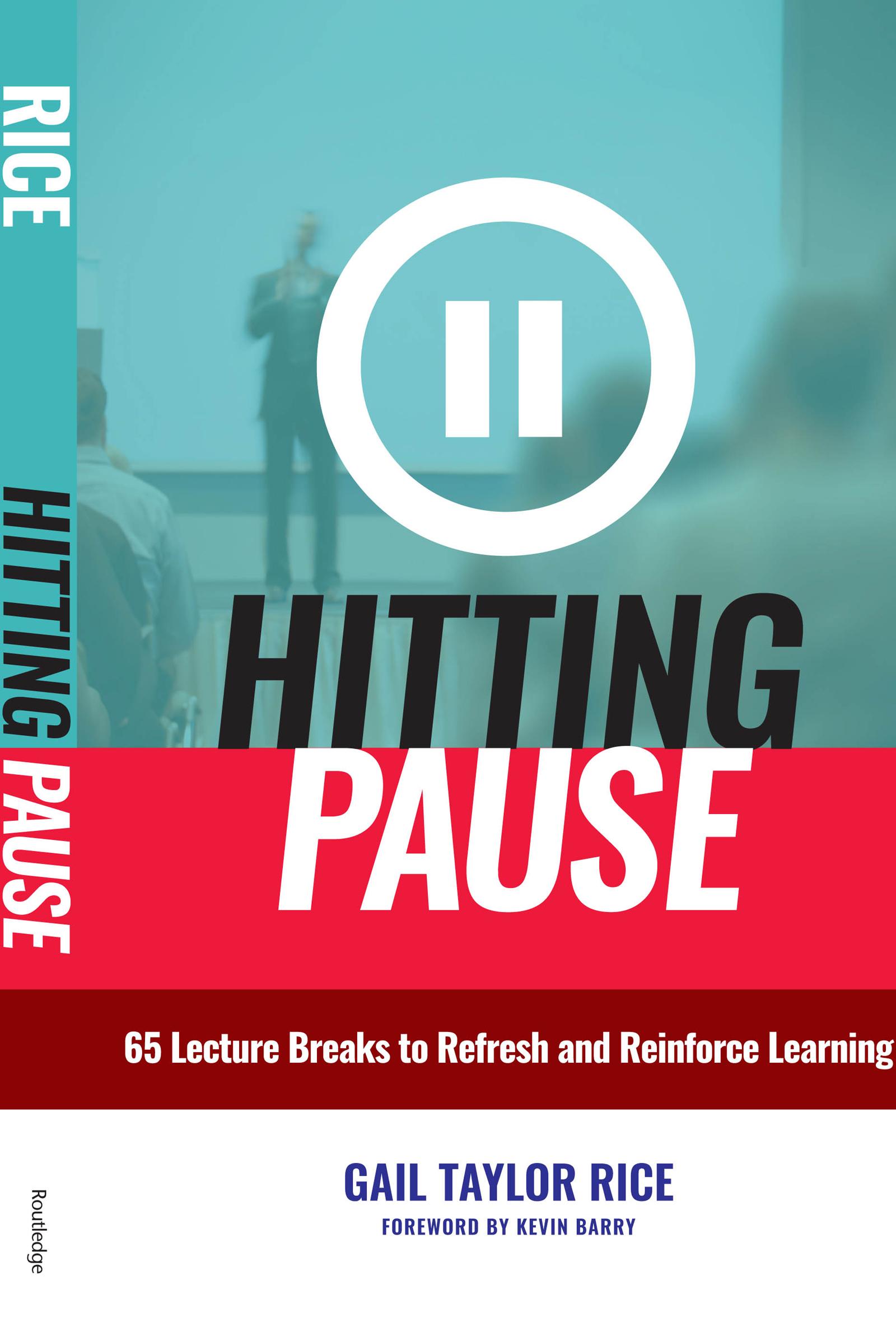
Pauses constitute a simple technique for enlivening and enhancing the effectiveness of lectures, or indeed of any form of instruction, whether a presentation or in an experiential setting. This book presents the evidence and rationale for breaking up lectures into shorter segments by using pauses to focus attention, reinforce key points, and review learning. It also provides 65 adaptable pause ideas to use at the opening of class, mid-way through, or as closers.Starting with brain science research on attention span and cognitive load, Rice bases her book on two fundamental principles: shorter segments of instruction are better than longer ones, and learners who actively participate in instruction learn better than those who don’t.Pausing helps teachers apply these principles and create student engagement without requiring major changes in their lesson plans. With careful planning, they can integrate pauses into learning sessions with ease and significantly reinforce student learning. They will also gain feedback on students’ comprehension.Rice sets out the characteristics of good pauses, gives advice on how to plan them and how to introduce them to maximum effect. She provides compelling examples and concludes with a repertory of pauses readers can easily modify and apply to any discipline. This book contains a compendium of strategies that any teacher can fruitfully use to reinforce learning, as well as a stepping stone to those seeking to transition to more active learning methods. It:• Makes the case for using pauses• Identifies the primary functions of pauses: focusing, refocusing, enhancing retention, or closing off the learning experience • Provides research evidence from cognitive science and educational psychology• Provides practical guidance for creating quick active learning breaks• Distinguishes between starting, middle, and closing pauses • Includes descriptions, with suggested applications, of 65 pauses
Before Memmo my notes were scattered across PDFs. Now a workspace pulls everything into one place — I see exactly what's still left to study.
Memmo's summaries are gold before exams. I don't have to re-read 800 pages two weeks before — just the important parts.
The AI chat has saved me the night before an exam more than once. I just keep asking until I get it — no waiting on a study group to reply.
The quizzes hit exactly what I need to know. Memmo tracks what I get stuck on — so I only practice what's worth it.
Flashcards with spaced repetition are magic. Memmo knows when I'm about to forget something and brings it back.
The AI podcasts are my favorite. I listen on my way to school and get a recap without sitting at a computer.

Handbok i kvalitativa metoder
281 kr

Hållbar utveckling: en introduktion för ingenjörer och andra problemlösare
334 kr

Brymans Samhällsvetenskapliga metoder
390 kr

Projektledning
491 kr

Den orättvisa hälsan: om socioekonomiska skillnader i hälsa och livslängd
326 kr

Organizational Leadership
429 kr

Vetenskapsteori för nybörjare
196 kr

På väg mot läraryrket
172 kr

Det sociala livet i skolan: Socialpsykologiska perspektiv
253 kr

Betygsättningens didaktik
151 kr

Personality
402 kr

Studying Leadership
404 kr

Managing Innovation
477 kr

Introduktion till samhällsvetenskaplig metod
347 kr

The Psychology of Sex and Gender
698 kr

Evidens och kunskap för socialt arbete
207 kr

Introduction to Leadership
605 kr