
Before Memmo my notes were scattered across PDFs. Now a workspace pulls everything into one place — I see exactly what's still left to study.
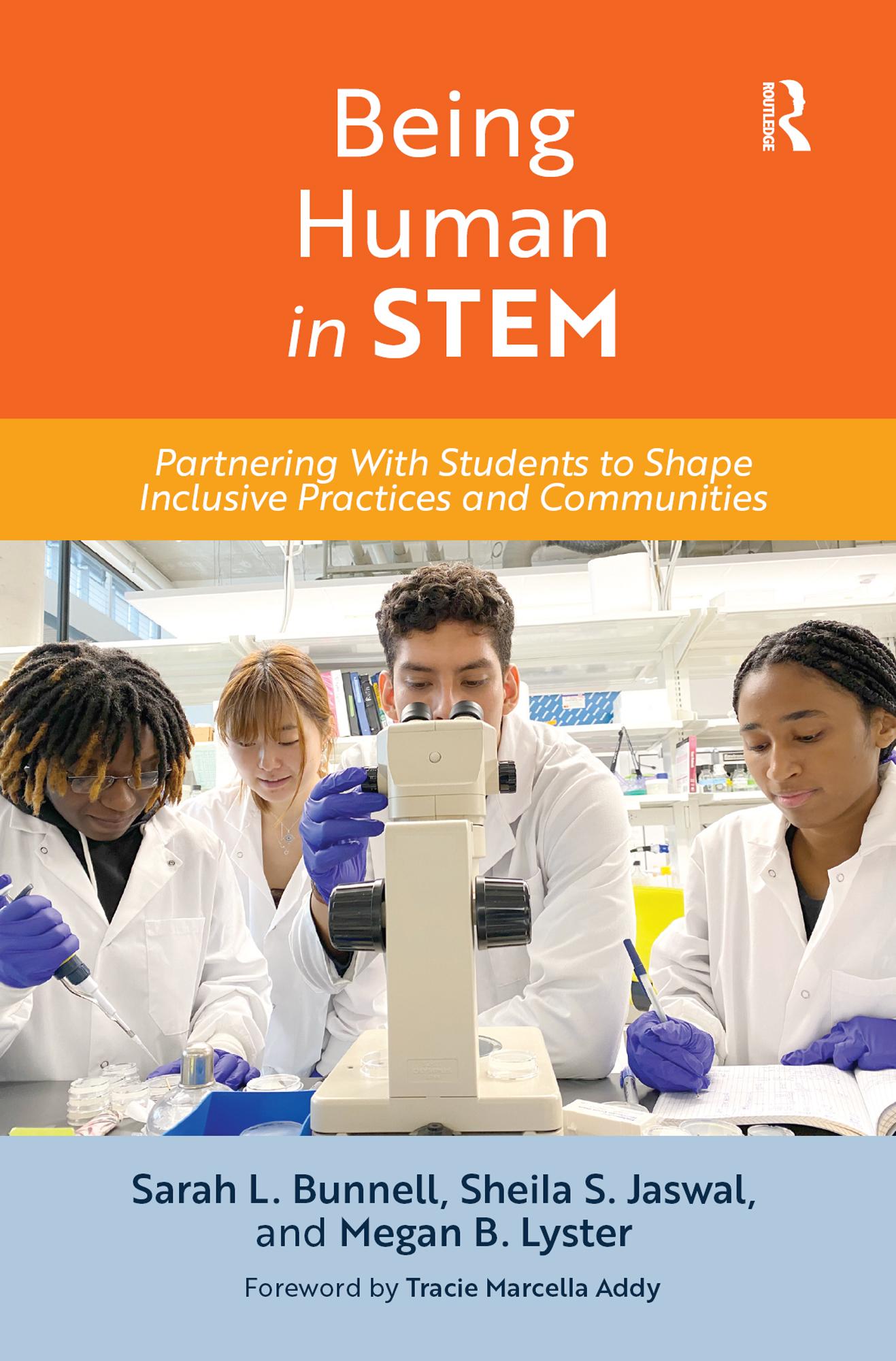
For all STEM faculty, chairs, administrators, and faculty developers who work to support students’ learning and thriving in STEM – especially those students who have felt unwelcome and unsupported in their past STEM experiences – this book offers sustainable strategies that are now being widely adopted to create inclusive environments in undergraduate STEM classes and programs. Further, this book presents a framework for partnering with students to collaboratively envision how STEM can be a space that fosters a sense of belonging for, and promotes the success of, all individuals in STEM. This book presents the Being Human in STEM Initiative, or HSTEM, as a model for challenging the assumptions we make, and how we communicate to students, about who belongs and who can thrive in STEM. This work arose out of a time of conflict at Amherst College: A four-day sit-in, protesting in support of the Black Lives Matter movement and bringing attention to related experiences of exclusion and marginalization that minoritized students experienced on campus. What emerged from that conflict has been transformative for the college, its students, and for its faculty and staff. In this book, the authors share how the HSTEM course came into being, offer a course overview, readings, and resources for developing an HSTEM course at your own institution, provide recommendations for evaluating the multi-level impact of inclusive change initiatives, and profile models of how the HSTEM course has been adapted at colleges and universities across the country. In addition to providing a road map for developing your own HSTEM course, the authors articulate ways that you can make any course or institutional structure more inclusive through active listening and validation, and through reflective practice and partnership, to progressively make incremental and sustainable changes in STEM education. Through listening and reflecting, the model facilitates uncovering the disconnects that can impede inclusivity in our classrooms and laboratories. While the authors offer a proven process and model for change, originally motivated by the urgent need to respond to students’ demands, they recognize that larger institutional culture shifts require the identification and commitment to common values, a shared sense of purpose in the work of change, and the provision of agency and resources to individuals tasked with making change happen. How might we shift institutional STEM culture? The HSTEM model provides one solution: By reflecting on our own lived experiences and identities, engaging with the literature on the factors that enhance and limit full inclusion in STEM, and partnering with students to identify actionable ways to bring about sustainable change in our scientific communities, we can all work towards creating a more inclusive, and human, STEM ecosystem.Each chapter opens with a set of guiding reflective questions to help you connect these ideas, frameworks, and strategies to your own teaching and institutional context. While each chapter builds on the previous ideas and frameworks, the book can also be used as a resource to identify a just-in-time strategy to address particular questions you may have about making your teaching more inclusive. The appendices offer an array of Facilitator Guides, each of which outlines a student-endorsed exercise, based on the pedagogical literature, that can foster a sense of belonging and inclusion in your classrooms and laboratory spaces.
Before Memmo my notes were scattered across PDFs. Now a workspace pulls everything into one place — I see exactly what's still left to study.
Memmo's summaries are gold before exams. I don't have to re-read 800 pages two weeks before — just the important parts.
The AI chat has saved me the night before an exam more than once. I just keep asking until I get it — no waiting on a study group to reply.
The quizzes hit exactly what I need to know. Memmo tracks what I get stuck on — so I only practice what's worth it.
Flashcards with spaced repetition are magic. Memmo knows when I'm about to forget something and brings it back.
The AI podcasts are my favorite. I listen on my way to school and get a recap without sitting at a computer.

Handbok i kvalitativa metoder
281 kr

Hållbar utveckling: en introduktion för ingenjörer och andra problemlösare
334 kr

Brymans Samhällsvetenskapliga metoder
390 kr

Projektledning
491 kr

Den orättvisa hälsan: om socioekonomiska skillnader i hälsa och livslängd
326 kr

Organizational Leadership
429 kr

Vetenskapsteori för nybörjare
196 kr

På väg mot läraryrket
172 kr

Det sociala livet i skolan: Socialpsykologiska perspektiv
253 kr

Betygsättningens didaktik
151 kr

Personality
402 kr

Studying Leadership
404 kr

Managing Innovation
477 kr

Introduktion till samhällsvetenskaplig metod
347 kr

The Psychology of Sex and Gender
698 kr

Evidens och kunskap för socialt arbete
207 kr

Introduction to Leadership
605 kr