
Before Memmo my notes were scattered across PDFs. Now a workspace pulls everything into one place — I see exactly what's still left to study.
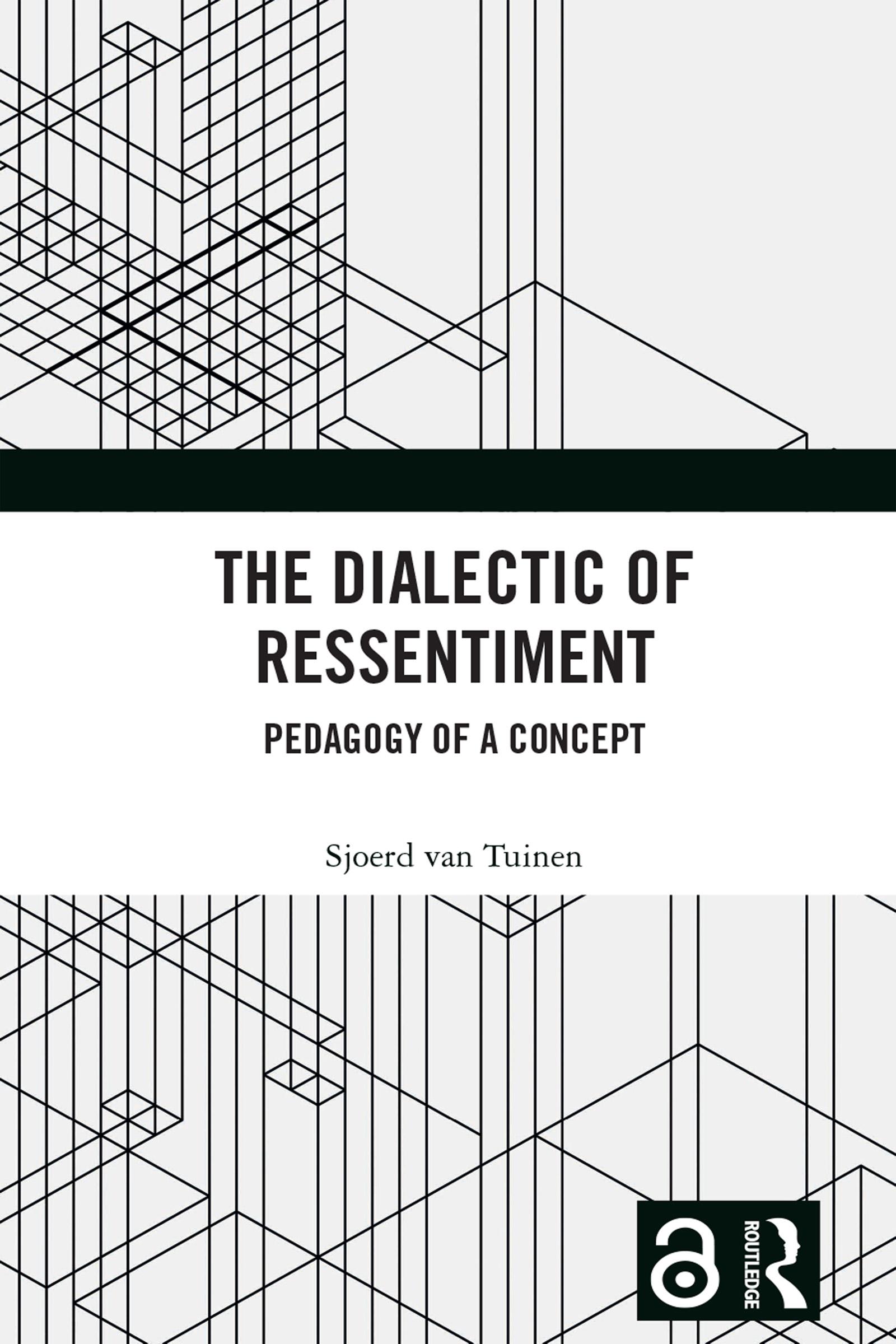
Drawing upon a wide variety of authors, approaches, and ideological contexts, this book offers a comprehensive and detailed critique of the distinct and polemical senses in which the concept of ressentiment (and its cognate 'resentment') is used today. It also proposes a new mode of addressing ressentiment in which critique and polemics no longer set the tone: care.
Contemporary tendencies in political culture such as neoliberalism, nationalism, populism, identity politics, and large-scale conspiracy theories have led to the return of the concept of ressentiment in armchair political analysis. This book argues that, due to the tension between its enormous descriptive power and its mutually contradicting ideological performances, it is necessary to ‘redramatize’ the concept of ressentiment. By what right do we possess and use the concept of ressentiment, and what makes the phenomenon worth knowing? Inspired by Marxist political epistemology, affect theory, postcolonialism, and feminism, the book maps, delimits, and assesses four irreducible ways in which ressentiment can be articulated: the ways of the priest, the physician, the witness, and the diplomat. The first perspective is typically embodied by conservative (Scheler, Girard) and liberal (Smith, Rawls) political theory; the second, by Nietzsche, Deleuze and Foucault; whereas the standpoint of the witness is found in the writings of Améry, Fanon and Adorno; and the diplomat’s is the author’s own, albeit inspired by philosophers such as Ahmed, Stiegler, Stengers, and Sloterdijk. In producing a dialectical sequence between all four typical modes of enunciation, the book demonstrates how the first three reinterpretations of ressentiment are already implied in the theater set up in Nietzsche’s late polemical books, while the fourth proposes a line of flight out of it.
The Dialectic of Ressentiment will be of interest to scholars and advanced students working in critical theory, social and political philosophy, cultural studies, sociology, history, literature, political science, anthropology, and Nietzsche scholarship. It will also appeal to anyone interested in the politics of anger, discourse ethics, trauma studies, and memory politics.
The Open Access version of this book, available at www.taylorfrancis.com, has been made available under a Creative Commons Attribution-Non Commercial-No Derivatives 4.0 license.
Before Memmo my notes were scattered across PDFs. Now a workspace pulls everything into one place — I see exactly what's still left to study.
Memmo's summaries are gold before exams. I don't have to re-read 800 pages two weeks before — just the important parts.
The AI chat has saved me the night before an exam more than once. I just keep asking until I get it — no waiting on a study group to reply.
The quizzes hit exactly what I need to know. Memmo tracks what I get stuck on — so I only practice what's worth it.
Flashcards with spaced repetition are magic. Memmo knows when I'm about to forget something and brings it back.
The AI podcasts are my favorite. I listen on my way to school and get a recap without sitting at a computer.

Handbok i kvalitativa metoder
281 kr

Hållbar utveckling: en introduktion för ingenjörer och andra problemlösare
334 kr

Brymans Samhällsvetenskapliga metoder
390 kr

Projektledning
491 kr

Den orättvisa hälsan: om socioekonomiska skillnader i hälsa och livslängd
326 kr

Organizational Leadership
429 kr

Vetenskapsteori för nybörjare
196 kr

På väg mot läraryrket
172 kr

Det sociala livet i skolan: Socialpsykologiska perspektiv
253 kr

Betygsättningens didaktik
151 kr

Personality
402 kr

Studying Leadership
404 kr

Managing Innovation
477 kr

Introduktion till samhällsvetenskaplig metod
347 kr

The Psychology of Sex and Gender
698 kr

Evidens och kunskap för socialt arbete
207 kr

Introduction to Leadership
605 kr