
Before Memmo my notes were scattered across PDFs. Now a workspace pulls everything into one place — I see exactly what's still left to study.
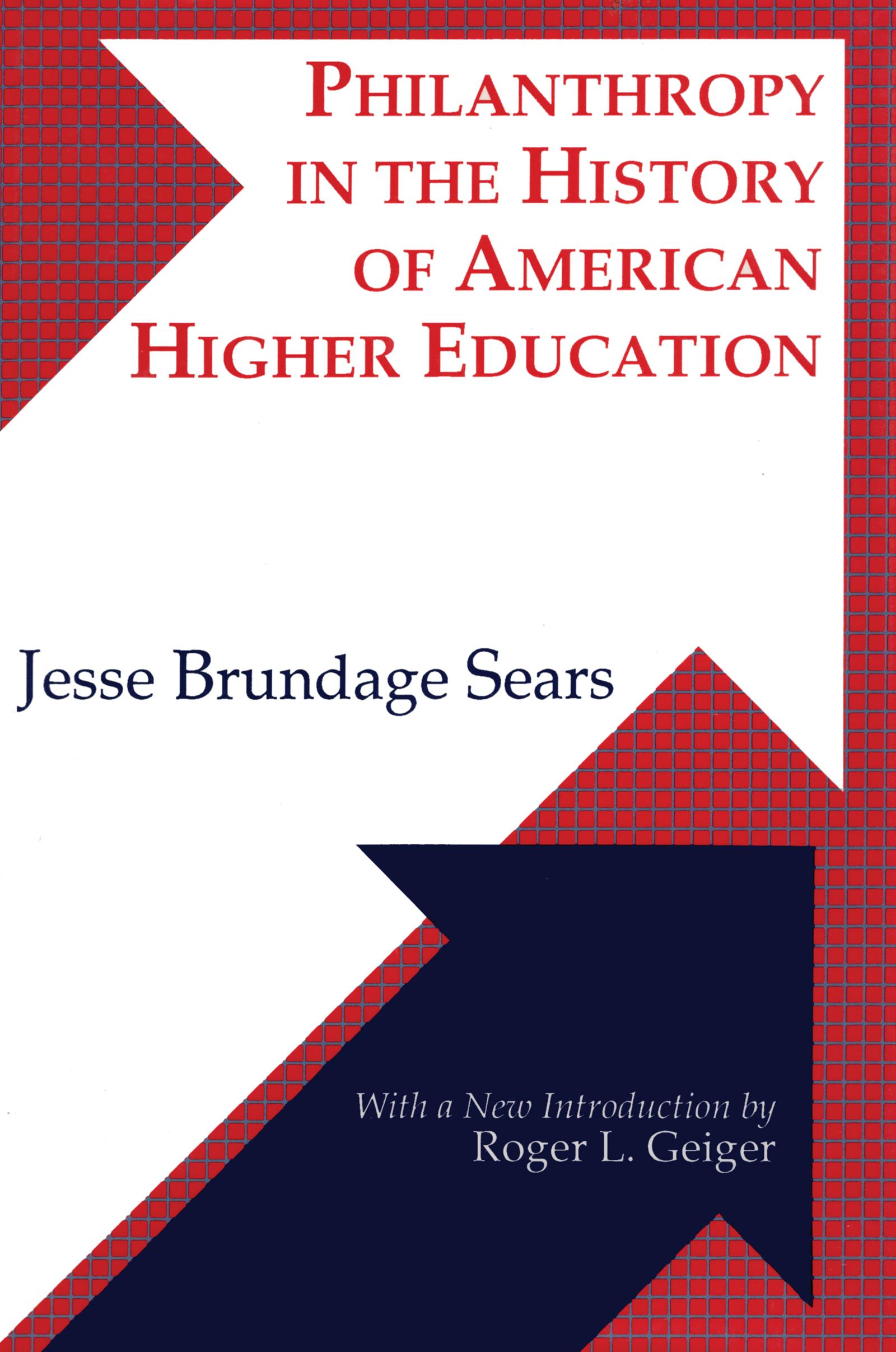
A work that can truly be described as an underground masterpiece, Sears' Philanthropy in the History of American Higher Education was written as a dissertation seventy years ago, and subsequently published as a "Bulletin" by the United States Bureau of Education in 1922. It has been much spoken of and little read since then. As Roger L. Geiger points out in his new opening essay, this volume can still be read with wide interest and great profit. This is a tribute to the quality of mind and diligence of its author.
The special quality of this volume is its close connection of educational philosophies of the past linked firmly to the educational philanthropies of the nineteenth and twentieth centuries. The scope of coverage is broad-ranging: from the great universities to the manual labor colleges. But it is more than quantitative research that the reader will find. For Sears, from start to finish, while appreciating the benefits which foundations bestow, fully appreciated the continuing risks of such outside support.
For Sears, the overwhelming impulse of philanthropy has been the encouragement of the public good, or at least the support of a healthy notoriety for the donors and recipients alike. But he also notes that a democratic society must never be expected to take massive gifts on faith. He urged that even a "grain of danger" should be weeded out if it carries with it the potential for the bias and special interest.
This edition is graced by a fine essay that gives a deep background to the life and work of Jesse Brundage Sears. It covers his origins in rural Missouri, his move to Stanford University and work for Ellwood P. Cubberly, and his later work on the history of philanthropy. For individuals interested in the history of education, the structure of financing higher education, and the data on which social policy has been made, this will be indispensable reading.
Roger L. Geiger, author of the recently published work, To Advance Knowledge: The Growth of American Research Universities, 1900-1940 and other works in education at The Pennsylvania State University. This volume is the twelfth volume in the Transaction Studies in Philanthropy and Society edited by Richard Magat of The Foundation Center.
Before Memmo my notes were scattered across PDFs. Now a workspace pulls everything into one place — I see exactly what's still left to study.
Memmo's summaries are gold before exams. I don't have to re-read 800 pages two weeks before — just the important parts.
The AI chat has saved me the night before an exam more than once. I just keep asking until I get it — no waiting on a study group to reply.
The quizzes hit exactly what I need to know. Memmo tracks what I get stuck on — so I only practice what's worth it.
Flashcards with spaced repetition are magic. Memmo knows when I'm about to forget something and brings it back.
The AI podcasts are my favorite. I listen on my way to school and get a recap without sitting at a computer.

Handbok i kvalitativa metoder
281 kr

Hållbar utveckling: en introduktion för ingenjörer och andra problemlösare
334 kr

Brymans Samhällsvetenskapliga metoder
390 kr

Projektledning
491 kr

Den orättvisa hälsan: om socioekonomiska skillnader i hälsa och livslängd
326 kr

Vetenskapsteori för nybörjare
196 kr

Organizational Leadership
429 kr

På väg mot läraryrket
172 kr

Det sociala livet i skolan: Socialpsykologiska perspektiv
253 kr

Betygsättningens didaktik
151 kr

Personality
402 kr

Studying Leadership
404 kr

Managing Innovation
477 kr

Introduktion till samhällsvetenskaplig metod
347 kr

The Psychology of Sex and Gender
698 kr

Evidens och kunskap för socialt arbete
207 kr

Introduction to Leadership
605 kr