
Before Memmo my notes were scattered across PDFs. Now a workspace pulls everything into one place — I see exactly what's still left to study.
In recent years, the application of composites and nanocomposites has been increasing steadily in industries such as aerospace, automotive, marine, and civil engineering. It is among the most complex and crucial aspects of the mechanics of a deformable solid, due to several specific phenomena and analytic factors arising from cyclic loading. The problems are primarily associated with the development of fatigue damage, and the need to assess the cyclic and structural instability of composite and nanocomposite materials. The study of structural strength under cyclic loading has gained much attention, especially in aircraft manufacturing, power engineering, aviation, and rocket technology. Cyclic loading significantly reduces creep-fatigue lifespan during the entire frequency range. It is clear that characteristics such as endurance limit, static creep limits and long-term static strength will not suffice in the design criteria for fatigue life. New aspects have emerged in high-temperature strength - cyclical creep and long-term cyclic strength, leading to the creation of new methods and means of determining the resistance of composites and nanocomposites materials and continuum damage development under cyclic loading to the creation of appropriate physical models. Particularly relevant is the intensification of creep by high-frequency cyclic loading in composite materials, which usually occurs at high temperatures. Most studies in the field of cyclic creep are experimental, and the direct use of number of cycles to define damage model cannot escape the empirical relation that predicts multi-stress level fatigue life well.
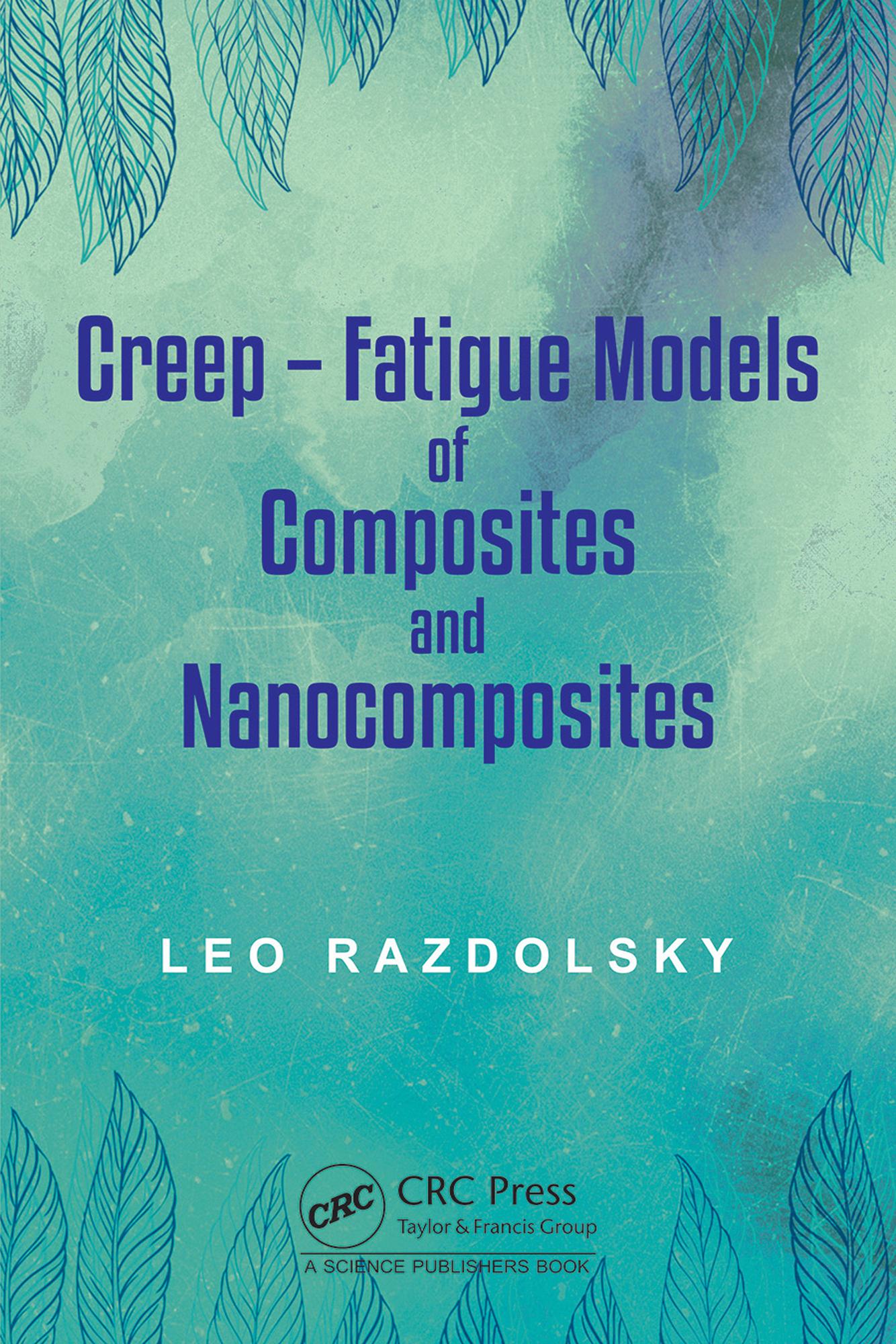
The book presents new phenomenological cyclic creep – fatigue models for describing the fatigue life and behavior of time-dependent composites and nanocomposites. Since the main difference between the creep process from the fatigue process is that from a physical point of view, the first is quasi-static, and the second is dynamic. Therefore, the functions of creep should reflect the oscillatory nature of the fatigue process. The results are supported by step-by-step practical design examples and will be useful for practicing structural engineers, code developers as well as research and university faculty.
Before Memmo my notes were scattered across PDFs. Now a workspace pulls everything into one place — I see exactly what's still left to study.
Memmo's summaries are gold before exams. I don't have to re-read 800 pages two weeks before — just the important parts.
The AI chat has saved me the night before an exam more than once. I just keep asking until I get it — no waiting on a study group to reply.
The quizzes hit exactly what I need to know. Memmo tracks what I get stuck on — so I only practice what's worth it.
Flashcards with spaced repetition are magic. Memmo knows when I'm about to forget something and brings it back.
The AI podcasts are my favorite. I listen on my way to school and get a recap without sitting at a computer.

Handbok i kvalitativa metoder
281 kr

Hållbar utveckling: en introduktion för ingenjörer och andra problemlösare
334 kr

Brymans Samhällsvetenskapliga metoder
390 kr

Projektledning
491 kr

Den orättvisa hälsan: om socioekonomiska skillnader i hälsa och livslängd
326 kr

Organizational Leadership
429 kr

Vetenskapsteori för nybörjare
196 kr

På väg mot läraryrket
172 kr

Det sociala livet i skolan: Socialpsykologiska perspektiv
253 kr

Betygsättningens didaktik
151 kr

Personality
402 kr

Studying Leadership
404 kr

Managing Innovation
477 kr

Introduktion till samhällsvetenskaplig metod
347 kr

The Psychology of Sex and Gender
698 kr

Evidens och kunskap för socialt arbete
207 kr

Introduction to Leadership
605 kr