
Before Memmo my notes were scattered across PDFs. Now a workspace pulls everything into one place — I see exactly what's still left to study.
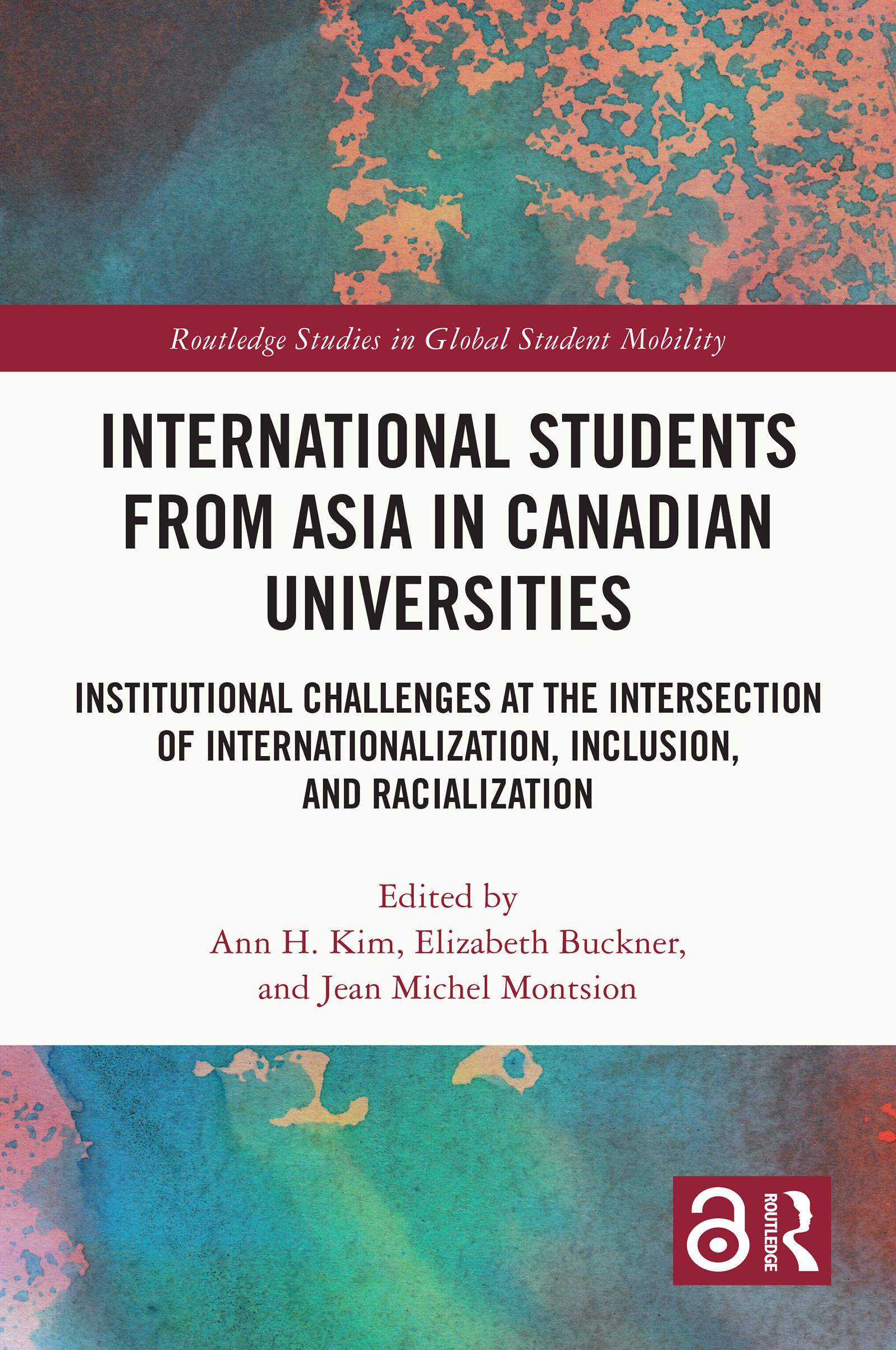
This book explores how the recruitment and retention of Asian international students in Canadian universities intersects with other institutional priorities. Responding to the growing need for new insights and perspectives on the institutional mechanisms adopted by Canadian universities to support Asian international students in their academic and social integration to university life, it crucially examines the challenges at the intersection of two institutional priorities: internationalization and anti-racism. This is especially important for the Asian international student group, who are known to experience invisible forms of discrimination and differential treatment in Canadian post-secondary education institutions. The authors present new conceptualisations and theoretical perspectives on topics including international students’ experiences and understandings of race and racism, comparisons with domestic students and/or non-Asian students, institutional discourse and narratives on Asian international students, comparison with other university priorities, cross-national comparisons, best practices, and recent developments linked to the COVID-19 pandemic. Foregrounding the institutional strategies of Canadian universities, as opposed to student experience exclusively, this direct examination of institutional responses and initiatives draws out similarities and differences across the country, compares them within the broader array of university priorities, and ultimately offers the opportunity for Canadian universities to learn from each other in improving the integration of Asian international students and others to their student body. It will appeal to teacher-scholars, researchers and educators with interested in higher education, international education and race and ethnic studies.
The Open Access version of this book, available at http://www.taylorfrancis.com, has been made available under a Creative Commons Attribution-Non Commercial-No Derivatives (CC-BY-NC-ND) 4.0 license.
Before Memmo my notes were scattered across PDFs. Now a workspace pulls everything into one place — I see exactly what's still left to study.
Memmo's summaries are gold before exams. I don't have to re-read 800 pages two weeks before — just the important parts.
The AI chat has saved me the night before an exam more than once. I just keep asking until I get it — no waiting on a study group to reply.
The quizzes hit exactly what I need to know. Memmo tracks what I get stuck on — so I only practice what's worth it.
Flashcards with spaced repetition are magic. Memmo knows when I'm about to forget something and brings it back.
The AI podcasts are my favorite. I listen on my way to school and get a recap without sitting at a computer.

Handbok i kvalitativa metoder
281 kr

Hållbar utveckling: en introduktion för ingenjörer och andra problemlösare
334 kr

Brymans Samhällsvetenskapliga metoder
390 kr

Projektledning
491 kr

Den orättvisa hälsan: om socioekonomiska skillnader i hälsa och livslängd
326 kr

Vetenskapsteori för nybörjare
196 kr

Organizational Leadership
429 kr

På väg mot läraryrket
172 kr

Det sociala livet i skolan: Socialpsykologiska perspektiv
253 kr

Betygsättningens didaktik
151 kr

Personality
402 kr

Studying Leadership
404 kr

Managing Innovation
477 kr

Introduktion till samhällsvetenskaplig metod
347 kr

The Psychology of Sex and Gender
698 kr

Evidens och kunskap för socialt arbete
207 kr

Introduction to Leadership
605 kr