
Before Memmo my notes were scattered across PDFs. Now a workspace pulls everything into one place — I see exactly what's still left to study.
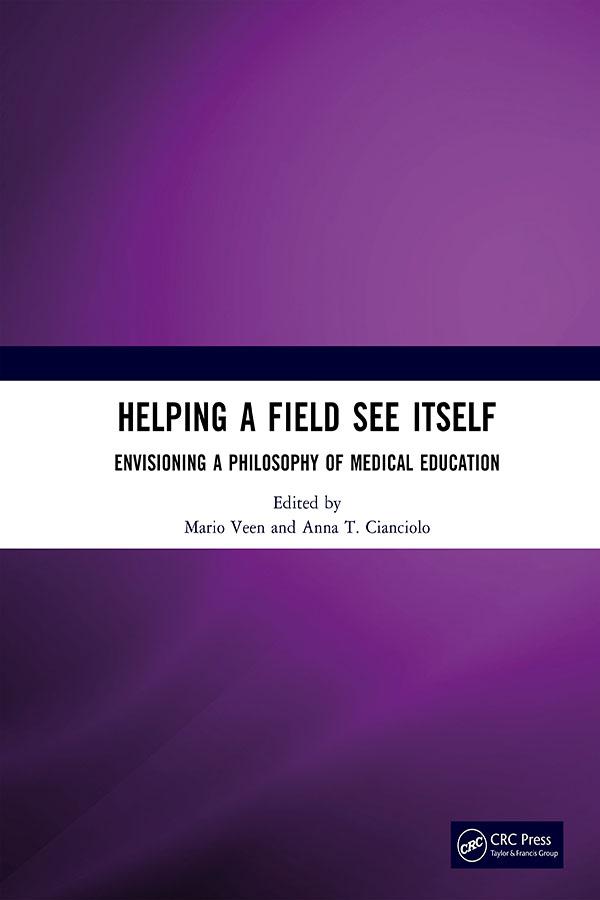
The perceived value of philosophy to medical education is increasing. But beyond the occasional application of philosophical concepts, what does it mean to be philosophical about medical education and to do philosophy—to create new concepts and ways of thinking about what medical education is? The complex and dynamic nature of academic medicine requires medical educators to reflect on their practices, to question assumptions, and to embrace the ambiguity of a world that cannot be captured by any one model or theory.
This volume explores philosophy as a practice in medical education. We use persistent problems that vex medical educators as a starting point to do philosophy, asking fundamental questions to probe them: How are teaching and learning related? How do we educate the value of personal experience relative to scientific evidence? We also challenge the assumptions underlying these problems with alternatives: What if teaching does not cause learning? What if we cannot divide our inner and outer world? We then explore ways forward: If we cannot cause learning, how do we reconceptualize the educational process? How do we help physician trainees critically reflect on medical epistemology throughout their professional development?
Each chapter explores one theme in medical education (e.g., education, science, inequality, technology, mortality) from a philosophical perspective, opening it up to fundamental re-examination and inviting readers to continue exploration beyond the printed words. This book is a step towards enabling medical educators to practice philosophy themselves at appropriate moments in their work. In this way, it aims to establish medical education as a mature field with its own philosophy. The chapters in this book were originally published in the journal Teaching and Learning in Medicine.
Before Memmo my notes were scattered across PDFs. Now a workspace pulls everything into one place — I see exactly what's still left to study.
Memmo's summaries are gold before exams. I don't have to re-read 800 pages two weeks before — just the important parts.
The AI chat has saved me the night before an exam more than once. I just keep asking until I get it — no waiting on a study group to reply.
The quizzes hit exactly what I need to know. Memmo tracks what I get stuck on — so I only practice what's worth it.
Flashcards with spaced repetition are magic. Memmo knows when I'm about to forget something and brings it back.
The AI podcasts are my favorite. I listen on my way to school and get a recap without sitting at a computer.

Handbok i kvalitativa metoder
281 kr

Hållbar utveckling: en introduktion för ingenjörer och andra problemlösare
334 kr

Brymans Samhällsvetenskapliga metoder
390 kr

Projektledning
491 kr

Den orättvisa hälsan: om socioekonomiska skillnader i hälsa och livslängd
326 kr

Organizational Leadership
429 kr

Vetenskapsteori för nybörjare
196 kr

På väg mot läraryrket
172 kr

Det sociala livet i skolan: Socialpsykologiska perspektiv
253 kr

Betygsättningens didaktik
151 kr

Personality
402 kr

Studying Leadership
404 kr

Managing Innovation
477 kr

Introduktion till samhällsvetenskaplig metod
347 kr

The Psychology of Sex and Gender
698 kr

Evidens och kunskap för socialt arbete
207 kr

Introduction to Leadership
605 kr