
Before Memmo my notes were scattered across PDFs. Now a workspace pulls everything into one place — I see exactly what's still left to study.
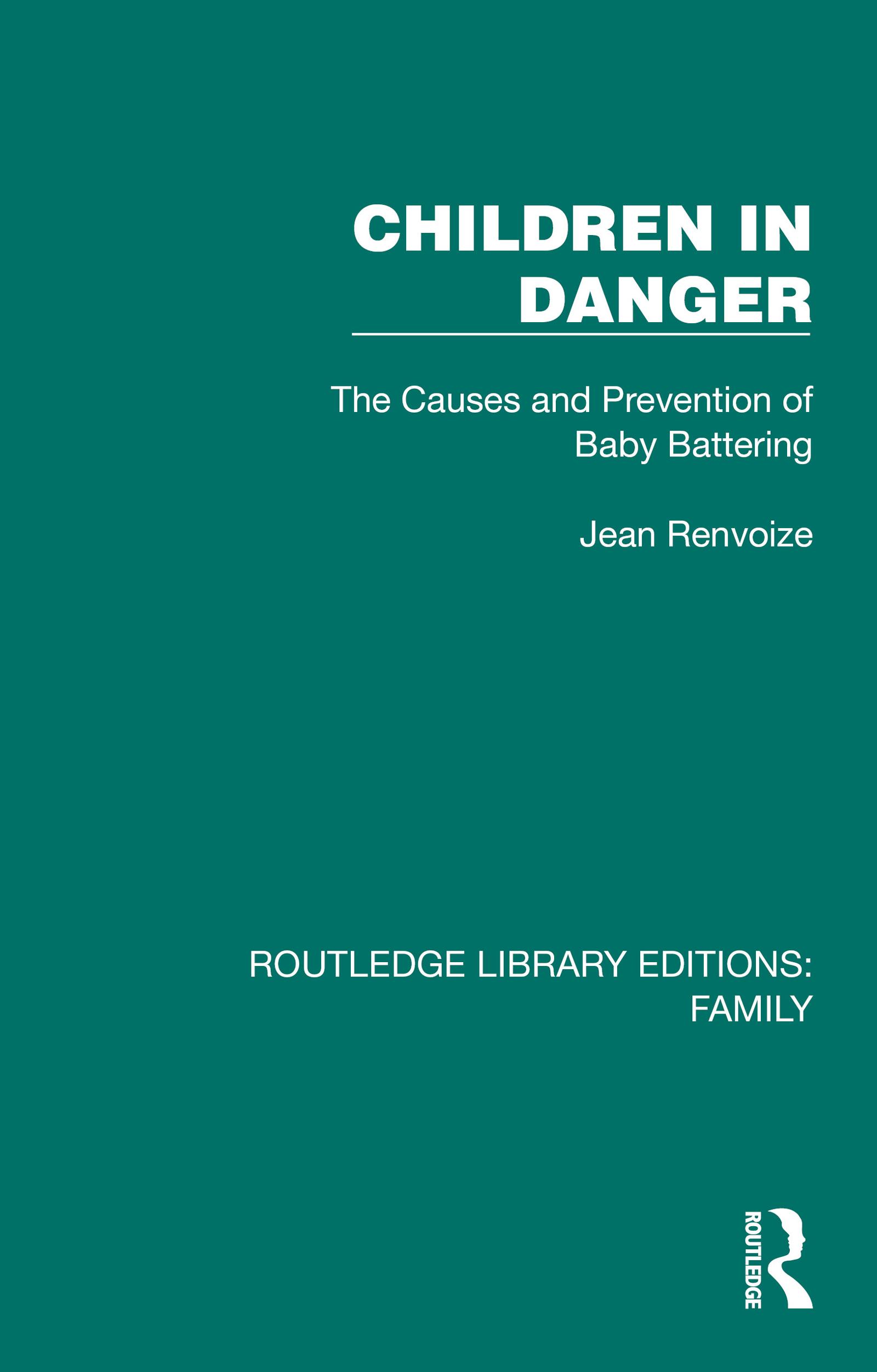
In the early 1970s ‘baby battering’ accounted for an estimated 700 child deaths a year in Britain, while a further 4-5,000 children were seriously injured – all this in spite of the knowledge gained from the research done both in Britain and in the United States. How could such tragedies be prevented? What is known about the parents, the family patterns and social situations that gave rise to baby battering? Extraordinary public interest had been aroused by the appalling case of Maria Colwell, and the problem of baby battering was now receiving the close attention it had long warranted.
Originally published in 1974, Jean Renvoize had spent two years interviewing the battering parents themselves, as well as social workers, doctors, the police and psychiatrists. The special virtue of Children in Danger was that, apart from being the first fully-researched book on the subject, the author was able to look at baby battering as an outsider, seeing the picture as a whole. Her overwhelming impression is that although lip-service was paid to the idea of cooperation between all professionals working in the field, the truth was that too frequently a deep distrust existed between them, particularly between social workers and the police. The result of this distrust was that every year thousands of children fell through the social welfare net with tragic results. Jean Renvoize discusses frankly and impartially the ways the various professions regard each other, and she makes constructive suggestions for the future.
The taped stories of several battering parents, which illustrate how narrow the line is between necessary discipline and near-cruelty, between extreme exasperation and uncontrolled attack, are a moving and illuminating feature of the book. These parents talk not only about their lives and the events which led them towards actions they will never cease regretting, but also about their views of the help that was given them, or the lack of it. They are articulate and self-aware, and here for the first time their story is heard, along with the various professional explanations of why some people cannot stop themselves attacking the children whom they long to love.
Before Memmo my notes were scattered across PDFs. Now a workspace pulls everything into one place — I see exactly what's still left to study.
Memmo's summaries are gold before exams. I don't have to re-read 800 pages two weeks before — just the important parts.
The AI chat has saved me the night before an exam more than once. I just keep asking until I get it — no waiting on a study group to reply.
The quizzes hit exactly what I need to know. Memmo tracks what I get stuck on — so I only practice what's worth it.
Flashcards with spaced repetition are magic. Memmo knows when I'm about to forget something and brings it back.
The AI podcasts are my favorite. I listen on my way to school and get a recap without sitting at a computer.

Handbok i kvalitativa metoder
281 kr

Hållbar utveckling: en introduktion för ingenjörer och andra problemlösare
334 kr

Brymans Samhällsvetenskapliga metoder
390 kr

Projektledning
491 kr

Den orättvisa hälsan: om socioekonomiska skillnader i hälsa och livslängd
326 kr

Organizational Leadership
429 kr

Vetenskapsteori för nybörjare
196 kr

På väg mot läraryrket
172 kr

Det sociala livet i skolan: Socialpsykologiska perspektiv
253 kr

Betygsättningens didaktik
151 kr

Personality
402 kr

Studying Leadership
404 kr

Managing Innovation
477 kr

Introduktion till samhällsvetenskaplig metod
347 kr

The Psychology of Sex and Gender
698 kr

Evidens och kunskap för socialt arbete
207 kr

Introduction to Leadership
605 kr