
Before Memmo my notes were scattered across PDFs. Now a workspace pulls everything into one place — I see exactly what's still left to study.
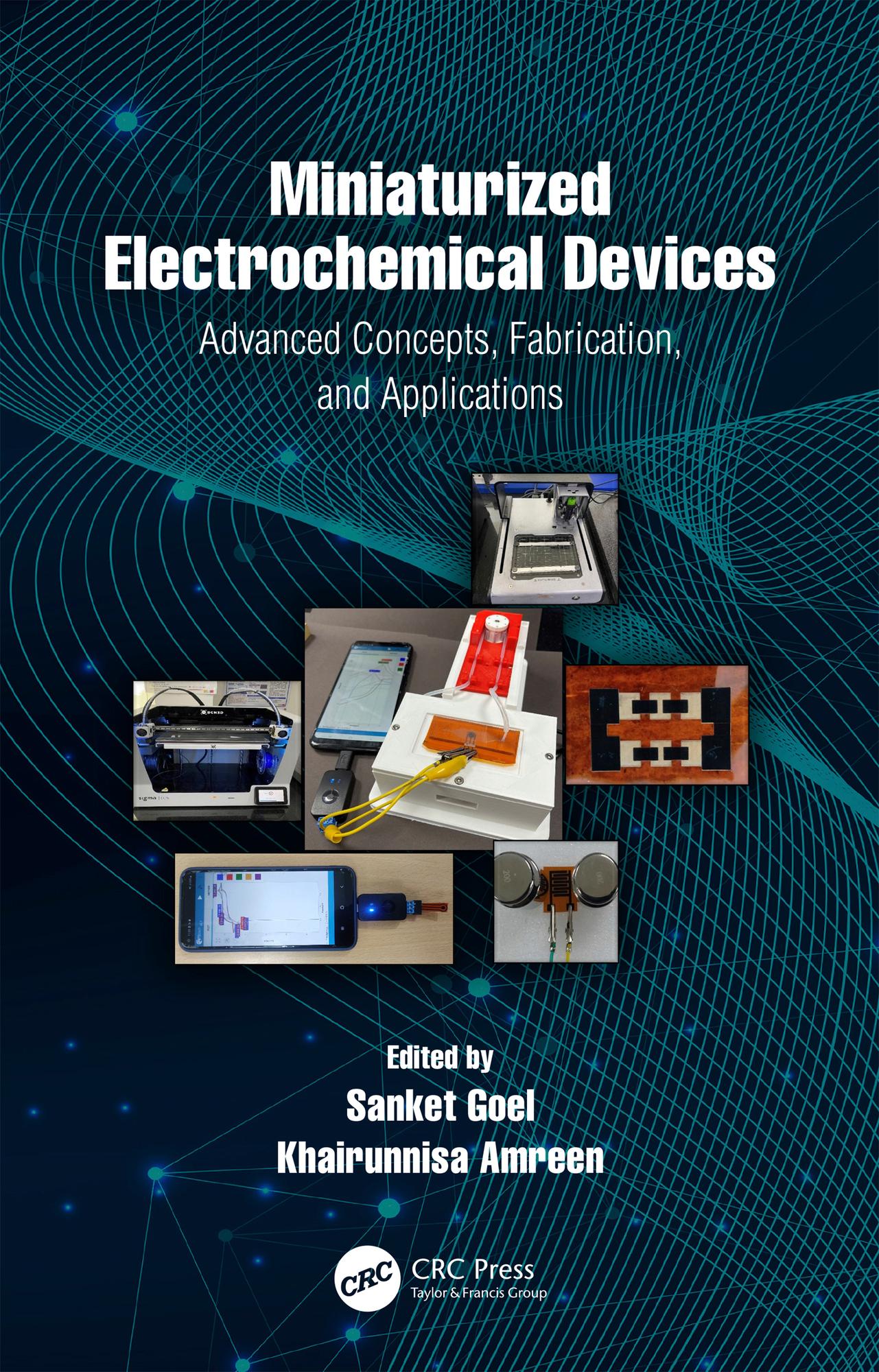
Evidently, electrochemical sensing has revolutionized the electroanalytical detections in the world. Since the 19th century, a huge amount of growth has been visible on various fronts, such as biosensors, energy devices, semiconductor devices, communication, embedded systems, sensors etc. However, the major research gap lies in the fact that most of the reported literatures are bulk systems; hence there are limitations for practical applications.
Research in these domains has been carried out by both academia and industry, whereby academics is the backbone whose intellectual outputs have been widely adopted by the industry and implemented for consumers at large. In order to impart portability to the electrochemical sensors for point-of-care application, the collaboration of electrochemistry, microfluidics, electronics and communication as an interdisciplinary forum is crucial. The miniaturization, automation, IoT enabling and integration are the requirements for building the mentioned research gap. The conversion of electrochemical sensing theoretical concepts to practical applications in real time via miniaturization and integration of microfluidics will enhance this domain. In this context, of lately, several research groups have developed miniaturized microdevices as electrochemical-sensing platforms. This has led to a demand of offering a reference book as a guideline for the PhD programs in electrochemistry, MEMS, electronics and communication. Undoubtedly, this will have a huge impact for R&D in industries, public-funded research institutes and academic institutions.
The book will provide a single forum to understand the current research trends and future perspectives of various electrochemical sensors and their integration in microfluidic devices, automation and point-of-care testing. For students, the book will become a motivation for them to explore these areas for their career standpoints. For the professionals, the book will become a thought-provoking stage to manoeuvre the next-generation devices/processes for commercialization.
Before Memmo my notes were scattered across PDFs. Now a workspace pulls everything into one place — I see exactly what's still left to study.
Memmo's summaries are gold before exams. I don't have to re-read 800 pages two weeks before — just the important parts.
The AI chat has saved me the night before an exam more than once. I just keep asking until I get it — no waiting on a study group to reply.
The quizzes hit exactly what I need to know. Memmo tracks what I get stuck on — so I only practice what's worth it.
Flashcards with spaced repetition are magic. Memmo knows when I'm about to forget something and brings it back.
The AI podcasts are my favorite. I listen on my way to school and get a recap without sitting at a computer.

Handbok i kvalitativa metoder
281 kr

Hållbar utveckling: en introduktion för ingenjörer och andra problemlösare
334 kr

Brymans Samhällsvetenskapliga metoder
390 kr

Projektledning
491 kr

Den orättvisa hälsan: om socioekonomiska skillnader i hälsa och livslängd
326 kr

Vetenskapsteori för nybörjare
196 kr

Organizational Leadership
429 kr

På väg mot läraryrket
172 kr

Det sociala livet i skolan: Socialpsykologiska perspektiv
253 kr

Betygsättningens didaktik
151 kr

Personality
402 kr

Studying Leadership
404 kr

Managing Innovation
477 kr

Introduktion till samhällsvetenskaplig metod
347 kr

The Psychology of Sex and Gender
698 kr

Evidens och kunskap för socialt arbete
207 kr

Introduction to Leadership
605 kr