
Before Memmo my notes were scattered across PDFs. Now a workspace pulls everything into one place — I see exactly what's still left to study.
Clinical psychologist and former intelligence officer Eric D. Shaw brings over 30 years of psychological consultation experience to the national security community, corporate investigations and law enforcement to this work on insider risk. After a career in counterterrorism, Dr. Shaw spent the last 20 years concentrating on insiders—employees who commit espionage, sabotage, intellectual property theft, present risks of harm to self and others, and other workplace risks, especially those influenced by mental health conditions.
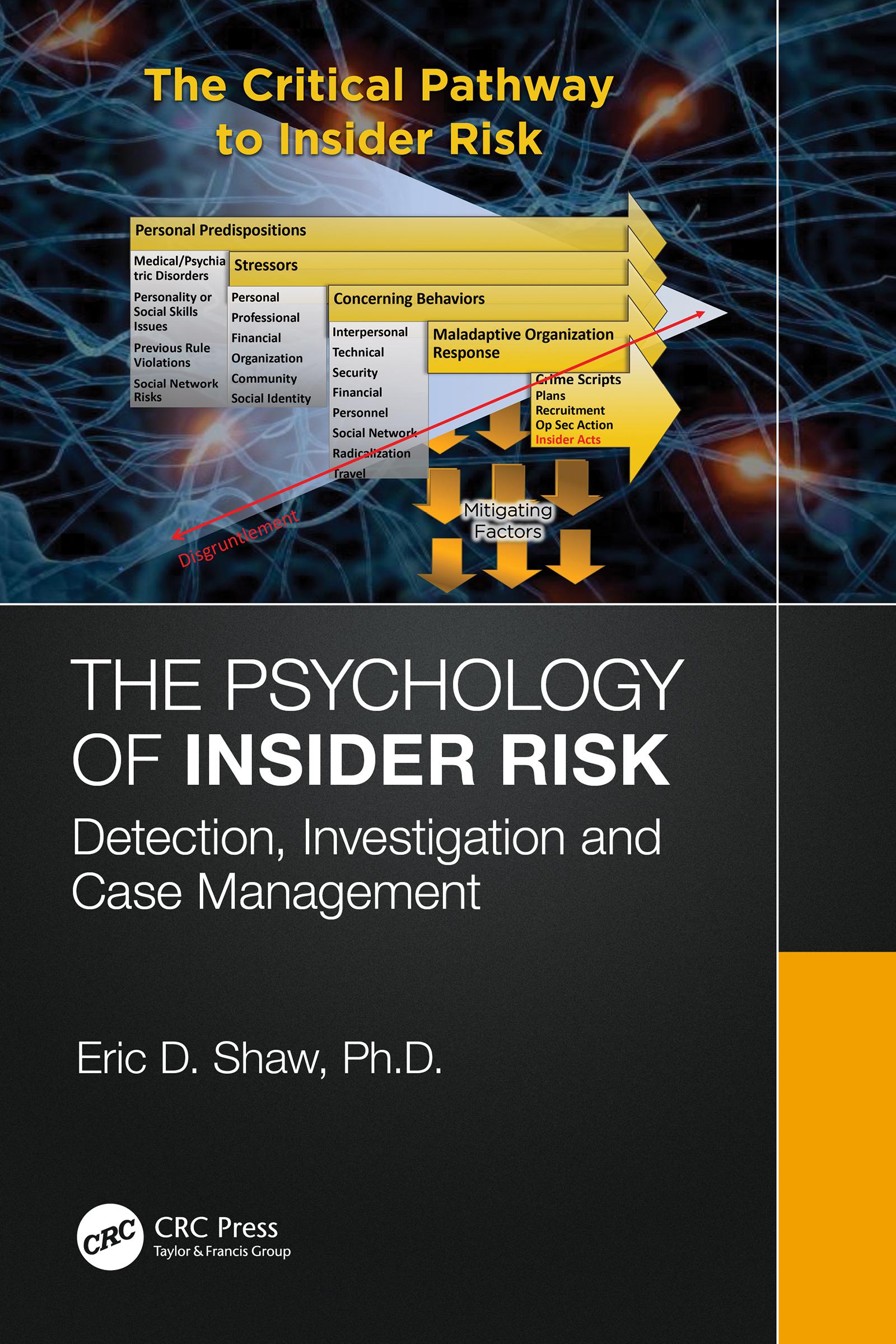
Dr. Shaw is the author of the Critical Pathway to Insider Risk (CPIR) which addresses the characteristics, experiences and connections at-risk employees bring to our organizations, the stressors that trigger higher levels of risk, the concerning behaviors that signal this risk has increased and the action or inaction by organizations that escalate insider risk. The CPIR also examines what these employees look like when they have broken bad and the personal characteristics, resources and support that can mitigate these risks. Dr. Shaw also examines specific risk accelerators like subject disgruntlement, personality disorders and problematic organizational responses that can escalate the speed and intensity of insider risks. The investigative applications, strengths and weaknesses of the CPIR are also considered.
This work also describes the behavioral science tools deployed in insider investigations, especially those designed to locate and understand persons at-risk and help organizations intervene to avoid escalation or manage potential damage. Case examples are drawn from intelligence community, corporate and law enforcement investigations. Specific insider cases where the use of behavioral science tools is described in detail include leaks, anonymous threats, erotomania, hacking, violence risk, mass destruction threats and espionage.
The work closes with consideration of the many current and future challenges insider risk professionals face. These include the challenge of recognizing suicidal ideation as a gateway to other forms of insider risk, understanding when subject therapy will, and will not reduce risk, deciphering belief in conspiracy theory from significant extremist risk, appreciating insider threats to our elections and the unique challenges posed when the insider is a leader.
Before Memmo my notes were scattered across PDFs. Now a workspace pulls everything into one place — I see exactly what's still left to study.
Memmo's summaries are gold before exams. I don't have to re-read 800 pages two weeks before — just the important parts.
The AI chat has saved me the night before an exam more than once. I just keep asking until I get it — no waiting on a study group to reply.
The quizzes hit exactly what I need to know. Memmo tracks what I get stuck on — so I only practice what's worth it.
Flashcards with spaced repetition are magic. Memmo knows when I'm about to forget something and brings it back.
The AI podcasts are my favorite. I listen on my way to school and get a recap without sitting at a computer.

Handbok i kvalitativa metoder
281 kr

Hållbar utveckling: en introduktion för ingenjörer och andra problemlösare
334 kr

Brymans Samhällsvetenskapliga metoder
390 kr

Projektledning
491 kr

Den orättvisa hälsan: om socioekonomiska skillnader i hälsa och livslängd
326 kr

Vetenskapsteori för nybörjare
196 kr

Organizational Leadership
429 kr

På väg mot läraryrket
172 kr

Det sociala livet i skolan: Socialpsykologiska perspektiv
253 kr

Betygsättningens didaktik
151 kr

Personality
402 kr

Studying Leadership
404 kr

Managing Innovation
477 kr

Introduktion till samhällsvetenskaplig metod
347 kr

The Psychology of Sex and Gender
698 kr

Evidens och kunskap för socialt arbete
207 kr

Introduction to Leadership
605 kr