
Before Memmo my notes were scattered across PDFs. Now a workspace pulls everything into one place — I see exactly what's still left to study.
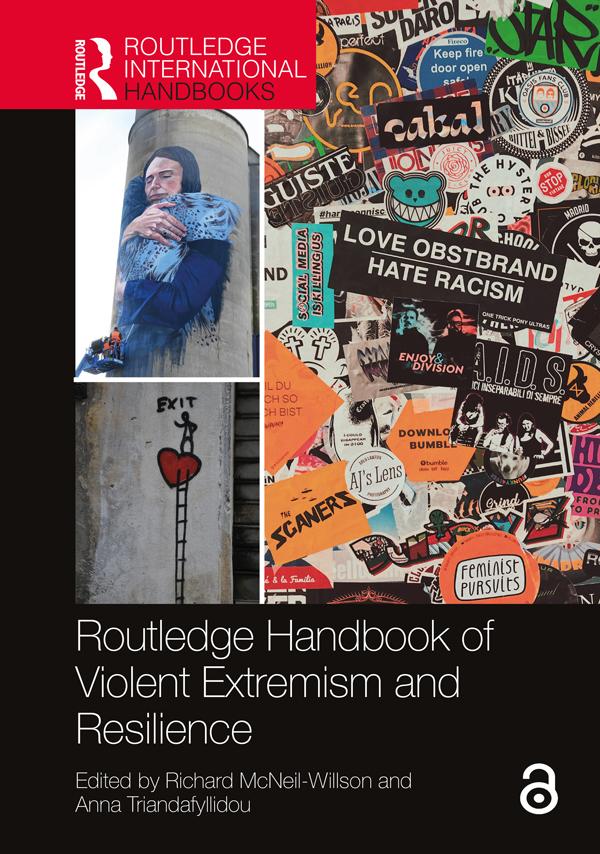
At a time of great global uncertainty and instability, communities face fracturing from the increasing influence of extremist movements hostile to democratic and multicultural norms. Europe and the West have grown increasingly polarised in recent years, beset with financial crises, political instability, the rise of malicious actors and irregular violence, and new forms of media and social media. These factors have enabled the spread of new forms of extremism and suggest a growing need for a response sensitive to inequalities and divisions in wider society – a task made even more urgent by the COVID- 19 pandemic.
The Routledge Handbook of Violent Extremism and Resilience brings together research conducted throughout Europe and the world, to analyse various articulations of violent extremism and consider the impact that such groups and networks have had on the wellbeing of communities and societies. It examines different theories, factors, and national case studies of extremism, polarisation, and societal fragmentation, drilling deep into national examples to map trends across Europe, North America, and Australasia, to provide regional and state-level comparative analysis. It also offers a thorough exploration of resilience – a recent addition to counterextremism policy and practice – to consider how it has come to play this increasingly central role in Preventing and Countering Violent Extremism (P/ CVE), the limitations and opportunities of such approaches, and how it could be shared, developed, problematised, and deployed in response to violence and polarisation.
The Handbook details new trends in both violent extremism and counter-extremism response, within this increasingly fractured global context. It critically explores the latest theories of community violence, extremism, polarisation, and resilience, mapping them across case study countries. In doing so, it presents new findings for students, researchers, practitioners, and policymakers seeking to understand these new patterns of polarisation and extremism and develop community-driven responses.
Before Memmo my notes were scattered across PDFs. Now a workspace pulls everything into one place — I see exactly what's still left to study.
Memmo's summaries are gold before exams. I don't have to re-read 800 pages two weeks before — just the important parts.
The AI chat has saved me the night before an exam more than once. I just keep asking until I get it — no waiting on a study group to reply.
The quizzes hit exactly what I need to know. Memmo tracks what I get stuck on — so I only practice what's worth it.
Flashcards with spaced repetition are magic. Memmo knows when I'm about to forget something and brings it back.
The AI podcasts are my favorite. I listen on my way to school and get a recap without sitting at a computer.

Handbok i kvalitativa metoder
281 kr

Hållbar utveckling: en introduktion för ingenjörer och andra problemlösare
334 kr

Brymans Samhällsvetenskapliga metoder
390 kr

Projektledning
491 kr

Den orättvisa hälsan: om socioekonomiska skillnader i hälsa och livslängd
326 kr

Vetenskapsteori för nybörjare
196 kr

Organizational Leadership
429 kr

På väg mot läraryrket
172 kr

Det sociala livet i skolan: Socialpsykologiska perspektiv
253 kr

Betygsättningens didaktik
151 kr

Personality
402 kr

Studying Leadership
404 kr

Managing Innovation
477 kr

Introduktion till samhällsvetenskaplig metod
347 kr

The Psychology of Sex and Gender
698 kr

Evidens och kunskap för socialt arbete
207 kr

Introduction to Leadership
605 kr