
Before Memmo my notes were scattered across PDFs. Now a workspace pulls everything into one place — I see exactly what's still left to study.
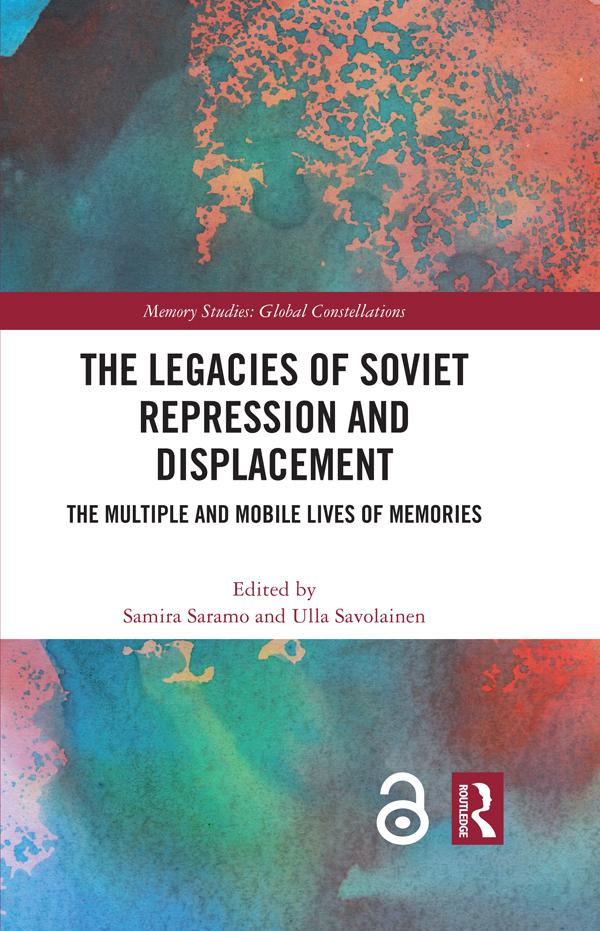
This book explores the ways in which memories of Stalin-era repression and displacement manifest across times and places through diverse forms of materialization. The chapters of the book explore the concrete mobilities of life stories, letters, memoirs, literature, objects, and bodies reflecting Soviet repression and violence across borders of geographical locations, historical periods, and affective landscapes. These spatial, temporal, and psychological shifts are explored further as processes of textual circulation and mediation.
By offering novel multi-sited and multi-media analyses of the creative, political, societal, cultural, and intimate implications of remembrance, the collection contributes fresh interdisciplinary perspectives to both the field of memory studies and the study of Soviet repression. The case studies in this collection focus on the personal, autobiographical, and intimate representations, experiences, and practices related to the remembrance of Stalinist repression and displacement as they are mediated through memoirs, fiction, interviews, and versatile commemorative practices. Taken together, the book asks: what happens to memories, life stories, testimonies, and experiences when they travel in time and space and between media and are (re)interpreted and (re)formulated through these transfers? What kinds of memorial forms are gained through processes of mediation? What types of spaces for remembering, telling, and feeling are created, negotiated, and contested through these shifts? What are the boundaries and intersections of intimate, familial, community, national, and transnational memories?
By analytically contextualizing the various case studies within broader memory discourses in a range of geographical and political contexts, the book offers rich and multilayered interpretations of the enduring ramifications of communist repression. The collection demonstrates that these multiply moving memories not only reflect Eastern European memory culture but also reach far beyond and have transnational and transgenerational significance. As such, this timely book will be essential reading for anyone with an interest in the former Soviet Union or memory studies more broadly.
The Open Access version of this book, available at http://www.taylorfrancis.com, has been made available under a Creative Commons [Attribution-Non Commercial-No Derivatives (CC-BY-NC-ND)] 4.0 license.
Before Memmo my notes were scattered across PDFs. Now a workspace pulls everything into one place — I see exactly what's still left to study.
Memmo's summaries are gold before exams. I don't have to re-read 800 pages two weeks before — just the important parts.
The AI chat has saved me the night before an exam more than once. I just keep asking until I get it — no waiting on a study group to reply.
The quizzes hit exactly what I need to know. Memmo tracks what I get stuck on — so I only practice what's worth it.
Flashcards with spaced repetition are magic. Memmo knows when I'm about to forget something and brings it back.
The AI podcasts are my favorite. I listen on my way to school and get a recap without sitting at a computer.

Handbok i kvalitativa metoder
281 kr

Hållbar utveckling: en introduktion för ingenjörer och andra problemlösare
334 kr

Brymans Samhällsvetenskapliga metoder
390 kr

Projektledning
491 kr

Den orättvisa hälsan: om socioekonomiska skillnader i hälsa och livslängd
326 kr

Vetenskapsteori för nybörjare
196 kr

Organizational Leadership
429 kr

På väg mot läraryrket
172 kr

Det sociala livet i skolan: Socialpsykologiska perspektiv
253 kr

Betygsättningens didaktik
151 kr

Personality
402 kr

Studying Leadership
404 kr

Managing Innovation
477 kr

Introduktion till samhällsvetenskaplig metod
347 kr

The Psychology of Sex and Gender
698 kr

Evidens och kunskap för socialt arbete
207 kr

Introduction to Leadership
605 kr