
Before Memmo my notes were scattered across PDFs. Now a workspace pulls everything into one place — I see exactly what's still left to study.
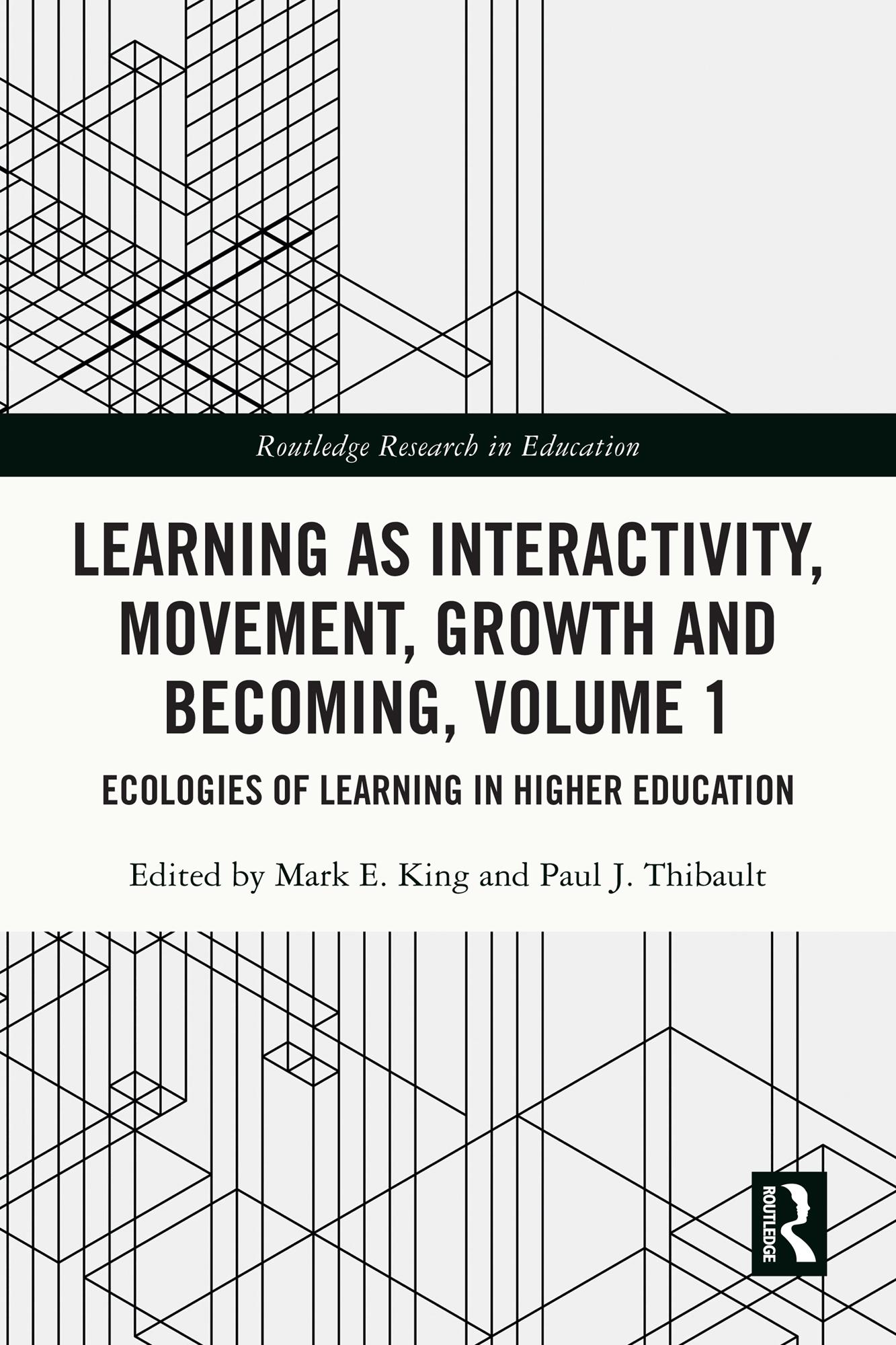
The two inter-linked volumes in this series are dedicated to the development of analysis and theorisation of learning and teaching in higher education. The two volumes focus on the multi-scalar ecological inter-connectedness of learners with teachers, with artefacts, with cultural patterns and resources, with places, with social activities and practices, with social institutions, with time and temporality, and with technologies. Learning reflects inter-individual dynamics that are shaped by biology and culture.
Against prevailing orthodoxies that view learning in higher education in terms of "information transmission" and "content delivery," the contributors articulate leading developments in distributed cognition, distributed language, ecological psychology, enactivist and embodied-embedded cognitive science, interactivity, and multimodal event analysis. They also extend several earlier traditions such as American pragmatism, embodied curriculum theory, and Vygotsky's latter day anti-dualist Spinozan turn.
Through detailed empirical analysis of in vivo episodes of learning using multimodal event analysis, cognitive event analysis, and cutting-edge theory, the authors show how and why learning is not adequately explainable as internal mental processes per se. Instead, sophisticated empirical analysis and innovative theory are put to work to reveal the emergence of learning in the interactivity of learners and teachers with the affordances of a distributed brain-body-environment learning system.
Volume 1 is an edited collection of seven chapters written by internationally renowned researchers together with an Introduction and an Afterword written by King and Thibault. Volume 1 (and its successor Volume 2) will serve as valuable reading for educationalists and researchers in the cognitive, communication, learning, and language sciences who are looking for new multidimensional tools for thinking about, and new empirical tools for analysing, learning, and teaching as multi-scalar interactive processes in radical embodied ecologies of learning and teaching.
Before Memmo my notes were scattered across PDFs. Now a workspace pulls everything into one place — I see exactly what's still left to study.
Memmo's summaries are gold before exams. I don't have to re-read 800 pages two weeks before — just the important parts.
The AI chat has saved me the night before an exam more than once. I just keep asking until I get it — no waiting on a study group to reply.
The quizzes hit exactly what I need to know. Memmo tracks what I get stuck on — so I only practice what's worth it.
Flashcards with spaced repetition are magic. Memmo knows when I'm about to forget something and brings it back.
The AI podcasts are my favorite. I listen on my way to school and get a recap without sitting at a computer.

Handbok i kvalitativa metoder
281 kr

Hållbar utveckling: en introduktion för ingenjörer och andra problemlösare
334 kr

Brymans Samhällsvetenskapliga metoder
390 kr

Projektledning
491 kr

Den orättvisa hälsan: om socioekonomiska skillnader i hälsa och livslängd
326 kr

Organizational Leadership
429 kr

Vetenskapsteori för nybörjare
196 kr

På väg mot läraryrket
172 kr

Det sociala livet i skolan: Socialpsykologiska perspektiv
253 kr

Betygsättningens didaktik
151 kr

Personality
402 kr

Studying Leadership
404 kr

Managing Innovation
477 kr

Introduktion till samhällsvetenskaplig metod
347 kr

The Psychology of Sex and Gender
698 kr

Evidens och kunskap för socialt arbete
207 kr

Introduction to Leadership
605 kr