
Before Memmo my notes were scattered across PDFs. Now a workspace pulls everything into one place — I see exactly what's still left to study.
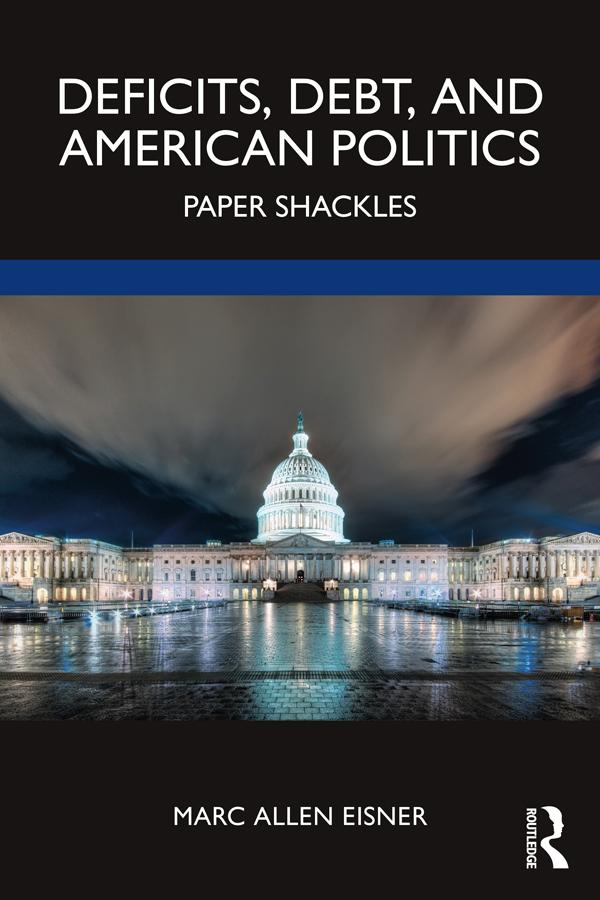
"For most of the history of the United States, periods of growing indebtedness—a product of wars and economic crises—were followed by reductions in the debt-to-GDP ratio." But why have the last several decades failed to follow this pattern, leaving the national debt at its highest level since World War II? In this groundbreaking new book, author Marc Allen Eisner, who has devoted most of his scholarly career to studying the evolution of the US political economy, explores the significant changes in the fiscal conditions of the United States during the postwar period, embedding the discussion in a broader historical context. He demonstrates that the national debt is in part a product of reduced revenues and the growing costs of the largest entitlement programs, but it also reflects a long series of shocks, including two wars, the financial crisis and Great Recession, and the COVID-19 pandemic.
Deficits, Debt, and American Politics chronicles the history of the US debt in the postwar period, placed in the context of broader changes in the political economy and partisan politics. But it grounds this exploration in reader-friendly, chapter-length discussions of public finance, taxation, mandatory spending, and the budgetary process from a policy perspective. The volume concludes with a discussion of the challenges of comprehensive tax and program reforms in the current political climate.
Deficits, Debt, and American Politics assumes little prior knowledge on the part of the reader, making it an ideal book for courses on public policy and political economy taught at both the upper-level undergraduate and graduate level. The material on public finance, long-term trends in taxation and spending, and the budgetary process, often relegated to descriptive texts, will be invaluable in courses engaging the deficit and debt.
Before Memmo my notes were scattered across PDFs. Now a workspace pulls everything into one place — I see exactly what's still left to study.
Memmo's summaries are gold before exams. I don't have to re-read 800 pages two weeks before — just the important parts.
The AI chat has saved me the night before an exam more than once. I just keep asking until I get it — no waiting on a study group to reply.
The quizzes hit exactly what I need to know. Memmo tracks what I get stuck on — so I only practice what's worth it.
Flashcards with spaced repetition are magic. Memmo knows when I'm about to forget something and brings it back.
The AI podcasts are my favorite. I listen on my way to school and get a recap without sitting at a computer.

Handbok i kvalitativa metoder
281 kr

Hållbar utveckling: en introduktion för ingenjörer och andra problemlösare
334 kr

Brymans Samhällsvetenskapliga metoder
390 kr

Projektledning
491 kr

Den orättvisa hälsan: om socioekonomiska skillnader i hälsa och livslängd
326 kr

Vetenskapsteori för nybörjare
196 kr

Organizational Leadership
429 kr

På väg mot läraryrket
172 kr

Det sociala livet i skolan: Socialpsykologiska perspektiv
253 kr

Betygsättningens didaktik
151 kr

Personality
402 kr

Studying Leadership
404 kr

Managing Innovation
477 kr

Introduktion till samhällsvetenskaplig metod
347 kr

The Psychology of Sex and Gender
698 kr

Evidens och kunskap för socialt arbete
207 kr

Introduction to Leadership
605 kr