
Before Memmo my notes were scattered across PDFs. Now a workspace pulls everything into one place — I see exactly what's still left to study.
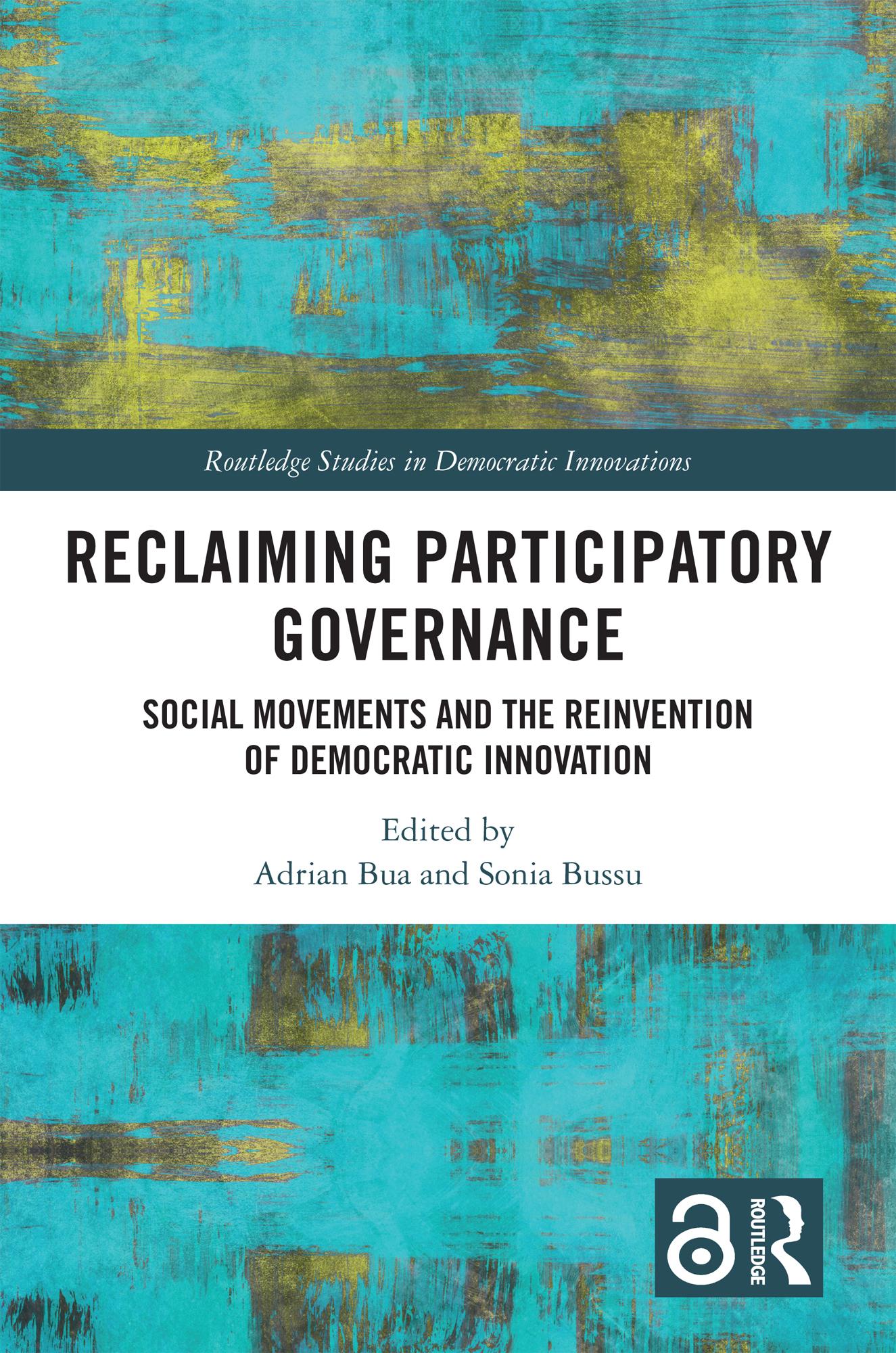
Reclaiming Participatory Governance offers empirical and theoretical perspectives on how the relationship between social movements and state institutions is emerging and developing through new modes of participatory governance.
One of the most interesting political developments of the past decade has been the adoption by social movements of strategies seeking to change political institutions through participatory governance. These strategies have flourished in a variety of contexts, from anti-austerity and pro-social justice protests in Spain, to movements demanding climate transition and race equality in the UK and the USA, to constitutional reforms in Belgium and Iceland. The chief ambition and challenge of these new forms of participatory governance is to institutionalise the prefigurative politics and social justice values that inspired them in the first place, by mobilising the bureaucracy to respond to their claims for reforms and rights. The authors of this volume assess how participatory governance is being transformed and explore the impact of such changes, providing timely critical reflections on: the constraints imposed by cultural, economic and political power relations on these new empowered participatory spaces; the potential of this new "wave" of participatory democracy to reimagine the relationship between citizens and traditional institutions towards more radical democratic renewal; where and how these new democratisation efforts sit within the representative state; and how tensions between the different demands of lay citizens, organised civil society and public officials are being managed.
This book will be an important resource for students and academics in political science, public administration and social policy, as well as activists, practitioners and policymakers interested in supporting innovative engagement for deeper social transformation.
Chapter 11 of this book is freely available as a downloadable Open Access PDF at http://www.taylorfrancis.com under a Creative Commons Attribution-Non Commercial-No Derivatives (CC-BY-NC-ND) 4.0 license.
Before Memmo my notes were scattered across PDFs. Now a workspace pulls everything into one place — I see exactly what's still left to study.
Memmo's summaries are gold before exams. I don't have to re-read 800 pages two weeks before — just the important parts.
The AI chat has saved me the night before an exam more than once. I just keep asking until I get it — no waiting on a study group to reply.
The quizzes hit exactly what I need to know. Memmo tracks what I get stuck on — so I only practice what's worth it.
Flashcards with spaced repetition are magic. Memmo knows when I'm about to forget something and brings it back.
The AI podcasts are my favorite. I listen on my way to school and get a recap without sitting at a computer.

Handbok i kvalitativa metoder
281 kr

Hållbar utveckling: en introduktion för ingenjörer och andra problemlösare
334 kr

Brymans Samhällsvetenskapliga metoder
390 kr

Projektledning
491 kr

Den orättvisa hälsan: om socioekonomiska skillnader i hälsa och livslängd
326 kr

Organizational Leadership
429 kr

Vetenskapsteori för nybörjare
196 kr

På väg mot läraryrket
172 kr

Det sociala livet i skolan: Socialpsykologiska perspektiv
253 kr

Betygsättningens didaktik
151 kr

Personality
402 kr

Studying Leadership
404 kr

Managing Innovation
477 kr

Introduktion till samhällsvetenskaplig metod
347 kr

The Psychology of Sex and Gender
698 kr

Evidens och kunskap för socialt arbete
207 kr

Introduction to Leadership
605 kr