
Before Memmo my notes were scattered across PDFs. Now a workspace pulls everything into one place — I see exactly what's still left to study.
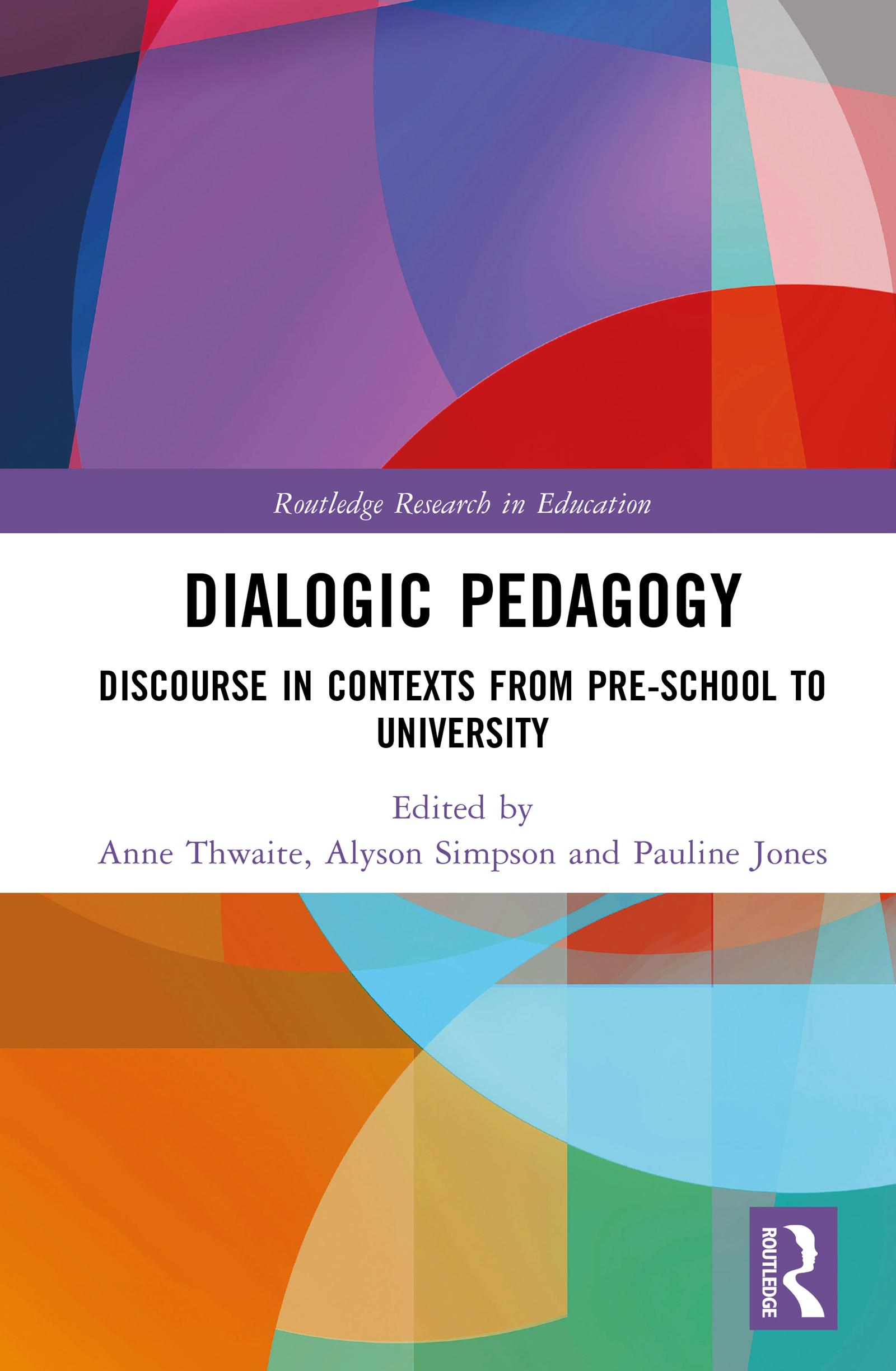
Taking a dialogic approach, this edited book engages in analysis and description of dialogic discourse in a number of different educational contexts, from early childhood to tertiary, with an international team of contributors from Australia, Finland, New Zealand and the United Kingdom. The chapters focus mostly on dialogic face-to-face discourse, with some examples of online interactions, and feature insights from educational linguistics, particularly the work of Michael Halliday.
While the contributors come from a range of theoretical backgrounds, they all share an interest in language in use and engage in close analysis of transcripts of naturally-occurring interaction. Taking inspiration from Alexander and other theorists, they employ a fine-grained and analytic approach to the exploration of their data. The authors make use of the linguistic tools and models of language in society, in order to examine the turn-by-turn unfolding of the interaction. The authors relate their insights from disparate forms of linguistic analysis to elements of Alexander’s (2020) dialogic framework, situating the discourse in its contexts and discussing the pedagogical implications of the linguistic choices at play.
In presenting this work from a range of situations and perspectives, the authors strive to demonstrate how dialogic discourse plays out in educational contexts across the world. The book aims to foster further research in this direction and to inspire educators to explore dialogic discourse for themselves. It will be of interest to a wide audience, including literacy researchers, linguists, teachers and teacher educators, as well as graduate students.
Before Memmo my notes were scattered across PDFs. Now a workspace pulls everything into one place — I see exactly what's still left to study.
Memmo's summaries are gold before exams. I don't have to re-read 800 pages two weeks before — just the important parts.
The AI chat has saved me the night before an exam more than once. I just keep asking until I get it — no waiting on a study group to reply.
The quizzes hit exactly what I need to know. Memmo tracks what I get stuck on — so I only practice what's worth it.
Flashcards with spaced repetition are magic. Memmo knows when I'm about to forget something and brings it back.
The AI podcasts are my favorite. I listen on my way to school and get a recap without sitting at a computer.

Handbok i kvalitativa metoder
281 kr

Hållbar utveckling: en introduktion för ingenjörer och andra problemlösare
334 kr

Brymans Samhällsvetenskapliga metoder
390 kr

Projektledning
491 kr

Den orättvisa hälsan: om socioekonomiska skillnader i hälsa och livslängd
326 kr

Organizational Leadership
429 kr

Vetenskapsteori för nybörjare
196 kr

På väg mot läraryrket
172 kr

Det sociala livet i skolan: Socialpsykologiska perspektiv
253 kr

Betygsättningens didaktik
151 kr

Personality
402 kr

Studying Leadership
404 kr

Managing Innovation
477 kr

Introduktion till samhällsvetenskaplig metod
347 kr

The Psychology of Sex and Gender
698 kr

Evidens och kunskap för socialt arbete
207 kr

Introduction to Leadership
605 kr