
Before Memmo my notes were scattered across PDFs. Now a workspace pulls everything into one place — I see exactly what's still left to study.
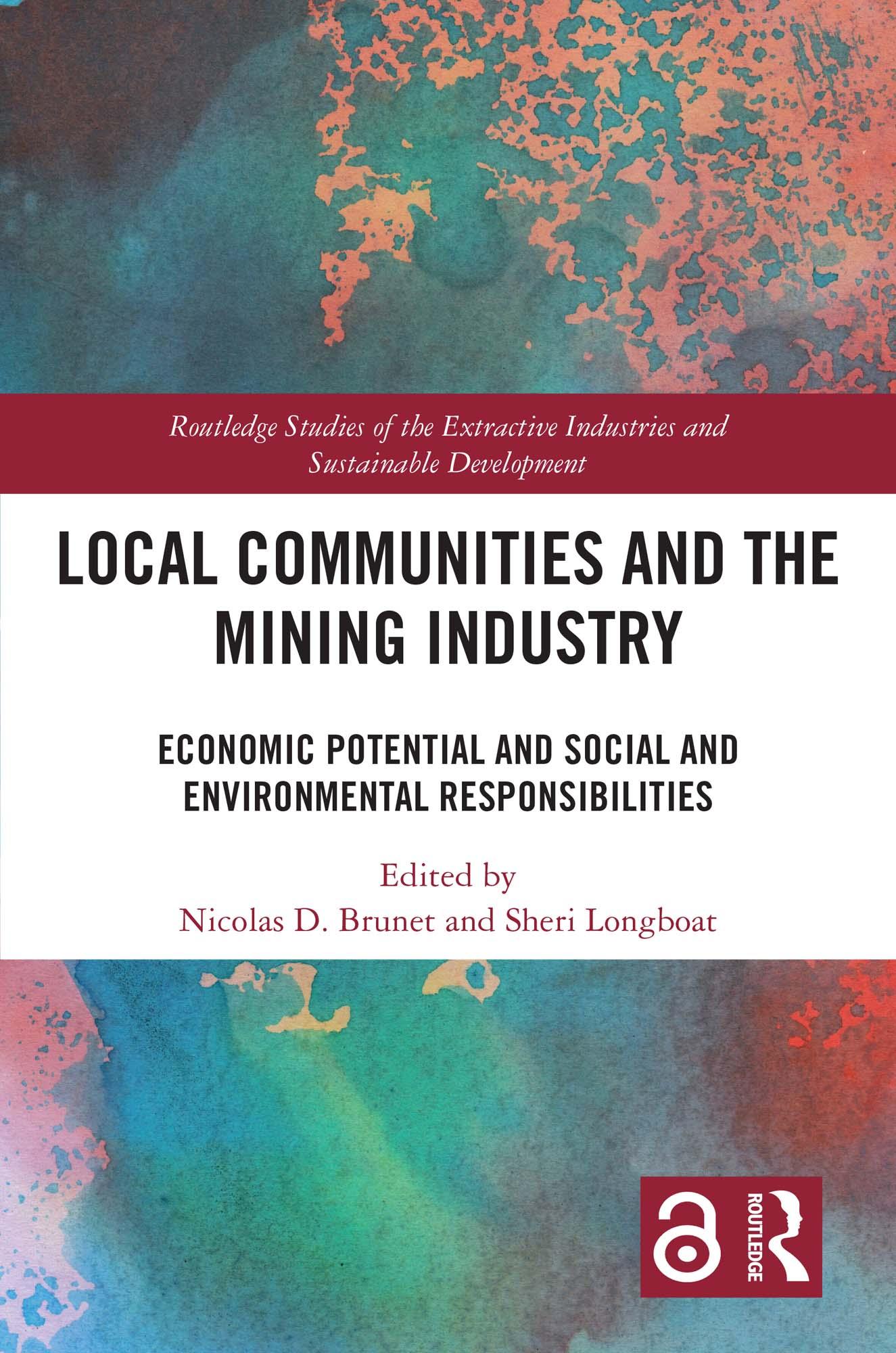
This book explores the challenges and opportunities at the intersection of the global mining sector and local communities by focusing on a number of international cases drawn from various locations in Canada, the Philippines, and Scandinavia.
Mining’s contribution to economic development varies greatly across countries. In some, it has been a major engine of development, but in others, disputes have erupted over land use, property rights, environmental damage, and revenue sharing. Corporate social responsibility programs are increasingly relied upon to manage company-community relations, yet conflicts persist in many settings, with significant costs for companies and communities. Exploring the many factors and drivers that characterize relationships among different actors within the sector, the volume contributes towards the development of practical wisdom, collective understanding, common sense, and prudence required for the mining sector and community partners to realize the economic potential and social and environmental responsibilities of non-renewable resource development. The book examines case studies from Canada, Scandinavia, and the Philippines, three regions amongst the world's top countries of mining operations. Drawing on their extensive experience in these regions, the contributors explore distinctive mining sectors in the Global North and South, the variation surrounding different types of extractive industries, and at different scales, and the legal processes in place to protect local communities. Key themes include corporate social responsibility, impact assessment, foreign ownership, Indigenous Peoples, gender, local insurgency, and mining disasters as well as climate change. The book identifies areas of future research and pathways to achieving stronger, respectful, and mutually beneficial relationships at the nexus of global mineral extraction and local communities.
This book will be of great interest to students and scholars of the extractive industries, natural resource management, sustainable business and corporate social responsibility, Indigenous studies, and sustainable planning and development.
The Open Access version of this book, available at www.taylorfrancis.com, has been made available under a Creative Commons [Attribution-Non Commercial-No Derivatives (CC-BY-NC-ND)] 4.0 license.
Before Memmo my notes were scattered across PDFs. Now a workspace pulls everything into one place — I see exactly what's still left to study.
Memmo's summaries are gold before exams. I don't have to re-read 800 pages two weeks before — just the important parts.
The AI chat has saved me the night before an exam more than once. I just keep asking until I get it — no waiting on a study group to reply.
The quizzes hit exactly what I need to know. Memmo tracks what I get stuck on — so I only practice what's worth it.
Flashcards with spaced repetition are magic. Memmo knows when I'm about to forget something and brings it back.
The AI podcasts are my favorite. I listen on my way to school and get a recap without sitting at a computer.

Handbok i kvalitativa metoder
281 kr

Hållbar utveckling: en introduktion för ingenjörer och andra problemlösare
334 kr

Brymans Samhällsvetenskapliga metoder
390 kr

Projektledning
491 kr

Den orättvisa hälsan: om socioekonomiska skillnader i hälsa och livslängd
326 kr

Vetenskapsteori för nybörjare
196 kr

Organizational Leadership
429 kr

På väg mot läraryrket
172 kr

Det sociala livet i skolan: Socialpsykologiska perspektiv
253 kr

Betygsättningens didaktik
151 kr

Personality
402 kr

Studying Leadership
404 kr

Managing Innovation
477 kr

Introduktion till samhällsvetenskaplig metod
347 kr

The Psychology of Sex and Gender
698 kr

Evidens och kunskap för socialt arbete
207 kr

Introduction to Leadership
605 kr