
Before Memmo my notes were scattered across PDFs. Now a workspace pulls everything into one place — I see exactly what's still left to study.
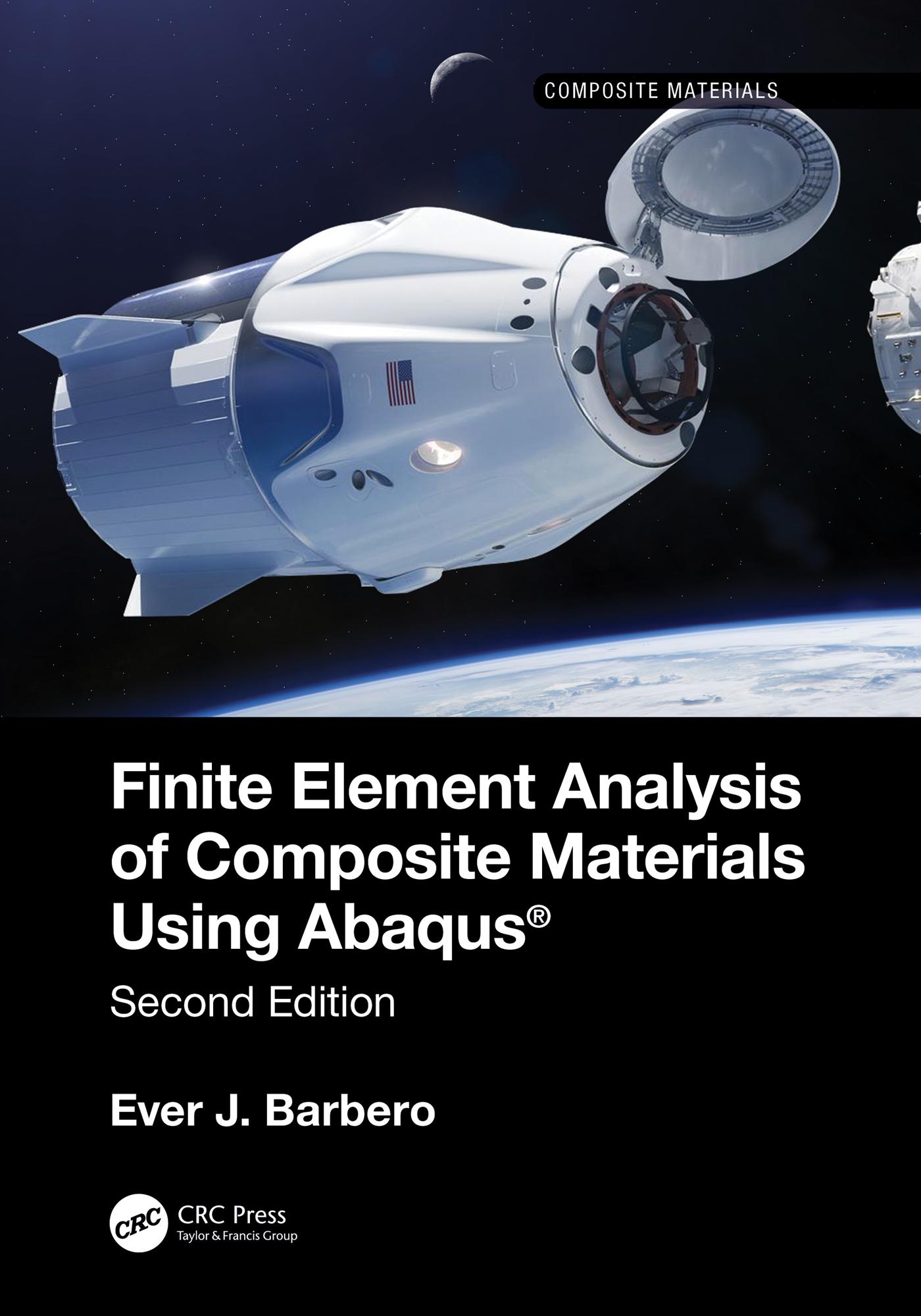
Developed from the author’s course on advanced mechanics of composite materials, Finite Element Analysis of Composite Materials with Abaqus® shows how powerful finite element tools tackle practical problems in the structural analysis of composites. This Second Edition includes two new chapters on "Fatigue" and "Abaqus Programmable Features" as well as a major update of chapter 10 "Delaminations" and significant updates throughout the remaining chapters. Furthermore, it updates all examples, sample code, and problems to Abaqus 2020.
Unlike other texts, this one takes theory to a hands-on level by actually solving problems. It explains the concepts involved in the detailed analysis of composites, the mechanics needed to translate those concepts into a mathematical representation of the physical reality, and the solution of the resulting boundary value problems using Abaqus. The reader can follow a process to recreate every example using Abaqus graphical user interface (CAE) by following step-by-step directions in the form of pseudo-code or watching the solutions on YouTube.
The first seven chapters provide material ideal for a one-semester course. Along with offering an introduction to finite element analysis for readers without prior knowledge of the finite element method, these chapters cover the elasticity and strength of laminates, buckling analysis, free edge stresses, computational micromechanics, and viscoelastic models for composites. Emphasizing hereditary phenomena, the book goes on to discuss continuum and discrete damage mechanics as well as delaminations and fatigue. The text also shows readers how to extend the capabilities of Abaqus via "user subroutines" and Python scripting.
Aimed at advanced students and professional engineers, this textbook features 62 fully developed examples interspersed with the theory, 82 end-of-chapter exercises, and 50+ separate pieces of Abaqus pseudo-code that illustrate the solution of example problems. The author’s website offers the relevant Abaqus and MATLAB model files available for download, enabling readers to easily reproduce the examples and complete the exercises: https://barbero.cadec-online.com/feacm-abaqus/index.html. Video recording of solutions to examples are available on YouTube with multilingual captions.
Before Memmo my notes were scattered across PDFs. Now a workspace pulls everything into one place — I see exactly what's still left to study.
Memmo's summaries are gold before exams. I don't have to re-read 800 pages two weeks before — just the important parts.
The AI chat has saved me the night before an exam more than once. I just keep asking until I get it — no waiting on a study group to reply.
The quizzes hit exactly what I need to know. Memmo tracks what I get stuck on — so I only practice what's worth it.
Flashcards with spaced repetition are magic. Memmo knows when I'm about to forget something and brings it back.
The AI podcasts are my favorite. I listen on my way to school and get a recap without sitting at a computer.

Handbok i kvalitativa metoder
281 kr

Hållbar utveckling: en introduktion för ingenjörer och andra problemlösare
334 kr

Brymans Samhällsvetenskapliga metoder
390 kr

Projektledning
491 kr

Den orättvisa hälsan: om socioekonomiska skillnader i hälsa och livslängd
326 kr

Organizational Leadership
429 kr

Vetenskapsteori för nybörjare
196 kr

På väg mot läraryrket
172 kr

Det sociala livet i skolan: Socialpsykologiska perspektiv
253 kr

Betygsättningens didaktik
151 kr

Personality
402 kr

Studying Leadership
404 kr

Managing Innovation
477 kr

Introduktion till samhällsvetenskaplig metod
347 kr

The Psychology of Sex and Gender
698 kr

Evidens och kunskap för socialt arbete
207 kr

Introduction to Leadership
605 kr