
Before Memmo my notes were scattered across PDFs. Now a workspace pulls everything into one place — I see exactly what's still left to study.
COVID-19 is a highly contagious viral illness caused by severe acute respiratory syndrome SARSCoV-2. It has had a devastating effect on the world’s demographics with high morbidity and mortality worldwide. After the influenza pandemic of 1918, it has emerged as the most consequential global health crisis. After the first cases of this predominantly respiratory viral illness were first reported in Wuhan, Hubei Province, China, in late December 2019, SARS-CoV- 2 rapidly disseminated across the world in a short span of time, compelling the World Health Organization (WHO) to declare it a global pandemic on March 11, 2020. The outbreak of COVID-19 has proven to be a worldwide unprecedented disaster. It has physically, psychologically, socially, and economically afflicted billions of people across the globe. Its transmission is significantly high. Serious postrecovery has been noticed in a large number of people. The virus is highly mutable and new and new strains are appearing, and many of them such as delta, BA1 and BA2 subvariants as well as their hybrids have been considered by the WHO as concerning. The virus has exhibited deleterious impacts on bodily systems other than the respiratory system (primary target) such as the brain, hematological system, liver, kidneys, endocrine system, etc. Right after its declaration as a pandemic by the WHO in March 2020, governments in various countries declared lockdowns to combat the spread of disease, causing major disruption to the lives of billions of people.
Besides the impact on health and healthcare systems, education was changed with the introduction of online and or hybrid systems to help students continue to learn. Though the pandemic has subsided now, the emergence of new variants continues and lifestyle changes such as online learning and work from home have continued.
Researchers who successfully mitigated the negative impact of social media and effectively used it for acceptance of medicinal or non-medicinal measures during pandemics by developing a realtime information sharing system and assembling a multidisciplinary team of experts to collect and analyze data from a variety of social media platforms across the global diaspora to better understand people’s perceptions and attitudes, as well as to spot early warning signs of error and correct them before they proliferate. They also emphasized the necessity of addressing people’s perceptions in order to increase awareness and education, so that social media may be used to promote public trust collaboration, and improved adherence to epidemic control measures. In totality the pandemic affected the environment and ecosystem as a whole positively due to a decrease in vehicles on roads and less movement of persons from one place to another. However, medical waste was increased and new measures were needed to handle it. People have had to change their habits in everyday life in order to live with the pandemic and protect themselves and others.
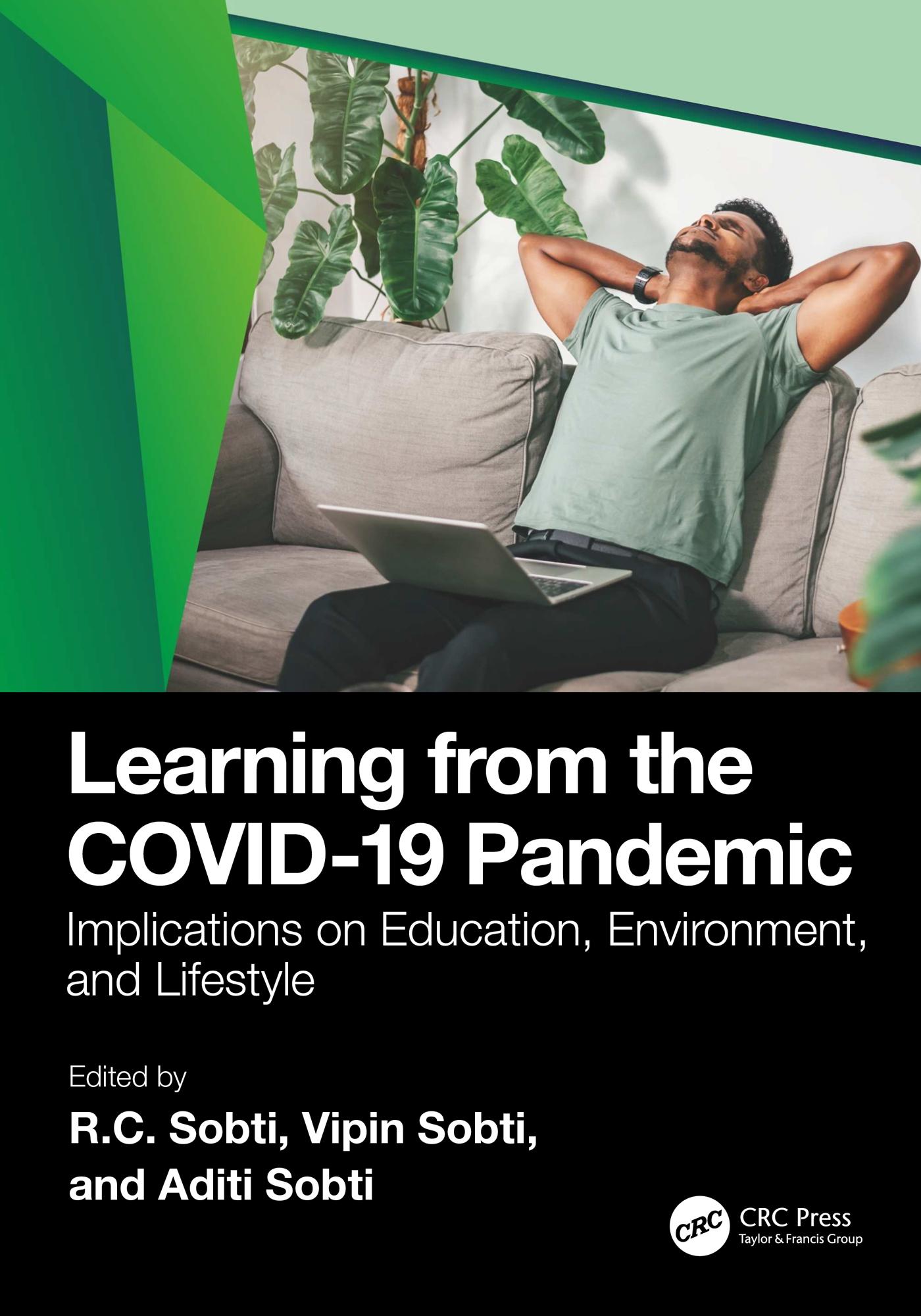
This volume focuses on the implications of COVID-19 on education, environment, and lifestyle. It includes chapters on the transformation of education systems and introduction of hybrid modes of education, impact on environment, management of solid wastes, and development of innovative gadgets and architectural designs to help deal with the pandemic. Other chapters cover diet, family systems, and adoption of new norms in pandemic times.
This book will be a valued resource for students, teachers, and researchers of social science and science as well as public health workers.
Before Memmo my notes were scattered across PDFs. Now a workspace pulls everything into one place — I see exactly what's still left to study.
Memmo's summaries are gold before exams. I don't have to re-read 800 pages two weeks before — just the important parts.
The AI chat has saved me the night before an exam more than once. I just keep asking until I get it — no waiting on a study group to reply.
The quizzes hit exactly what I need to know. Memmo tracks what I get stuck on — so I only practice what's worth it.
Flashcards with spaced repetition are magic. Memmo knows when I'm about to forget something and brings it back.
The AI podcasts are my favorite. I listen on my way to school and get a recap without sitting at a computer.

Handbok i kvalitativa metoder
281 kr

Hållbar utveckling: en introduktion för ingenjörer och andra problemlösare
334 kr

Brymans Samhällsvetenskapliga metoder
390 kr

Projektledning
491 kr

Den orättvisa hälsan: om socioekonomiska skillnader i hälsa och livslängd
326 kr

Vetenskapsteori för nybörjare
196 kr

Organizational Leadership
429 kr

På väg mot läraryrket
172 kr

Det sociala livet i skolan: Socialpsykologiska perspektiv
253 kr

Betygsättningens didaktik
151 kr

Personality
402 kr

Studying Leadership
404 kr

Managing Innovation
477 kr

Introduktion till samhällsvetenskaplig metod
347 kr

The Psychology of Sex and Gender
698 kr

Evidens och kunskap för socialt arbete
207 kr

Introduction to Leadership
605 kr