
Before Memmo my notes were scattered across PDFs. Now a workspace pulls everything into one place — I see exactly what's still left to study.
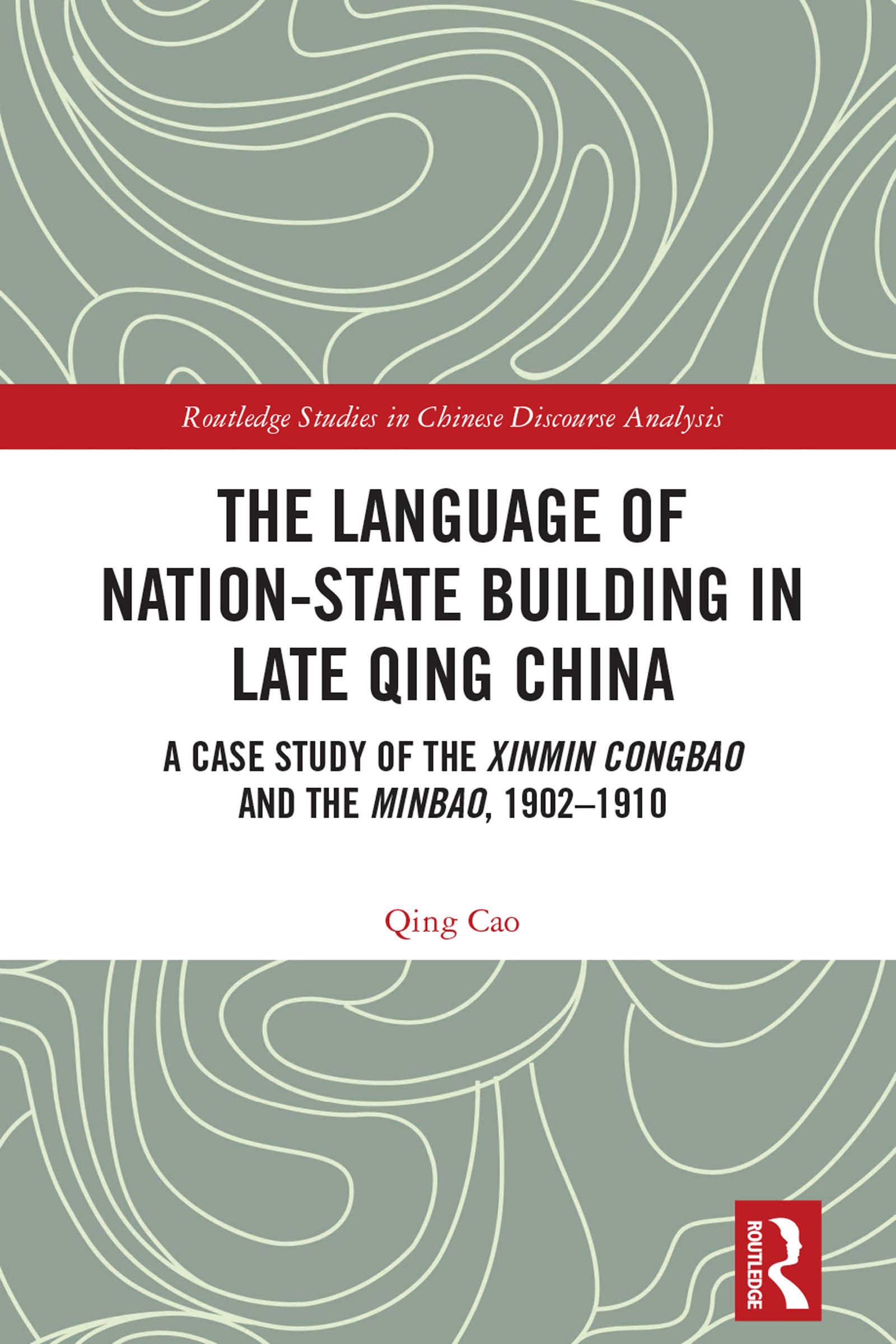
The Language of Nation-State Building in Late Qing China investigates the linguistic and intellectual roots of China’s modern transformation by presenting a systematic study of the interplay between language innovation and socio-political upheavals in the final decade of the Qing Dynasty.
This book examines the formations, internal tensions, and promotion of such macroconcepts as ‘nation people’ (guomin 国民), nation (minzu 民族), society (qun 群), state (guojia 国家) and revolution (gemin 革命) as novel ideas borrowed from Europe but mediated through Meiji Japan. Using corpus-based discourse analysis of the full-text corpus (4.2 million words) of the two most influential periodicals, Xinmin Congbao (新民丛报) and Minbao (民报), this book scrutinises the multi-faceted formulations of these concepts and their impact. It underscores the adaptation and appropriation of European post-enlightenment values to the socio-political conditions of late Qing society.
The analysis centres on the epic debate (1905-7) between these two periodicals that offered two distinctive visions of future China. Comparable to the great eighteenth-century debate between Edmund Burke and Thomas Paine on the French Revolution, the Chinese debate has hitherto attracted little scholarly attention outside China. Yet it not only turned the tidal wave of public opinion against the Manchu monarchy and contributed to its downfall in 1911; it has also given rise to a radical undercurrent of intellectual thinking whose ramifications have been keenly felt throughout twentieth-century China. This book represents the first study in English on this press debate that contributes significantly to the intellectual foundation of modern China.
This book will be useful and relevant to academics, postgraduate students and final year undergraduate students in the field of Chinese studies, and anyone interested in the role of language in shaping modern intellectual history.
Before Memmo my notes were scattered across PDFs. Now a workspace pulls everything into one place — I see exactly what's still left to study.
Memmo's summaries are gold before exams. I don't have to re-read 800 pages two weeks before — just the important parts.
The AI chat has saved me the night before an exam more than once. I just keep asking until I get it — no waiting on a study group to reply.
The quizzes hit exactly what I need to know. Memmo tracks what I get stuck on — so I only practice what's worth it.
Flashcards with spaced repetition are magic. Memmo knows when I'm about to forget something and brings it back.
The AI podcasts are my favorite. I listen on my way to school and get a recap without sitting at a computer.

Handbok i kvalitativa metoder
281 kr

Hållbar utveckling: en introduktion för ingenjörer och andra problemlösare
334 kr

Brymans Samhällsvetenskapliga metoder
390 kr

Projektledning
491 kr

Den orättvisa hälsan: om socioekonomiska skillnader i hälsa och livslängd
326 kr

Vetenskapsteori för nybörjare
196 kr

Organizational Leadership
429 kr

På väg mot läraryrket
172 kr

Det sociala livet i skolan: Socialpsykologiska perspektiv
253 kr

Betygsättningens didaktik
151 kr

Personality
402 kr

Studying Leadership
404 kr

Managing Innovation
477 kr

Introduktion till samhällsvetenskaplig metod
347 kr

The Psychology of Sex and Gender
698 kr

Evidens och kunskap för socialt arbete
207 kr

Introduction to Leadership
605 kr