
Before Memmo my notes were scattered across PDFs. Now a workspace pulls everything into one place — I see exactly what's still left to study.
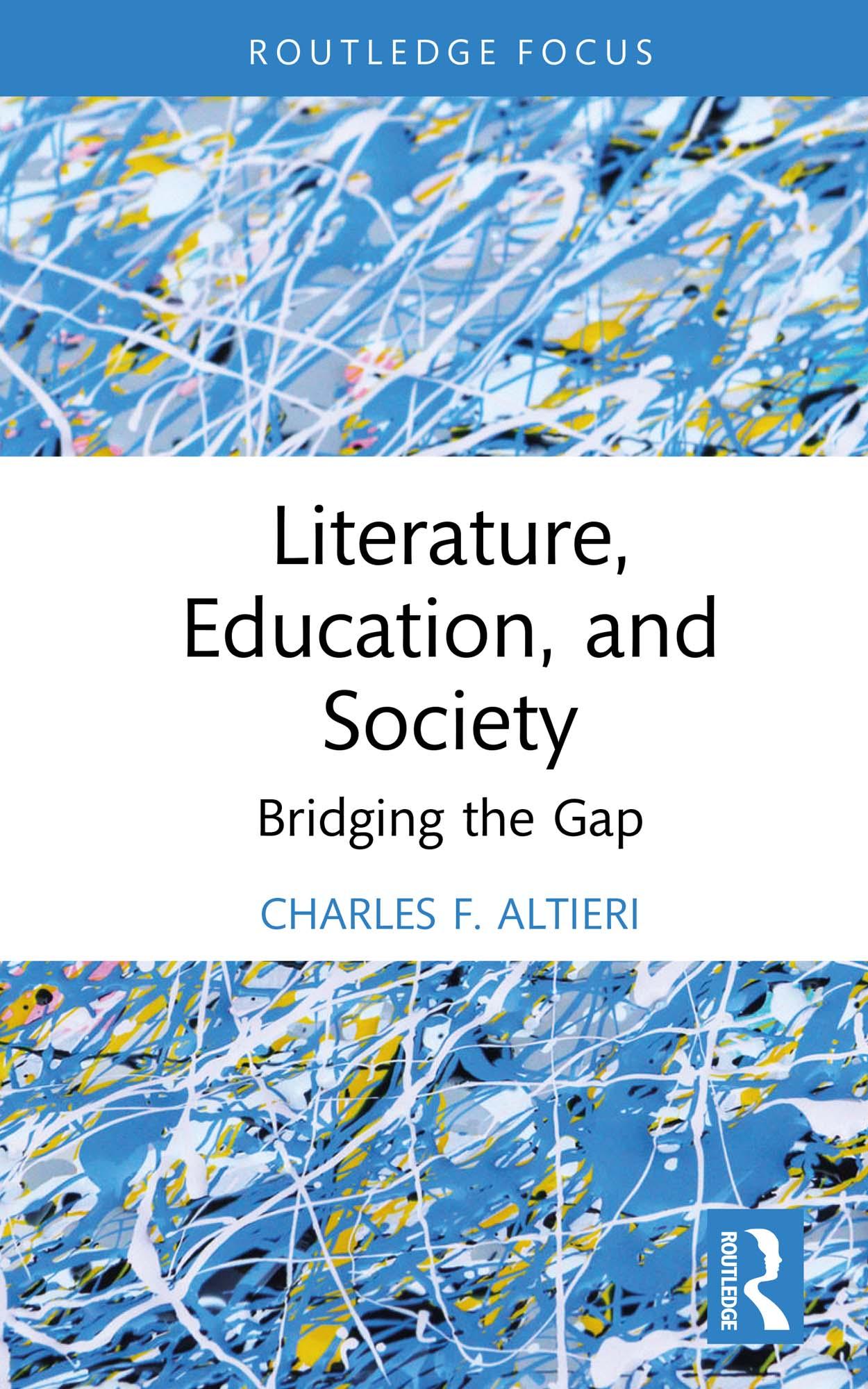
In today’s classrooms, educators specializing in literature and the arts have found themselves facing an escalating crisis. Most obviously, they encounter serious budget cuts, largely because students tend in increasing numbers to prefer majoring in disciplines that provide clear, practical knowledge and the promise of relatively lucrative careers. These educators have addressed the crisis by stressing how the arts can also provide valuable forms of knowledge by testing moral values and by developing the skills of critical thinking required to understand the cost of apparently perennial social problems. Literature, Education, and Society offers a fresh strategy by focusing not on knowledge but on how literature and the arts provide distinctive domains of experience that stress significant values not typically provided by other disciplines. Practical disciplines tend to treat experiences as instances for which we learn to provide interpretive generalizations, making knowledge possible and helping us establish concrete programs for acting in accord with what we come to know. But the arts do not encourage generalizing from particulars. Instead they emphasize how to appreciate the particulars for qualities like sensitivity, intensity, and the capacity to solicit empathy. In order to dramatize this crucial difference, this book distinguishes sharply between a focus on "experience of" what solicits knowledge and a focus on "experience as" which encourages careful attention to what can be embedded in particular experiences. Then the book characterizes the making of art as an act of doubling. where the making fashions some aspect of experience and invites self-conscious participation in the intensity provided by the particular work. After exploring several aspects of doubling, the book turns to the vexed question of ethics, arguing that while this theory cannot persuade us that the arts improve behavior, its stress on art’s purposive structuring of experience can affect how people construct values, something essential to education itself.
Before Memmo my notes were scattered across PDFs. Now a workspace pulls everything into one place — I see exactly what's still left to study.
Memmo's summaries are gold before exams. I don't have to re-read 800 pages two weeks before — just the important parts.
The AI chat has saved me the night before an exam more than once. I just keep asking until I get it — no waiting on a study group to reply.
The quizzes hit exactly what I need to know. Memmo tracks what I get stuck on — so I only practice what's worth it.
Flashcards with spaced repetition are magic. Memmo knows when I'm about to forget something and brings it back.
The AI podcasts are my favorite. I listen on my way to school and get a recap without sitting at a computer.

Handbok i kvalitativa metoder
281 kr

Hållbar utveckling: en introduktion för ingenjörer och andra problemlösare
334 kr

Brymans Samhällsvetenskapliga metoder
390 kr

Projektledning
491 kr

Den orättvisa hälsan: om socioekonomiska skillnader i hälsa och livslängd
326 kr

Vetenskapsteori för nybörjare
196 kr

Organizational Leadership
429 kr

På väg mot läraryrket
172 kr

Det sociala livet i skolan: Socialpsykologiska perspektiv
253 kr

Betygsättningens didaktik
151 kr

Personality
402 kr

Studying Leadership
404 kr

Managing Innovation
477 kr

Introduktion till samhällsvetenskaplig metod
347 kr

The Psychology of Sex and Gender
698 kr

Evidens och kunskap för socialt arbete
207 kr

Introduction to Leadership
605 kr