
Before Memmo my notes were scattered across PDFs. Now a workspace pulls everything into one place — I see exactly what's still left to study.
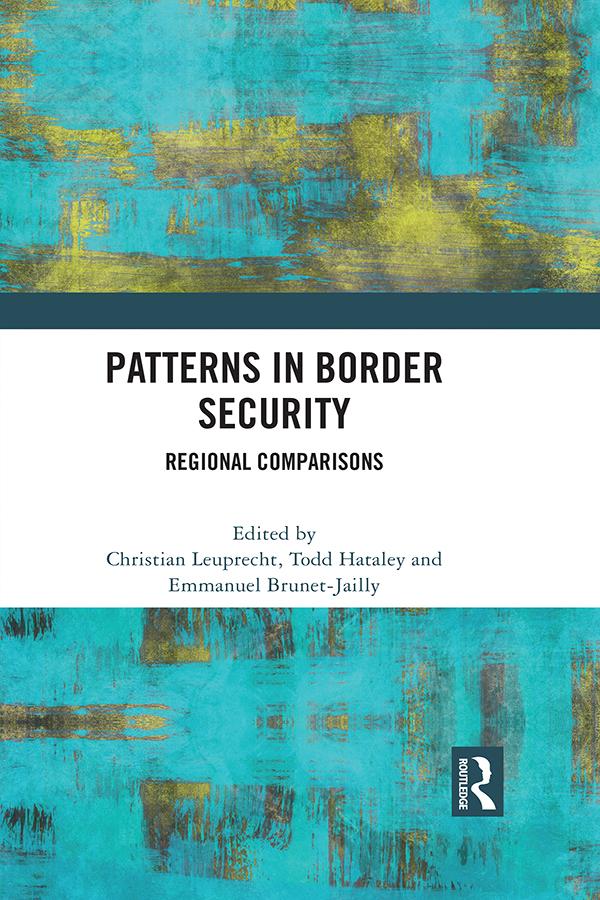
How do security communities transform into security regimes? This book compares the construction of cross-border security regimes across five regions of the world to illustrate how trust emerges from the day-to-day relations of coordination, cooperation, or collaboration. Patterns in Border Security: Regional Comparisons studies the way borderland communities develop, implement, and align border policy to enhance their sense of security. Borders have been evolving rapidly in direct response to the multifaceted challenges brought on by globalization, which has had a nuanced impact on the way borders are governed and border security is managed. Taking a methodical comparative regional approach, this book identifies and contrasts determinants of nascent, ascendant, and mature border security regimes, which the book documents in seven regional case studies from across the globe. The findings identify conditions that give rise to cross-border and trans-governmental coordination, cooperation, or collaboration. Specifically, pluralistic forms of communication and interactions, sometimes far from the actual borderline, emerge as key determinants of friendly and trustful relations among both contiguous and non-contiguous regions. This is a significant innovation in the study of borders, in particular in the way borders mediate security. For six decades international security studies had posited culture as the bedrock of security communities. By contrast, the book identifies conditions, a method, and a model for adequate and effective cross-border relations, but whose outcome is not contingent on culture. The chapters in this book were originally published as a special issue of Commonwealth and Comparative Politics with a Foreword by the Secretary General of the World Customs Organization.
The Open Access chapters of this book, available at http://www.tandfebooks.com/doi/view/10.4324/9781003216926, have been made available under a Creative Commons Attribution-Non Commercial-No Derivatives 4.0 license.
Before Memmo my notes were scattered across PDFs. Now a workspace pulls everything into one place — I see exactly what's still left to study.
Memmo's summaries are gold before exams. I don't have to re-read 800 pages two weeks before — just the important parts.
The AI chat has saved me the night before an exam more than once. I just keep asking until I get it — no waiting on a study group to reply.
The quizzes hit exactly what I need to know. Memmo tracks what I get stuck on — so I only practice what's worth it.
Flashcards with spaced repetition are magic. Memmo knows when I'm about to forget something and brings it back.
The AI podcasts are my favorite. I listen on my way to school and get a recap without sitting at a computer.

Handbok i kvalitativa metoder
281 kr

Hållbar utveckling: en introduktion för ingenjörer och andra problemlösare
334 kr

Brymans Samhällsvetenskapliga metoder
390 kr

Projektledning
491 kr

Den orättvisa hälsan: om socioekonomiska skillnader i hälsa och livslängd
326 kr

Organizational Leadership
429 kr

Vetenskapsteori för nybörjare
196 kr

På väg mot läraryrket
172 kr

Det sociala livet i skolan: Socialpsykologiska perspektiv
253 kr

Betygsättningens didaktik
151 kr

Personality
402 kr

Studying Leadership
404 kr

Managing Innovation
477 kr

Introduktion till samhällsvetenskaplig metod
347 kr

The Psychology of Sex and Gender
698 kr

Evidens och kunskap för socialt arbete
207 kr

Introduction to Leadership
605 kr