
Before Memmo my notes were scattered across PDFs. Now a workspace pulls everything into one place — I see exactly what's still left to study.
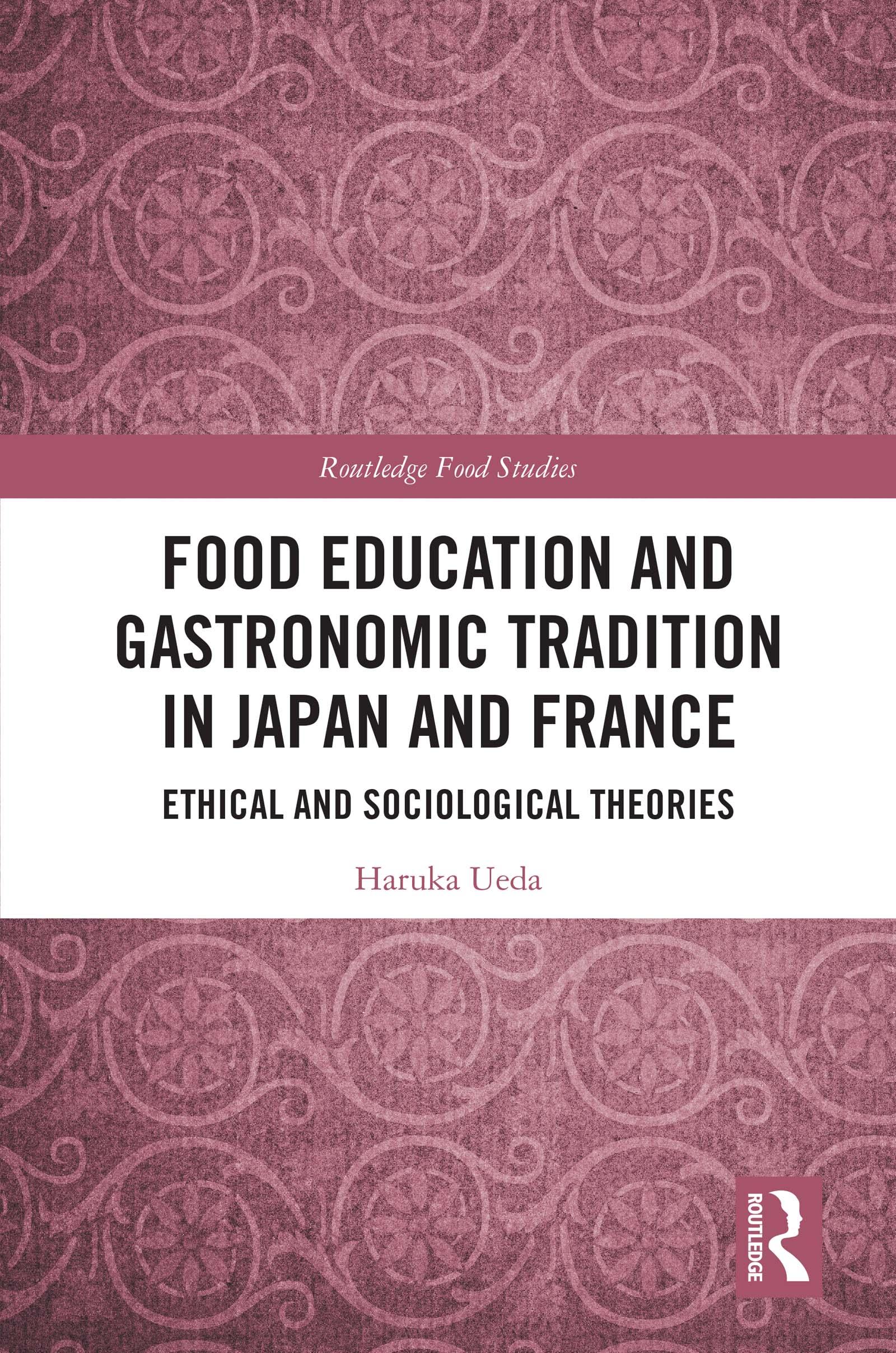
Drawing on ethical and sociological theories of food, this book presents a new approach to food education that moves beyond nutrition-centred education.
Food education has gained increasing scientific and political importance in many countries as a promising way to change contemporary eating. However, many practices fail to address two epistemological obstacles regarding its very components – ‘food’ and ‘education’. Food has largely been thought of from a nutritionistic viewpoint alone and the ethical issues over children’s freedom of choice and well-being have been absent. This book resolves these problems by applying ethical and sociological theories of food and analysing food education in two pioneering countries: Japan and France. The book focuses on taste education and gastronomy as two key concepts which have great potential to positively impact food education. Taste education is a promising alternative to nutrition-centred pedagogy which foregrounds the experience and pleasure of eating food, creating an environment for taste sensibility and food curiosity. From taste education, the picture can be broadened to examine the role and impact of gastronomy in food education. Examining the cultural traditions of France and Japan reveals how gastronomy can impact eating habits and food cultures and how these criteria should be an intrinsic part of food education. The book concludes by constructing an integrative theory for food education that moves beyond nutrition-centred education for the benefit of one’s well-being.
This book will greatly interest students, scholars, policymakers and educators working on food education, food-related issues at the intersection between nutritional and social sciences, and ‘gastronomes’ searching for a pedagogical guide for developing their capabilities to eat in a more humanistic way.
Before Memmo my notes were scattered across PDFs. Now a workspace pulls everything into one place — I see exactly what's still left to study.
Memmo's summaries are gold before exams. I don't have to re-read 800 pages two weeks before — just the important parts.
The AI chat has saved me the night before an exam more than once. I just keep asking until I get it — no waiting on a study group to reply.
The quizzes hit exactly what I need to know. Memmo tracks what I get stuck on — so I only practice what's worth it.
Flashcards with spaced repetition are magic. Memmo knows when I'm about to forget something and brings it back.
The AI podcasts are my favorite. I listen on my way to school and get a recap without sitting at a computer.

Handbok i kvalitativa metoder
281 kr

Hållbar utveckling: en introduktion för ingenjörer och andra problemlösare
334 kr

Brymans Samhällsvetenskapliga metoder
390 kr

Projektledning
491 kr

Den orättvisa hälsan: om socioekonomiska skillnader i hälsa och livslängd
326 kr

Vetenskapsteori för nybörjare
196 kr

Organizational Leadership
429 kr

På väg mot läraryrket
172 kr

Det sociala livet i skolan: Socialpsykologiska perspektiv
253 kr

Betygsättningens didaktik
151 kr

Personality
402 kr

Studying Leadership
404 kr

Managing Innovation
477 kr

Introduktion till samhällsvetenskaplig metod
347 kr

The Psychology of Sex and Gender
698 kr

Evidens och kunskap för socialt arbete
207 kr

Introduction to Leadership
605 kr