
Before Memmo my notes were scattered across PDFs. Now a workspace pulls everything into one place — I see exactly what's still left to study.
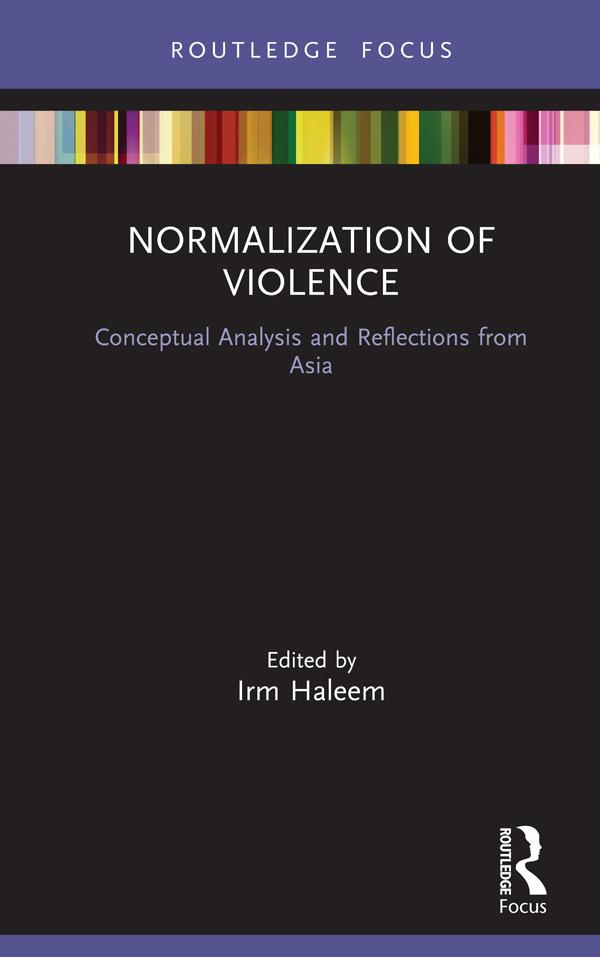
This book offers both a conceptual and an empirical analysis of how violence is normalized. In its conceptual analysis, Irm Haleem offers a framework of explanation that she argues is universal in its narratives, which she submits is premised on moralizing, legalizing, and popularizing violence. Haleem engages Stathis Kalyvas’s notion of the two stages of violence (process and outcome), and proposes the notion of "metaphysical" violence as distinct from physical violence. Through drawing upon works of scholars such as Hannah Arendt, Noam Chomsky, W.J.T. Mitchell, Michel Foucault, Jacques Derrida, George Kateb, and others, she illustrates why these distinctions (of stages and types of violence) are critical in understanding how violence is normalized.
In its empirical analysis, Naoko Kumada argues that the contemporary changes in narratives and educational curriculum in Japan are intended to moralize the historic glory days of imperial Japan, which, she argues, may subsequently normalize militarism. Stefanie Kam focuses on how China has normalized violence in Xinjiang through narratives of the imperatives of security, thereby both legalizing and moralizing violence. Jennifer Dhanaraj argues how the denial of citizenship to the Rohingya community in Myanmar has provided both the moral and legal justifications for Buddhist extremists and the military to wage a brutal and unbridled war against the Rohingyas. Finally, Abdul Basit examines how the ex-communication of the Ahmadi sectarian minority in Pakistan has criminalized the minority, thus paving the way for unbridled violence against them from extremist mobs that have justified their violence in moral and legal terms. In all the cases in this book, we see how violence is popularized as being either a matter of the will of the people, or as being for the greater good of the people.
Before Memmo my notes were scattered across PDFs. Now a workspace pulls everything into one place — I see exactly what's still left to study.
Memmo's summaries are gold before exams. I don't have to re-read 800 pages two weeks before — just the important parts.
The AI chat has saved me the night before an exam more than once. I just keep asking until I get it — no waiting on a study group to reply.
The quizzes hit exactly what I need to know. Memmo tracks what I get stuck on — so I only practice what's worth it.
Flashcards with spaced repetition are magic. Memmo knows when I'm about to forget something and brings it back.
The AI podcasts are my favorite. I listen on my way to school and get a recap without sitting at a computer.

Handbok i kvalitativa metoder
281 kr

Hållbar utveckling: en introduktion för ingenjörer och andra problemlösare
334 kr

Brymans Samhällsvetenskapliga metoder
390 kr

Projektledning
491 kr

Den orättvisa hälsan: om socioekonomiska skillnader i hälsa och livslängd
326 kr

Organizational Leadership
429 kr

Vetenskapsteori för nybörjare
196 kr

På väg mot läraryrket
172 kr

Det sociala livet i skolan: Socialpsykologiska perspektiv
253 kr

Betygsättningens didaktik
151 kr

Personality
402 kr

Studying Leadership
404 kr

Managing Innovation
477 kr

Introduktion till samhällsvetenskaplig metod
347 kr

The Psychology of Sex and Gender
698 kr

Evidens och kunskap för socialt arbete
207 kr

Introduction to Leadership
605 kr