
Before Memmo my notes were scattered across PDFs. Now a workspace pulls everything into one place — I see exactly what's still left to study.
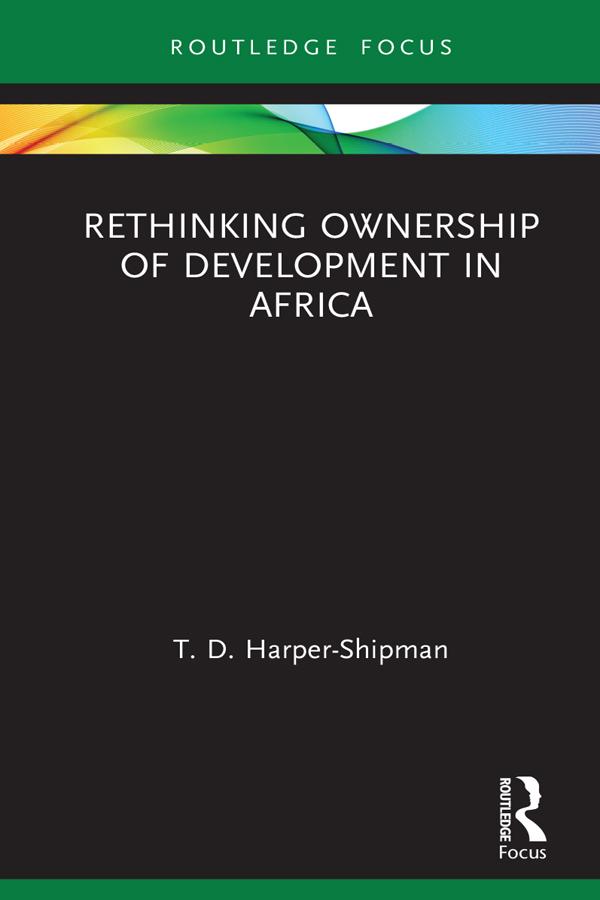
Rethinking Ownership of Development in Africa demonstrates how instead of empowering the communities they work with, the jargon of development ownership often actually serves to perpetuate the centrality of multilateral organizations and international donors in African development, awarding a fairly minimal role to local partners.
In the context of today’s development scheme for Africa, ownership is often considered to be the panacea for all of the aid-dependent continent’s development woes. Reinforced through the Organization for Economic Co-operation and Development (OECD)’s Paris Declaration on Aid Effectiveness and the Accra Agenda for Action, ownership is now the preeminent procedure for achieving aid effectiveness and a range of development outcomes. Throughout this book, the author illustrates how the ownership paradigm dictates who can produce development knowledge and who is responsible for carrying it out, with a specific focus on the health sectors in Burkina Faso and Kenya. Under this paradigm, despite the ownership narrative, national stakeholders in both countries are not producers of development knowledge; they are merely responsible for its implementation. This book challenges the preponderance of conventional international development policies that call for more ownership from African stakeholders without questioning the implications of donor demands and historical legacies of colonialism in Africa. Ultimately, the findings from this book make an important contribution to critical development debates that question international development as an enterprise capable of empowering developing nations.
This lively and engaging book challenges readers to think differently about the ownership, and as such will be of interest to researchers of development studies and African studies, as well as for development practitioners within Africa.
Before Memmo my notes were scattered across PDFs. Now a workspace pulls everything into one place — I see exactly what's still left to study.
Memmo's summaries are gold before exams. I don't have to re-read 800 pages two weeks before — just the important parts.
The AI chat has saved me the night before an exam more than once. I just keep asking until I get it — no waiting on a study group to reply.
The quizzes hit exactly what I need to know. Memmo tracks what I get stuck on — so I only practice what's worth it.
Flashcards with spaced repetition are magic. Memmo knows when I'm about to forget something and brings it back.
The AI podcasts are my favorite. I listen on my way to school and get a recap without sitting at a computer.

Handbok i kvalitativa metoder
281 kr

Hållbar utveckling: en introduktion för ingenjörer och andra problemlösare
334 kr

Brymans Samhällsvetenskapliga metoder
390 kr

Projektledning
491 kr

Den orättvisa hälsan: om socioekonomiska skillnader i hälsa och livslängd
326 kr

Organizational Leadership
429 kr

Vetenskapsteori för nybörjare
196 kr

På väg mot läraryrket
172 kr

Det sociala livet i skolan: Socialpsykologiska perspektiv
253 kr

Betygsättningens didaktik
151 kr

Personality
402 kr

Studying Leadership
404 kr

Managing Innovation
477 kr

Introduktion till samhällsvetenskaplig metod
347 kr

The Psychology of Sex and Gender
698 kr

Evidens och kunskap för socialt arbete
207 kr

Introduction to Leadership
605 kr