
Before Memmo my notes were scattered across PDFs. Now a workspace pulls everything into one place — I see exactly what's still left to study.
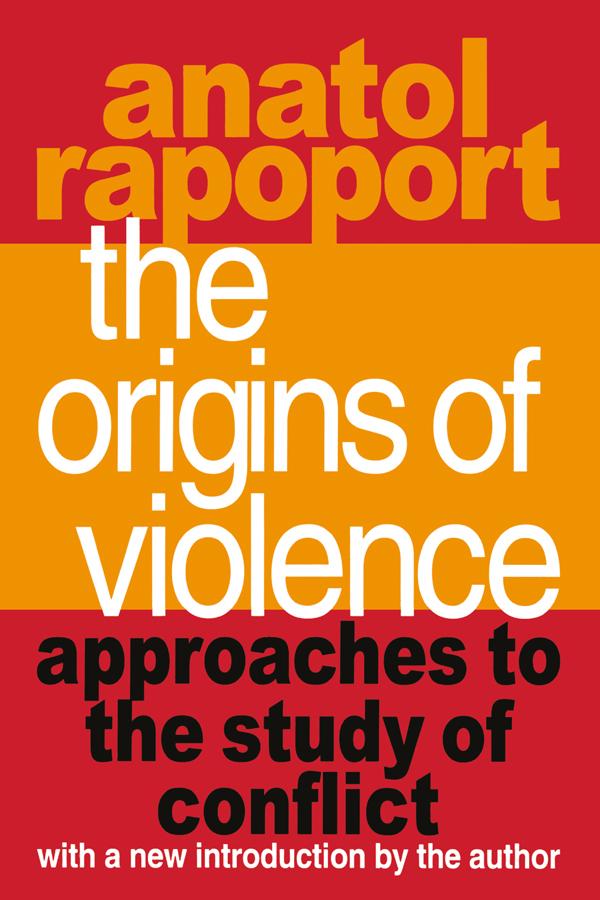
In this fundamental analysis, Rapoport asks: Why do we have wars? Doesn't humanity always seem on the verge of self-annihilation? Is there something in human genetic structure that makes people want to kill each other? Perhaps this impulse is a matter of good versus evil, or just plain human nature. Rapoport moves beyond cliches by claiming that the sources of modern violence reside in the imbalance between a lag in the system of values inherited from the past and the structure of science and technology that awaits no revision of values to move ahead. As a result, Rapoport argues that the study of war and peace should be considered a science, just like biology or, for that matter, political science. The same rules of empirical engagement and experimentation should apply. Before we can have a theory of peace, we need a methodology of conflict. Using the writings of thinkers who have made significant contributions to the predominant ideas and ideals of our society, Rapoport weaves together the strands of independent thought and research into a single, thought-provoking work. After investigating the whys of violence, using ideological, psychological, strategic, and systemic perspective, Rapoport moves to an in-depth analysis of possible varieties of conflict resolution. He explores such mechanisms as mediation, education, and applying the results of scientific research. He documents the impact of ideologies countervailing dominant ones that place obstacles in the way of peacemaking. Rapoport argues that conciliation and game theories can be utilized to replace the concept of winner take all or total victory. The Origins of Violence is a needed contribution to our understanding of warfare, and provides a forward-looking perspective that can be of wide use to each of the policy sciences, starting with military strategy and ending with international development.
Before Memmo my notes were scattered across PDFs. Now a workspace pulls everything into one place — I see exactly what's still left to study.
Memmo's summaries are gold before exams. I don't have to re-read 800 pages two weeks before — just the important parts.
The AI chat has saved me the night before an exam more than once. I just keep asking until I get it — no waiting on a study group to reply.
The quizzes hit exactly what I need to know. Memmo tracks what I get stuck on — so I only practice what's worth it.
Flashcards with spaced repetition are magic. Memmo knows when I'm about to forget something and brings it back.
The AI podcasts are my favorite. I listen on my way to school and get a recap without sitting at a computer.

Handbok i kvalitativa metoder
281 kr

Hållbar utveckling: en introduktion för ingenjörer och andra problemlösare
334 kr

Brymans Samhällsvetenskapliga metoder
390 kr

Projektledning
491 kr

Den orättvisa hälsan: om socioekonomiska skillnader i hälsa och livslängd
326 kr

Organizational Leadership
429 kr

Vetenskapsteori för nybörjare
196 kr

På väg mot läraryrket
172 kr

Det sociala livet i skolan: Socialpsykologiska perspektiv
253 kr

Betygsättningens didaktik
151 kr

Personality
402 kr

Studying Leadership
404 kr

Managing Innovation
477 kr

Introduktion till samhällsvetenskaplig metod
347 kr

The Psychology of Sex and Gender
698 kr

Evidens och kunskap för socialt arbete
207 kr

Introduction to Leadership
605 kr