
Before Memmo my notes were scattered across PDFs. Now a workspace pulls everything into one place — I see exactly what's still left to study.
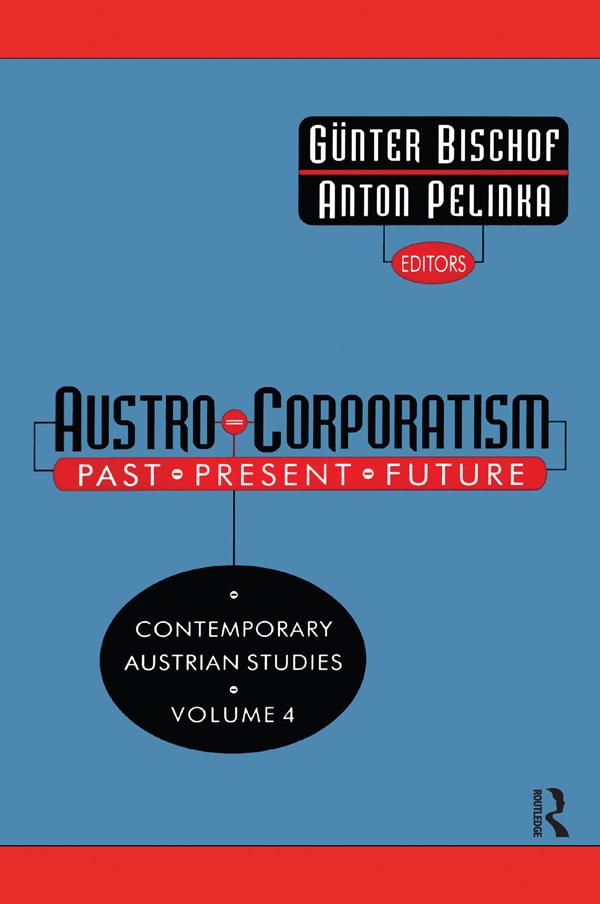
Corporatism was unpopular in the Europe of the past decade. During a time of neo-conservative resurgence in both the United States and the United Kingdom, macroeconomic steering and statist centralism and regulation were in disfavor. However, Austria's unique Sozialpartnerschaft, its famed system of tripartite informal and formal labor, business, and state cooperation, continued to prosper In spite of such powerful Anglo-American trends. Austro-Corporatism is the fourth volume in the interdisciplinary Contemporary Austrian Studies series. This effort in particular reflects the uniqueness of Austrian corporatism, and looks at its deep historical roots from a comparative continental European perspective.The contributors Include specialists on Austria from all parts of the world, making this a truly international effort. Andrei Markovits provides the larger European context for this analysis of Austrian corporatism. Emmerich Talos and Bernhard Kittel review the historical development of Austrian corporatism, going back to its nineteenth-century roots. Randall Kindley studies the Institutional framework of Austrian corporatism, particularly its post-World War II reincarnation. Hans Seidel looks at the subject from a neo-Keynesian economic perspective, and Ferdinand Karlhofer at the chances of Its survival in a changing international environment.Jonathan Petropoulos presents a fascinating biographical study of Nazi art plunderer Kajetan Muhlmann, and David McIntosh compares Eisenhower's policy vis-a-vis the small friendly countries of Lebanon, Costa Rica, and Austria. A special forum looks at the model character and appeal of tripartite Austrian cooperation among its new eastern democratic neighbors: the Czech Republic, Slovakia, Hungary, and Slovenia. A number of reviews of Austrian politics in 1994 complete the volume. Austro-Corporattsm will be of intense interest to foreign policy analysts, historians, and scholars concerned with the unique elements in Central European politics.
Before Memmo my notes were scattered across PDFs. Now a workspace pulls everything into one place — I see exactly what's still left to study.
Memmo's summaries are gold before exams. I don't have to re-read 800 pages two weeks before — just the important parts.
The AI chat has saved me the night before an exam more than once. I just keep asking until I get it — no waiting on a study group to reply.
The quizzes hit exactly what I need to know. Memmo tracks what I get stuck on — so I only practice what's worth it.
Flashcards with spaced repetition are magic. Memmo knows when I'm about to forget something and brings it back.
The AI podcasts are my favorite. I listen on my way to school and get a recap without sitting at a computer.

Handbok i kvalitativa metoder
281 kr

Hållbar utveckling: en introduktion för ingenjörer och andra problemlösare
334 kr

Brymans Samhällsvetenskapliga metoder
390 kr

Projektledning
491 kr

Den orättvisa hälsan: om socioekonomiska skillnader i hälsa och livslängd
326 kr

Vetenskapsteori för nybörjare
196 kr

Organizational Leadership
429 kr

På väg mot läraryrket
172 kr

Det sociala livet i skolan: Socialpsykologiska perspektiv
253 kr

Betygsättningens didaktik
151 kr

Personality
402 kr

Studying Leadership
404 kr

Managing Innovation
477 kr

Introduktion till samhällsvetenskaplig metod
347 kr

The Psychology of Sex and Gender
698 kr

Evidens och kunskap för socialt arbete
207 kr

Introduction to Leadership
605 kr