
Before Memmo my notes were scattered across PDFs. Now a workspace pulls everything into one place — I see exactly what's still left to study.
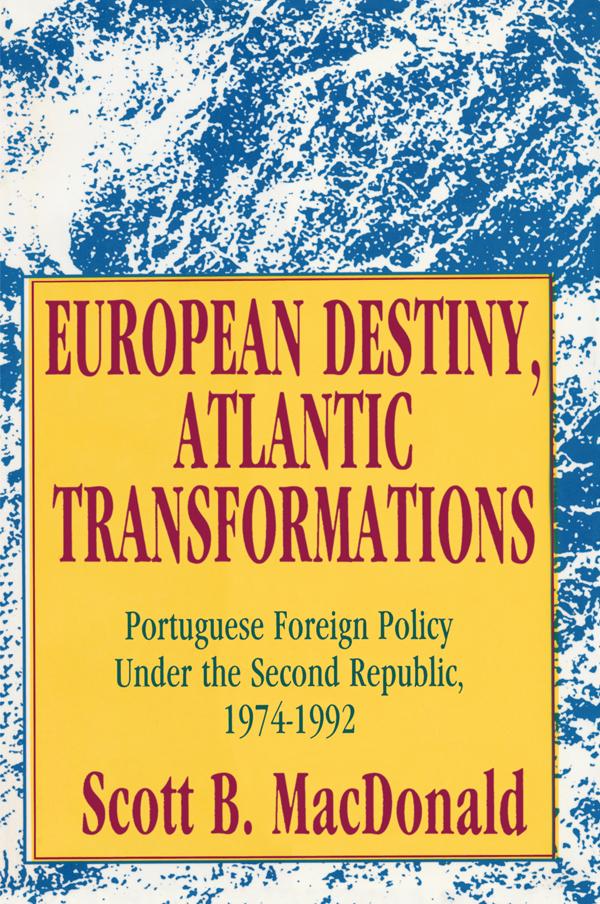
With the fall of its centuries-old empire in 1974-1975, Portugal embarked on a transitional period that reconciled a long tradition of acting out national interests overseas with the need to integrate itself into Western Europe. The result has been a deemphasis on various Atlantic and colonial linkages and the forging of a new and highly successful European identity within the framework of the European Community. In European Destiny, Atlantic Transformations Scott B. MacDonald offers a comprehensive analysis of Portugal's foreign policy and its highly successful venture in economic and political transformation. Although Portugal is firm in its commitment to a European destiny, it has not turned its back on relations with the United States and its former colonies hi Africa and Asia. MacDonald traces the evolution of U.S.-Portuguese cooperation along economic, cultural, and military lines and shows how NATO has played a pivotal role in the process. This was most recently underscored when the U.S. made extensive use of the Azores during the Gulf War against Iraq. Likewise, in its ties with the Lusophone countries formerly under its control - Cape Verde, Guinea-Bissau, S - o Tom" and Princip" - Portugal has sought to improve political relations and act as a peacemaker in regional conflicts such as those in East Timor, Angola, and Mozambique. The scope of MacDonald's work takes in issues posed to Portugal by new foreign policy concerns that range from the breakup of the Soviet Union to the rise of Islamic fundamentalism in North Africa and the Middle East. He points out that in a world of rapidly shifting political and economic alignments, Portugal provides a representative model of a relatively small nation that has undergone successful economic reform while deepening its commitment to its new democratic system. As such, the Portuguese model is instructive for newly emerging democracies of Eastern Europe and Latin America. European Destiny, Atlantic Transformations is an important addition to the literature on post-Cold War politics. It will be read by historians, economists, and foreign policy specialists.
Before Memmo my notes were scattered across PDFs. Now a workspace pulls everything into one place — I see exactly what's still left to study.
Memmo's summaries are gold before exams. I don't have to re-read 800 pages two weeks before — just the important parts.
The AI chat has saved me the night before an exam more than once. I just keep asking until I get it — no waiting on a study group to reply.
The quizzes hit exactly what I need to know. Memmo tracks what I get stuck on — so I only practice what's worth it.
Flashcards with spaced repetition are magic. Memmo knows when I'm about to forget something and brings it back.
The AI podcasts are my favorite. I listen on my way to school and get a recap without sitting at a computer.

Handbok i kvalitativa metoder
281 kr

Hållbar utveckling: en introduktion för ingenjörer och andra problemlösare
334 kr

Brymans Samhällsvetenskapliga metoder
390 kr

Projektledning
491 kr

Den orättvisa hälsan: om socioekonomiska skillnader i hälsa och livslängd
326 kr

Vetenskapsteori för nybörjare
196 kr

Organizational Leadership
429 kr

På väg mot läraryrket
172 kr

Det sociala livet i skolan: Socialpsykologiska perspektiv
253 kr

Betygsättningens didaktik
151 kr

Personality
402 kr

Studying Leadership
404 kr

Managing Innovation
477 kr

Introduktion till samhällsvetenskaplig metod
347 kr

The Psychology of Sex and Gender
698 kr

Evidens och kunskap för socialt arbete
207 kr

Introduction to Leadership
605 kr