
Before Memmo my notes were scattered across PDFs. Now a workspace pulls everything into one place — I see exactly what's still left to study.
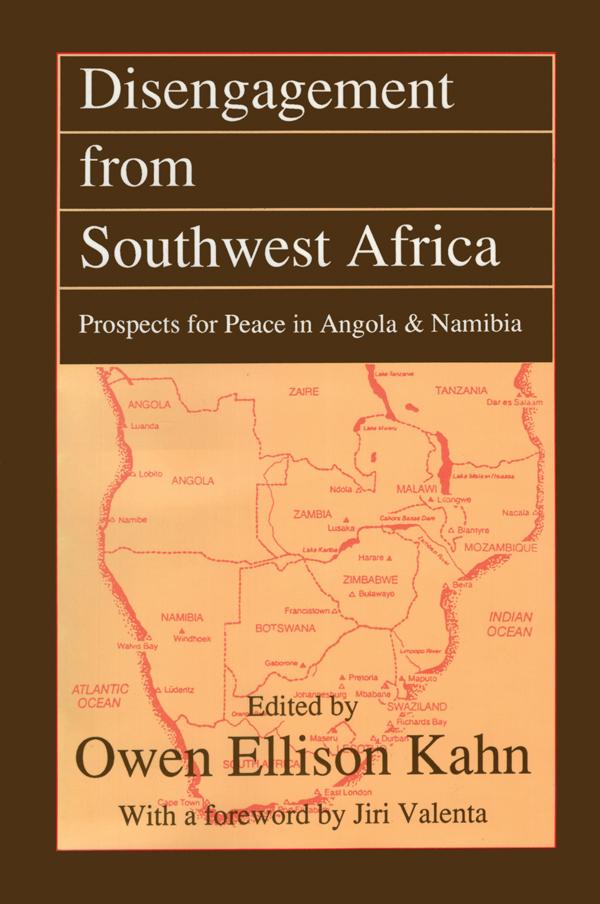
Gorbachev's new thinking on superpower relations assumes that struggle between two opposing world systems no longer characterizes the present era. This second volume in the East-South Relations series explores the implications of Gorbachev's new thinking for regional conflicts. Because these conflicts jeopardize tranquil relations between the United States and the Soviet Union, they are perceived as contrary to the new spirit of global cooperation. This volume suggests that the accords on Southwest Africa may illustrate how the superpowers will resolve conflict, and shows how smaller powers may now have new roles cast for them by the superpowers.
In 1975, Soviet-Cuban assistance to the Leninist-oriented Movement for the Popular Liberation of Angola (MPLA) was the first extensive Soviet-allied military intervention in the Third World. While the Soviet-backed Cubans propped up the MPLA, the South Africans intervened, on a smaller scale, in support of the National Union for the Total Independence of Angola (UNITA) under Jonas Savimbi. After 1985 UNITA began receiving United States support, and a military stalemate ensued. The contributors to this volume analyse how the Soviet Union and the United States used this stalemate to move the MPLA, Cuba and South Africa to settle not only their differences, but also the vexing question of the Independence of Namibia.
Central issues explored are how and why South Africa and Cuba got into the Angolan arena, why they stayed so long, and why they saw fit to get out. While the authors differ on the forces at work, their debate is itself enlightening, and offers valuable insights into the policy options of regional powers. The contributors also review further steps, beyond military disengagement, needed to finally resolve the Angolan civil war, and ensure regional stability. They assess the potential for breakdown of the accords, and the likely consequences should this occur.
Disengagement from Southwest Africa will interest policymakers and researchers concerned with developments in southern Africa and Cuba, and with relations between the superpowers.
Before Memmo my notes were scattered across PDFs. Now a workspace pulls everything into one place — I see exactly what's still left to study.
Memmo's summaries are gold before exams. I don't have to re-read 800 pages two weeks before — just the important parts.
The AI chat has saved me the night before an exam more than once. I just keep asking until I get it — no waiting on a study group to reply.
The quizzes hit exactly what I need to know. Memmo tracks what I get stuck on — so I only practice what's worth it.
Flashcards with spaced repetition are magic. Memmo knows when I'm about to forget something and brings it back.
The AI podcasts are my favorite. I listen on my way to school and get a recap without sitting at a computer.

Handbok i kvalitativa metoder
281 kr

Hållbar utveckling: en introduktion för ingenjörer och andra problemlösare
334 kr

Brymans Samhällsvetenskapliga metoder
390 kr

Projektledning
491 kr

Den orättvisa hälsan: om socioekonomiska skillnader i hälsa och livslängd
326 kr

Vetenskapsteori för nybörjare
196 kr

Organizational Leadership
429 kr

På väg mot läraryrket
172 kr

Det sociala livet i skolan: Socialpsykologiska perspektiv
253 kr

Betygsättningens didaktik
151 kr

Personality
402 kr

Studying Leadership
404 kr

Managing Innovation
477 kr

Introduktion till samhällsvetenskaplig metod
347 kr

The Psychology of Sex and Gender
698 kr

Evidens och kunskap för socialt arbete
207 kr

Introduction to Leadership
605 kr