
Before Memmo my notes were scattered across PDFs. Now a workspace pulls everything into one place — I see exactly what's still left to study.
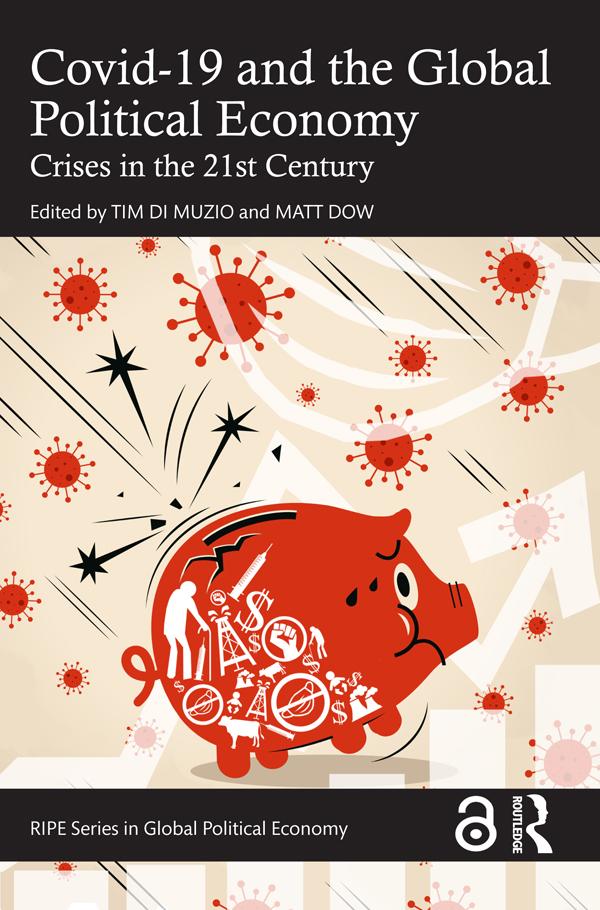
Covid-19 and the Global Political Economy investigates and explores how far and in what ways the Covid-19 pandemic is challenging, restructuring, and perhaps remaking aspects of the global political economy.
Since the 1970s, neoliberal capitalism has been the guiding principle of global development: fiscal discipline, privatisations, deregulation, the liberalisation of trade and investment regimes, and lower corporate and wealth taxation. But, after Covid-19, will these trends continue, particularly when states are continuing to struggle with overcoming the pandemic and violating one of neoliberalism’s key principles: balanced budgets? The pandemic has exposed the fragility of the global political economy, and it can be argued that the intensification of global trade, tourism, and finance over the past 30 years has facilitated the spread of infectious diseases such as Covid-19. Therefore, economies in lockdown, jittery markets, and massive government spending have sparked interest in potentially re-evaluating certain features of the global political economy. This volume brings together leading and upcoming critical scholars in international relations and international political economy to provide novel, timely, and innovative research on how the Covid-19 pandemic is impacting (and will continue to impact) the global economy in important dimensions, including state fiscal policy, monetary policy, the accumulation of debt, health and social reproduction, and the future of austerity and the fate of neoliberalism.
This book will be of great interest to students, scholars, and experts in international relations and international political economy, as well as history, anthropology, political science, sociology, cultural studies, economics, development studies, and human geography.
Chapter 8 of this book is freely available as a downloadable Open Access PDF at http://www.taylorfrancis.com under a Creative Commons Attribution-Non Commercial-No Derivatives (CC-BY-NC-ND) 4.0 license.
Before Memmo my notes were scattered across PDFs. Now a workspace pulls everything into one place — I see exactly what's still left to study.
Memmo's summaries are gold before exams. I don't have to re-read 800 pages two weeks before — just the important parts.
The AI chat has saved me the night before an exam more than once. I just keep asking until I get it — no waiting on a study group to reply.
The quizzes hit exactly what I need to know. Memmo tracks what I get stuck on — so I only practice what's worth it.
Flashcards with spaced repetition are magic. Memmo knows when I'm about to forget something and brings it back.
The AI podcasts are my favorite. I listen on my way to school and get a recap without sitting at a computer.

Handbok i kvalitativa metoder
281 kr

Hållbar utveckling: en introduktion för ingenjörer och andra problemlösare
334 kr

Brymans Samhällsvetenskapliga metoder
390 kr

Projektledning
491 kr

Den orättvisa hälsan: om socioekonomiska skillnader i hälsa och livslängd
326 kr

Vetenskapsteori för nybörjare
196 kr

Organizational Leadership
429 kr

På väg mot läraryrket
172 kr

Det sociala livet i skolan: Socialpsykologiska perspektiv
253 kr

Betygsättningens didaktik
151 kr

Personality
402 kr

Studying Leadership
404 kr

Managing Innovation
477 kr

Introduktion till samhällsvetenskaplig metod
347 kr

The Psychology of Sex and Gender
698 kr

Evidens och kunskap för socialt arbete
207 kr

Introduction to Leadership
605 kr