
Before Memmo my notes were scattered across PDFs. Now a workspace pulls everything into one place — I see exactly what's still left to study.
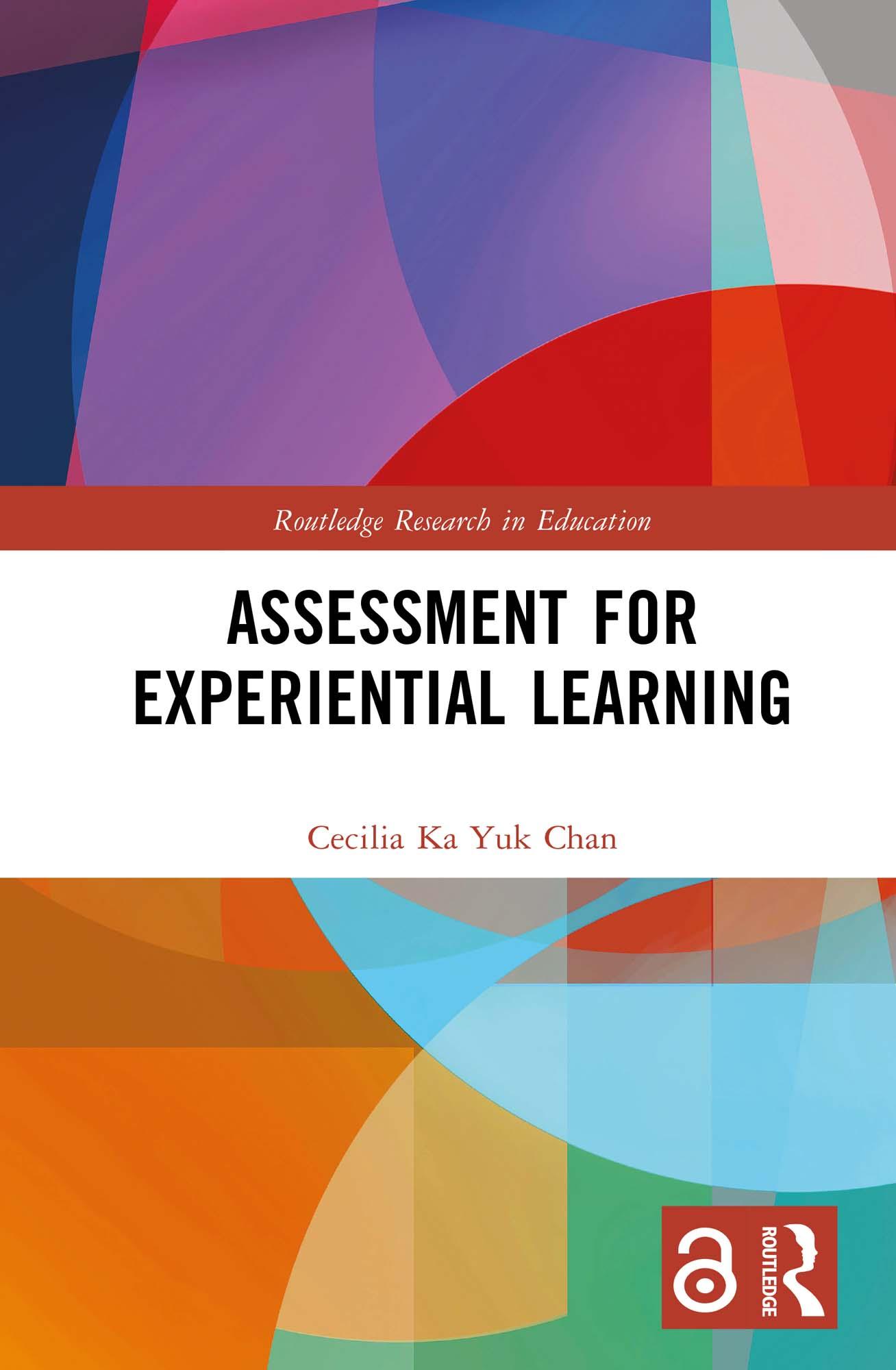
Chan’s book explores the challenges in assessing experiential learning, deepens our understanding, and inspires readers to think critically about the purpose of assessment in experiential learning.
Experiential learning has been studied and proven to be effective for student learning, particularly for the development of holistic competencies (i.e. 21st century skills, soft skills, transferable skills) considered essential for individuals to succeed in the increasingly global and technology-infused 21st century society. Universities around the world are now actively organising experiential learning activities or programmes for students to gain enriching and diversified learning experiences, however the assessment of these programmes tends to be limited, unclear, and contested.
Assessment plays a central role in education policies and students’ approach to learning. But do educators know how to assess less traditional learning such as service learning, entrepreneurship, cross-discipline or cross-cultural projects, internships and student exchanges? While the current assessment landscape is replete with assessments that measure knowledge of core content areas such as mathematics, law, languages, science and social studies, there is a lack of assessments and research that focus on holistic competencies. How do we assess students’ ability to think critically, problem solve, adapt, self-manage and collaborate?
Central to the discussion in this book, is the reason students are assessed and how they should be assessed to bring out their best learning outcomes. Offering a collection of best assessment practice employed by teachers around the world, this volume brings together both theoretical and empirical research that underpins assessment; and perceptions of different stakeholders – understanding of assessment in experiential learning from students, teachers, and policymakers. The idea of assessment literacy also plays an important role in experiential learning, for example, reflection is often used in assessing students in experiential learning but how reflection literate are educators, are they aware of the ethical dilemmas that arise in assessing students? These questions are discussed in detail. The volume also introduces a quality assurance programme to recognise student development within experiential learning programmes.
The book will be particularly informative to academic developers, teachers, students and community partners who struggle with the development and assessment for experiential learning, those who plan to apply for funding in experiential learning, and policymakers and senior managements seeking evidence and advice on fine-tuning curricular, assessment designs and quality assurance.
The Open Access version of this book, available at www.taylorfrancis.com, has been made available under a Creative Commons Attribution-Non Commercial-No Derivatives 4.0 license.
Before Memmo my notes were scattered across PDFs. Now a workspace pulls everything into one place — I see exactly what's still left to study.
Memmo's summaries are gold before exams. I don't have to re-read 800 pages two weeks before — just the important parts.
The AI chat has saved me the night before an exam more than once. I just keep asking until I get it — no waiting on a study group to reply.
The quizzes hit exactly what I need to know. Memmo tracks what I get stuck on — so I only practice what's worth it.
Flashcards with spaced repetition are magic. Memmo knows when I'm about to forget something and brings it back.
The AI podcasts are my favorite. I listen on my way to school and get a recap without sitting at a computer.

Handbok i kvalitativa metoder
281 kr

Hållbar utveckling: en introduktion för ingenjörer och andra problemlösare
334 kr

Brymans Samhällsvetenskapliga metoder
390 kr

Projektledning
491 kr

Den orättvisa hälsan: om socioekonomiska skillnader i hälsa och livslängd
326 kr

Vetenskapsteori för nybörjare
196 kr

Organizational Leadership
429 kr

På väg mot läraryrket
172 kr

Det sociala livet i skolan: Socialpsykologiska perspektiv
253 kr

Betygsättningens didaktik
151 kr

Personality
402 kr

Studying Leadership
404 kr

Managing Innovation
477 kr

Introduktion till samhällsvetenskaplig metod
347 kr

The Psychology of Sex and Gender
698 kr

Evidens och kunskap för socialt arbete
207 kr

Introduction to Leadership
605 kr